Weston digs up American history buried in a cellar where slaves were held | Williams
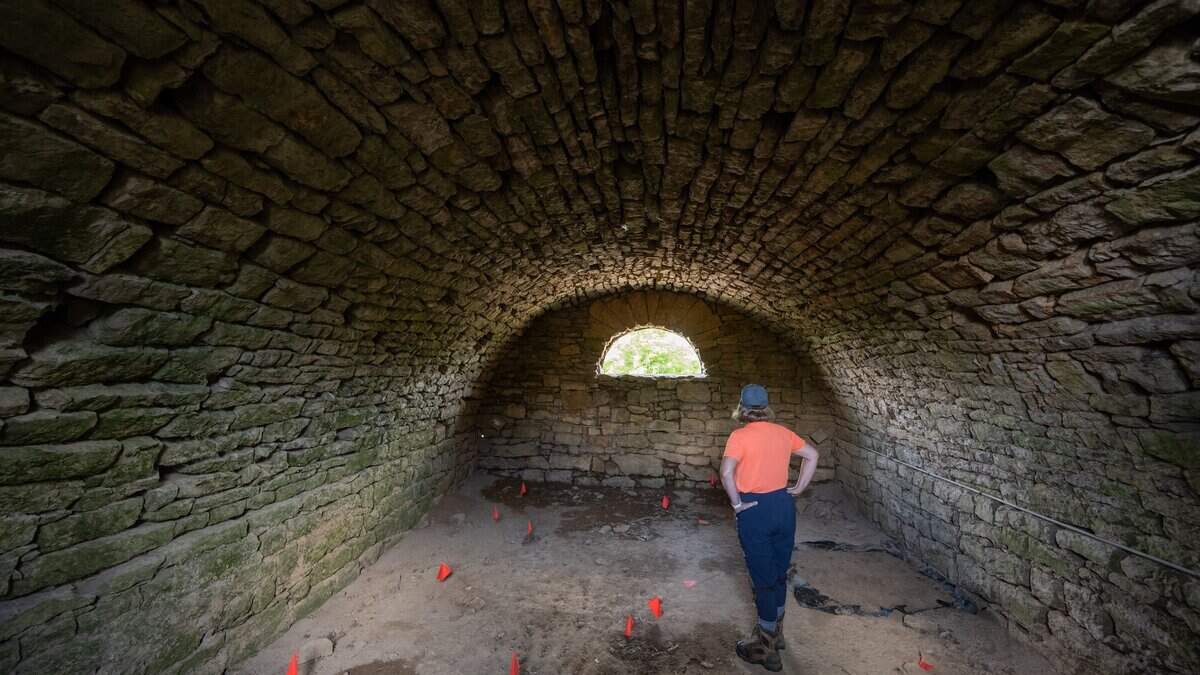
For several years the Black Ancestors Awareness Campaign and others in the small Missouri river town of Weston, had been working toward getting the historic Halfway House Cellar listed on the National Historic Register. That may not happen now because too much may have been changed or lost due to a lack of care at the site. But the history of the place still remains worthy of further discovery.
This month, an archeological team has led a dig at the site where, in the 1800s, the front porch of an old stone tavern and inn also functioned as an auction house — where Black enslaved people were bought, sold and stored shackled and chained to the walls in the structure’s cellar.
Descending the nine stone steps down underground into the small, dark and dank stone cellar built into a hillside adjacent to a road between Weston and Platte City, I felt goosebumps rise across my skin.
Then, standing on the dusty dirt floor, with that cellar — just 26.2 by 16.4 feet — arched around me, I thought: Wow! This is where shackled, Black enslaved people were chained to the stone walls, while enslavers and traders partied in the inn, tavern and stage coach stop that in the 1840s stood above the space.
I’d say unbelievable — except I know it’s absolutely not. — Rather, it’s much more the opposite.
In fact, that is indeed the story told about the Halfway House Cellar in Platte County near Weston, less than 40 miles north of Kansas City. For weeks, the team of archaeologists and students has been digging for artifacts that might help piece together all that historians and researchers say happened — and more probably than likely did happen — all those many years ago.
A metal historical marker outside the cellar says that in 1843, the property on Missouri Highway 273 — an old toll road — was owned by German immigrant John Floersch. Later, pro-slavery owners operated a tavern with a holding space — chains and shackles included — in the stone cellar, which is now all that remains of the structures that once stood on the many acres of land there.
That the cellar represents the last remnant is why members of the Black Ancestors Awareness Campaign, and some residents of Weston who are fascinated by this Missouri history, want to make sure it is preserved and its story documented to be told for decades to come.
Presidential order to remove historical markers
I confess: I love that this archaeological dig, if not actually but certainly symbolically, seems in direct defiance of our current +presidential administration’s national efforts to bury and erase parts of our history involving white folks’ enslavement of Black folks.
Seeing this chilling place, walking into it and knowing the story associated with it, I understand why Black Americans celebrate Black resistance, tenacity, contribution and pride, separately from, let’s say, national pride, as in July Fourth fireworks and the 250th anniversary celebration.
But any celebration of America would be incomplete without the inclusivity that some of our national leaders keep trying to deny, as seen in President Donald Trump’s shameless and falsely titled executive order, “Restoring Truth and Sanity to American History.” The order led to the removal of all sorts of historical mentions of slavery, including plaques and panels at the site where George Washington enslaved nine individuals, and also the removal of materials related to civil rights. Some of that history has since been restored, as it should be.
Ensuring that the history of chattel slavery in America is never forgotten is not the same as prominently maintaining monstrosities — granite statues — erected to honor the Confederate fight to continue the enslavement of Black people.
I argue, though — and this may be unpopular in some circles — that all of it is notable history that our kids and theirs and so on should know. It is intertwined into making America what it is.
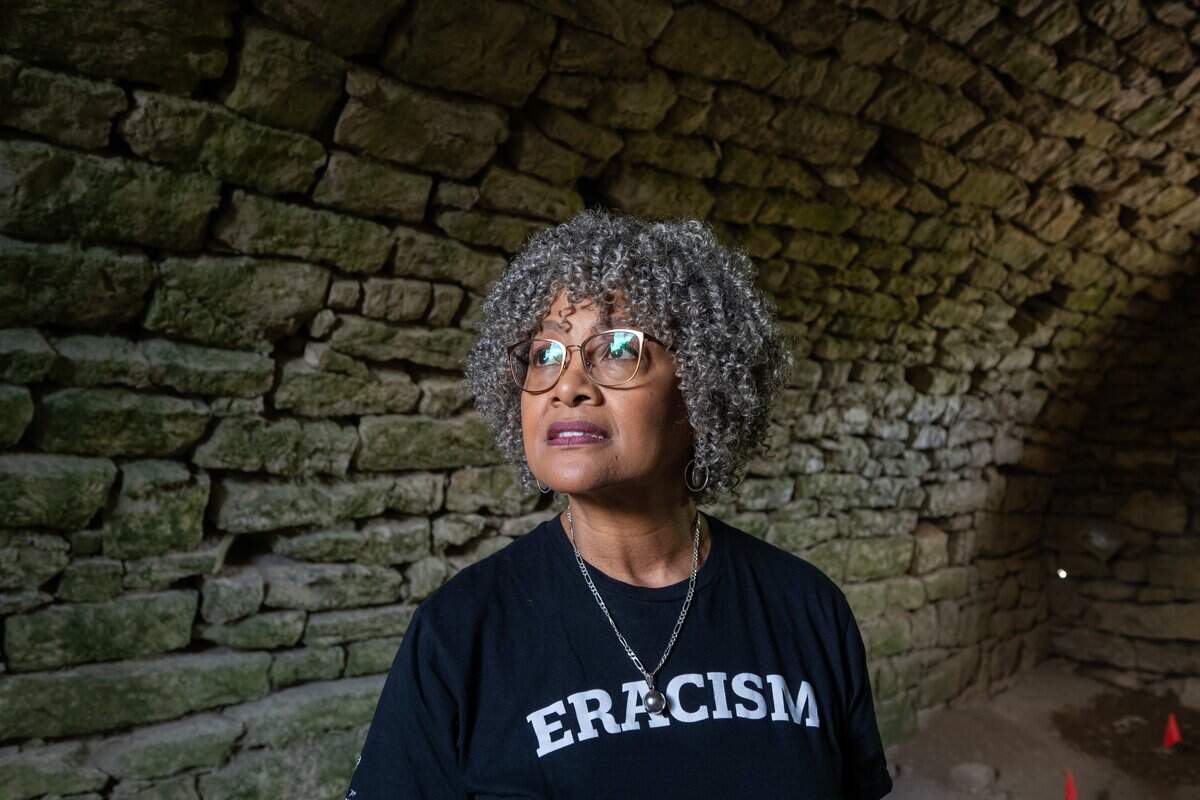
“Black history is American history,” said Angela Hagenbach, a former Kansas City jazz singer turned historian, who started the Black Ancestors Awareness Campaign. Hagenbach met me at the Weston dig site.
Angela Hagenbach, teacher of difficult history
Hagenbach helped start the Black Ancestors Awareness Campaign in 2021 intent on documenting and honoring the contributions of Weston’s early Black community. The organization operates under the Weston Historical Museum and focuses on bringing local Black history to light through various community efforts.
As for the Halfway House Cellar, Hagenbach says her understanding of the story is that while enslaved people were chained in the cellar, some were also bought and sold on the porch of the above-ground structure. The house that stood on the property, she said, was occupied until about the 1920s and eventually burned down. Still, many of the details of the earliest history were poorly documented.
“The systematic oppression of enslaved people and their descendants meant that their stories were rarely recorded, leaving a gap in the historical record that makes it difficult for researchers to piece together a comprehensive understanding of their experiences and contributions,” said Ann Raab, a Weston resident who is the archaeologist leading the dig.
She said destruction or neglect of sites associated with Black history has further complicated efforts to recover what she called “vital narratives.” The cellar site is an example of one that has been left open and, over the years, picked over., +here have been+“things taken from the site,” Raab said, referring to chains and shackles they know were removed. They would like to see those items returned.
Raab said she’s been hoping that they might find evidence of shackles or chains, to erase any doubt about what went on in the cellar nearly 200 years ago.
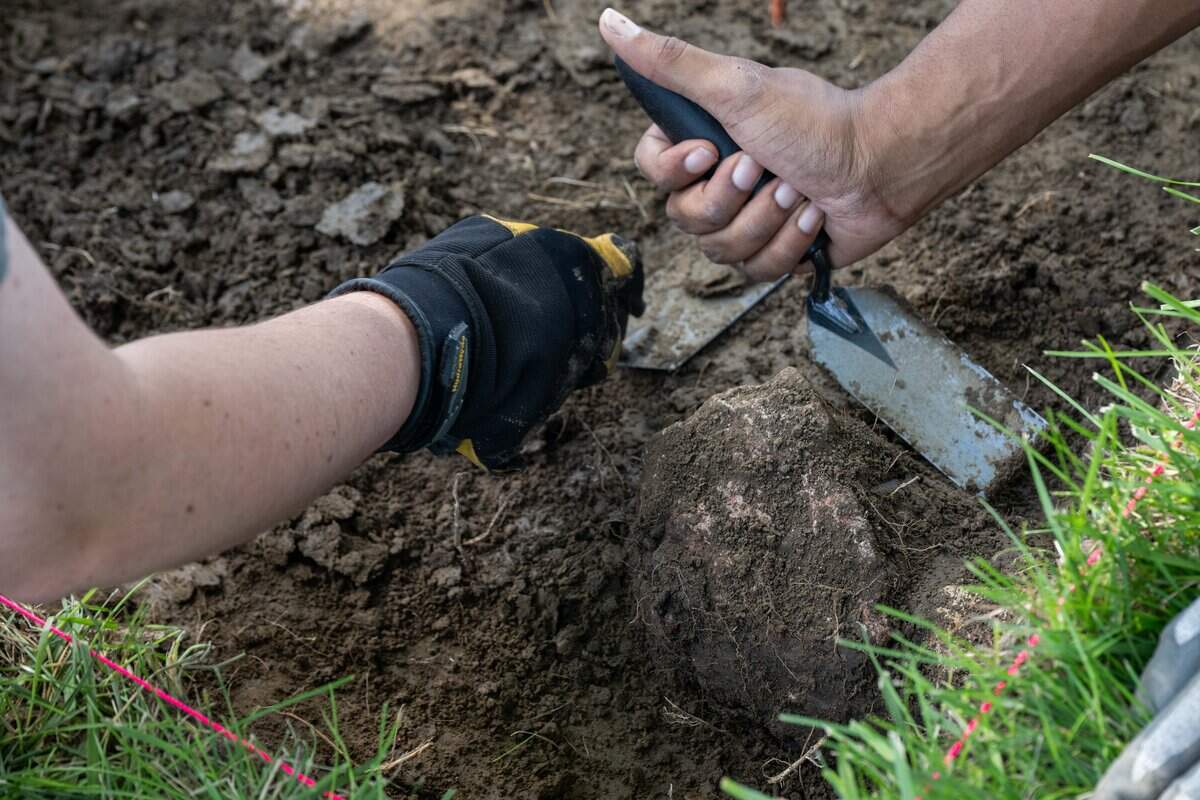
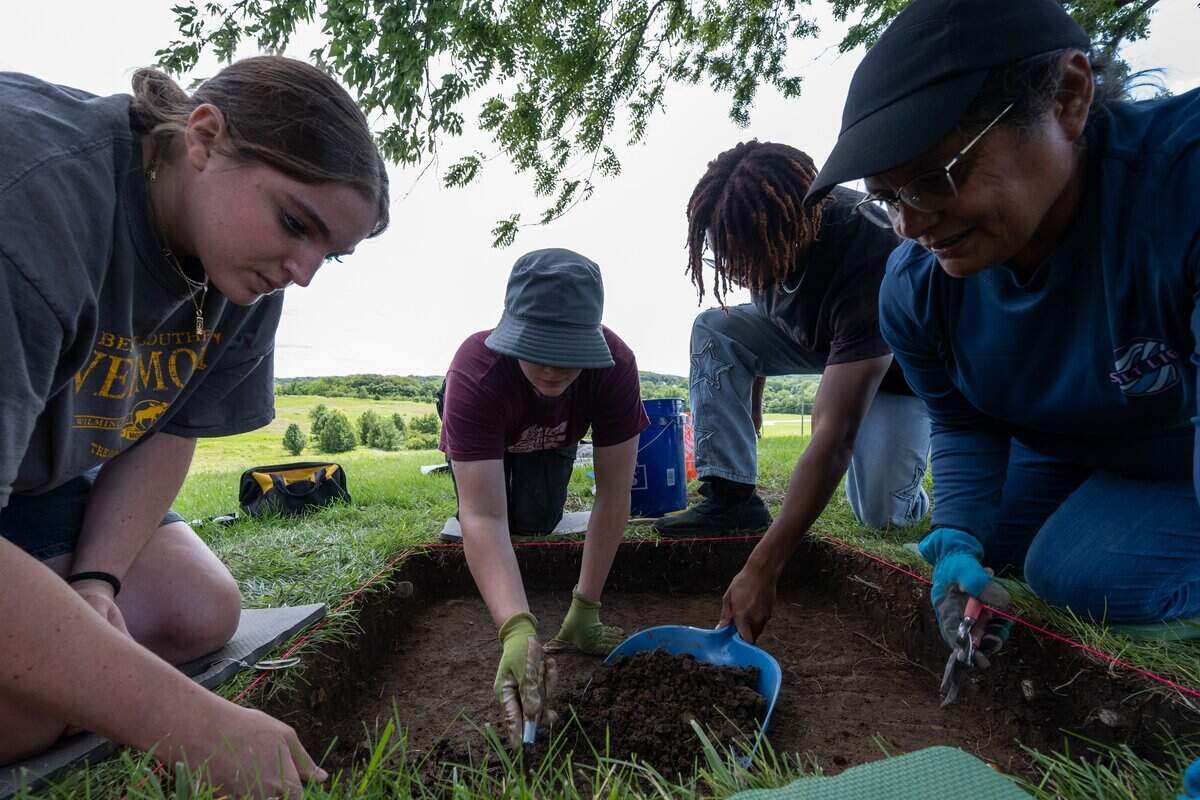
The footprint of the dig site seemed pretty small, though. It’s just an area a few feet from the cellar entrance, where students from the University of Missouri-Kansas City and the University of Central Missouri spent about three weeks digging four or five perfectly square sections about a foot deep into the earth.
‘Voices that have been silenced’
They found metal pieces, some nails and chips of pottery and brick that they bagged and will take to the lab to clean and study.
It’s tedious work. But for Julius Robertson, an archaeology student from Belton, it’s a project he said he felt drawn to “when I heard that enslaved people might have been kept in this cellar.”
Robertson, who is Black, but whose ancestral roots are not in American slavery, said that still he feels a kinship, and wanted to find evidence of enslaved Black people to “give a voice to the voices that have been silenced for a long time,” he said. “Now more than ever, we should be preserving this history.”
That will certainly take money to pay for the continued archaeological search of the site. And, Hagenbach said, “we are in desperate need of a masonry expert. Not just a mason but a dry-stack mason.” The cellar is arched with stone without mortar, so it requires specialized knowledge.
That must happen first. Raab said she and her students can’t spend hours excavating inside the cellar until an expert signs off on the integrity of the cellar ceiling and walls.
I certainly hope someone steps up to help with this incredible and important historical project. The likelihood is that evidence of enslavement on that site will be found somewhere in the dirt floor of that cellar.