
Laura Kelly’s death penalty decision will echo far beyond Kansas | Opinion
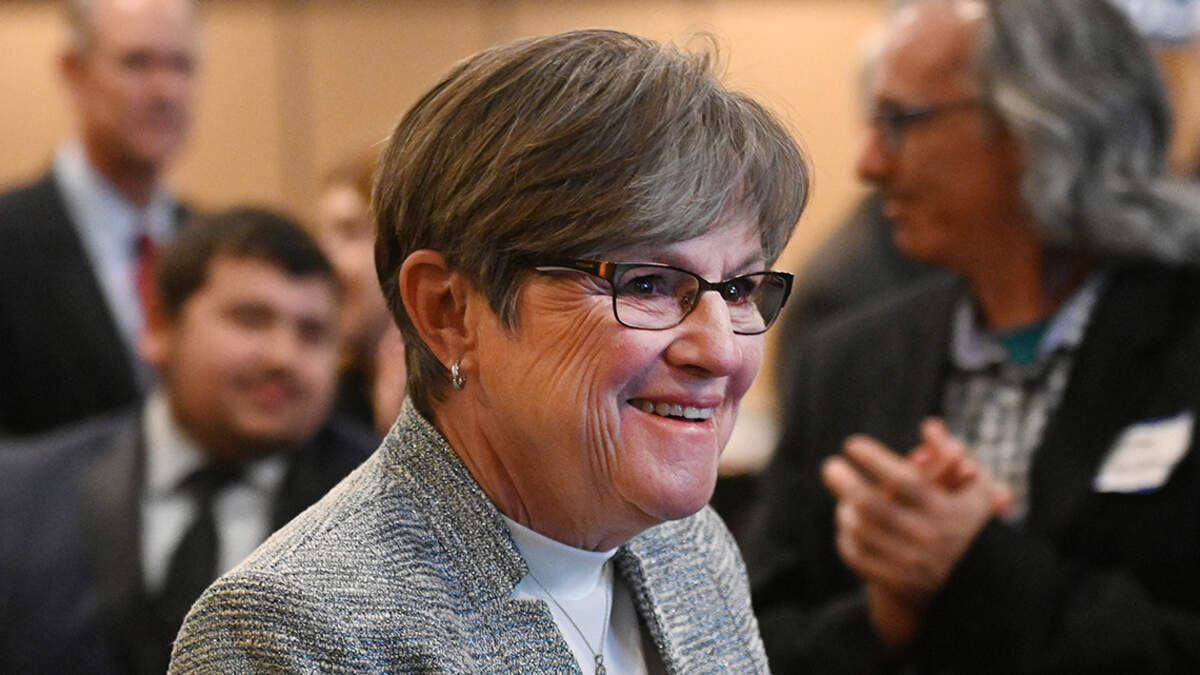
Kansas is not generally thought of as a death penalty hotbed. And for good reason.
While the Jayhawk State retains capital punishment, it has not executed anyone in more than 60 years. That is a stark departure from Kansas’ death penalty history. The state carried out 76 executions between 1853 and 1965.
Since 1965, the pause in executions in Kansas has lasted far longer than in any other death penalty state. And in the last three decades, only 15 people have received death sentences in the state.
But over the last two months, the death penalty in Kansas has been making headlines, spurred on by requests for clemency made by eight of the nine people on its death row. Included in the group seeking clemency are some of the state’s most notorious killers.
They are taking advantage of the fact that Gov. Laura Kelly is term-limited and will not be on the November ballot. In addition, she has called capital punishment “impractical, expensive and inhumane,” and believes that life in prison is a “harsher” punishment than the death penalty.
Moreover, Kelly has shown a willingness to use her clemency power for other crimes. It is now time for her to use that power to empty death row.
If she does, it would have a national impact.
It would offer an example and an inspiration to governors in places with much larger death row populations, such as those in California and Ohio. Like Gov. Kelly, California Gov. Gavin Newsom and Ohio’s Mike DeWine are also term-limited, and rumored to be considering mass commutations in their states.
Today, the death penalty situation in Kansas is epitomized by a political clash between Gov. Kelly and Republican Attorney General Kris Kobach, who is running to succeed her. Not surprisingly, Kobach has been very vocal in his opposition to clemency for any of the state’s death row inmates. On June 9, he issued a press release calling on Kelly to reject the pending clemency petitions.
The attorney general also held a press conference to turn up the heat on the governor. He was joined in that effort by family members of people killed by the people now seeking to have their death sentences commuted.
Kobach used that occasion to urge members of the public to join him in opposing clemency and to promote pro-capital punishment candidates’ candidacy for governor. “These families,” he said, “deserve a governor who will allow the death penalty to continue.”
Commuting the death sentences of people who commit heinous crimes is never easy for those with the authority to do so. That is certainly the case when, as is happening in Kansas, they include mass murderers. That difficulty is compounded when a chief executive considers a mass commutation, and because the responsibility for it falls squarely on those with the authority to bestow it.
As one federal court noted in a 1997 decision: “The very nature of clemency is that it is grounded solely in the will of the dispenser. He need give no reason for granting it, or for denying it.”
Michael DiSalle, former governor of Ohio, explained the burden of having such awesome power this way: “No one who has never watched the hands of a clock marking the last minutes of a condemned man’s existence, knowing that he alone has the temporary God-like power to stop the clock, can realize the agony of designing an appeal for executive clemency.”
If Gov. Kelly acts on her anti-death penalty convictions by commuting death sentences, she will set a political precedent and encourage other governors to follow her example.
Kansans are ready for her to do so. More of them now favor life without parole over the death penalty by a large margin. Granting clemency is a way of accomplishing that result for those who have already been sentenced.
Writing in 1833, John Marshall, the first Chief Justice of the United States Supreme Court, called clemency an “act of grace.” What he said then remains true today, and Gov. Kelly should show the power of such grace by extending it to those who showed no grace to their victims.
Austin Sarat is the William Nelson Cromwell Professor of Jurisprudence and Political Science at Amherst College in Amherst, Massachusetts.