
This Kansas City Pride Month, ‘Gospel is a Drag’ shows the power of faith | Opinion
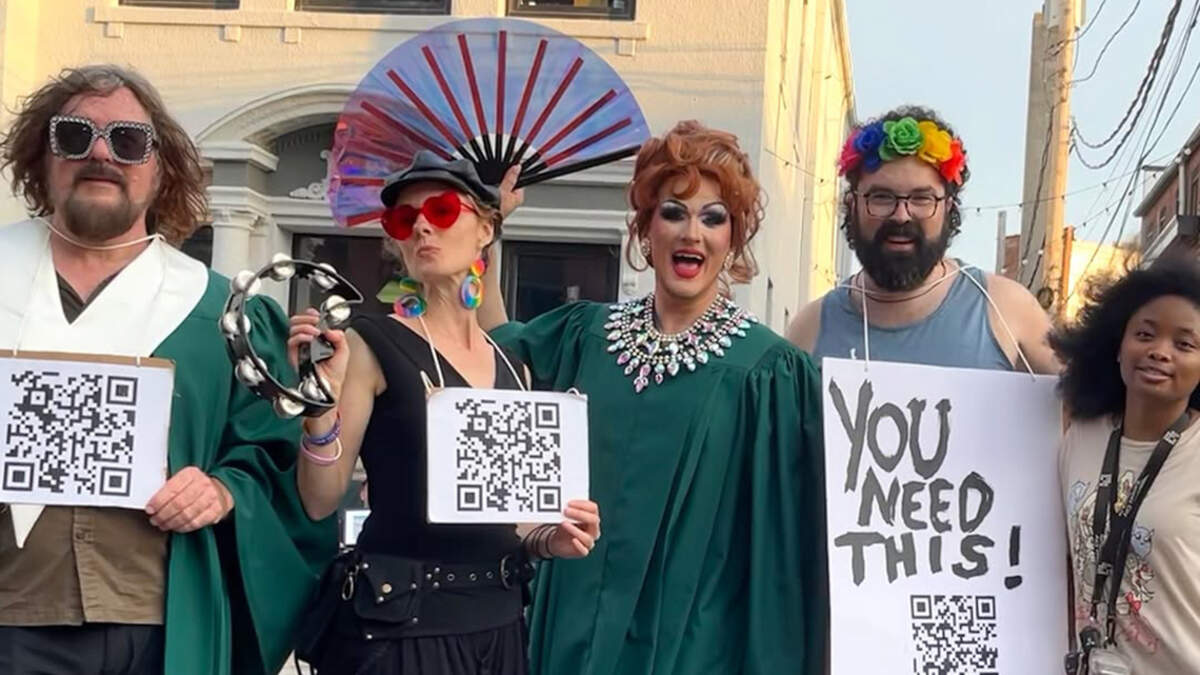
Like all queer men growing up in the Midwest, my relationship with the church has been strained at best. My personal trajectory through the heartland — navigating life from Indianapolis to Topeka, Columbia, and ultimately finding a home in Kansas City — has been a long process of understanding how the self is constructed in spaces that demand your erasure. This is precisely why Pride Month matters. This month, a powerful artistic pushback is happening right here in Kansas City throughout Pride.
“Gospel is a Drag”, an original new “infomusical” by Jerry Rapp running June 19–22 for its second weekend at The Arts Asylum, throws itself directly into this cultural fire. And drag is at the heart of Pride, especially within Kansas City — home to the iconic Hamburger Mary’s drag bar, several RuPaul’s Drag Race contestants and a nightlife legacy that stretches all the way back to Prohibition.
The timing is critical as politicians frame drag as an inherent threat, this production flips the script: What if a drag queen led a gospel choir? Rather than parodying sacred spaces, the show celebrates the craft of gospel music, proving the art form is not a corruption, but a vehicle for collective healing. It’s also fitting that the show debuted alongside the KC Pride Festival as it reminds us of what pride is supposed to be about in the first place—connection, community, and fellowship.
The play itself is set in the fictitious town of Squibbtown, Missouri, where a moralizing politician named Richard Cockson seeks to pass an ordinance banning drag. Gloria “In Excesses” Deo (played by Kansas City drag icon Ms. Tajma Stetson) and her gospel choir crash the town hall meeting, delivering a vibrant education on what drag actually is, its rich history and why it belongs in the community. There’s even a song devoted to the history of drag itself, an art form in which Missouri has long played a massive role. Amidst the high-quality acting and singing, the show delivers a powerful message.
In a moment of poetic justice, the production turns the weapon of moral superiority on its head. When Gloria confronts Richard over a series of thefts, a subsequent physical confrontation strips away Richard’s facade and profound hypocrisy. The very man attempting to legislate the community into oblivion is caught dead to rights violating his own rigid code, with Gloria aptly dubbing him “Dick.” It is a theatrical exposure of a truth queer Midwesterners know all too well: The loudest moral crusaders are often hiding their own complexities in the dark.
Watching Gloria on stage, I was instantly reminded of Chris King, a drag performer from Galesburg, Illinois, whose life story mirrors the protagonist. What King showed me in the real world is exactly what Gloria repeats on stage: Religion and faith can be powerful tools of healing, so long as they are not left exclusively in the hands of those who use them to exclude.
Following Richard’s exposure, the narrative shifts with Gloria standing before the audience to deliver a vibrant, defiant mandate: “Dressing to express yourself is not a crime. Drag is not a crime.” What follows is an unforgettable, gospel-style musical rebirth as the room erupts into a performance centered on the phrase “Free at last.”
In a very real sense, drag queens and performance spaces function as informal institutions. When formal structures — schools, legislatures and biological families — fail us, it is the subcultural infrastructure of the queer community that steps in. Performers such as Chris King and fictional heroes like Gloria act as living archives, preserving collective memory and providing the kinship required to survive.
The show serves as an urgent reminder that in this dark timeline, we need deep community connection — be it in a gospel choir, a drag cabaret, or a packed dance floor. Emerging into a post-COVID-19 world requires making intentional space for others, rejecting the cliquey gatekeeping that isolates us and prevents our growth and acting as a lifeline to those who carry the quiet desire to be chosen.
Spirituality can be anything we make it. For queer people carved out of the Midwestern landscape, finding our sanctuary means building it ourselves. “Gospel is a Drag” reminds us that our joy cannot be legislated away, and our spirit belongs entirely to us. Out of tragedy comes good art, and this is high art.
Christopher Thomas Conner is an assistant professor of sociology at the University of Missouri-Columbia and author of “The Gayborhood: From Sexual Revolution to Cosmopolitan Spectacle and Conspiracy Theories in New Times.”