
Kansas City, let’s use World Cup momentum to build a better transit system | Opinion
As Kansas City prepares for the World Cup, let’s pause to think about Atlanta.
Not the Atlanta of 2026, which is also a World Cup site, but the Atlanta of 1996, which hosted the Summer Olympics.
Beyond the pageantry and athleticism, Centennial Olympic Park is one of the most enduring legacies of the 1996 Atlanta Olympics. The 21-acre park, which is the site of Atlanta’s FIFA Fan Fest, remains what its website describes as a “central gathering place for the city … in the heart of downtown Atlanta.”
Centennial Olympic Park is an example of one city’s ability to capitalize on the long-term benefits of hosting an international sports spectacle — be it the Olympics or the World Cup.
At the KC Health Collaborative, we seek to advance health equity by exploring ways to address the social drivers of health. Those are factors outside the doctor’s office — such as access to quality education, stable housing and healthy food — that impact individual wellbeing.
Research tells us that social drivers account for approximately 80% of health issues.
A lack of public spaces to exercise is one underlying factor affecting individual health.
That Kansas City did not create something similar to Centennial Olympic Park is not the worst missed opportunity for the World Cup, given the city’s extensive park system.
The region’s biggest “clanger” — what the British would call a mistake on the soccer pitch — came from not establishing lasting improvements to public transportation.
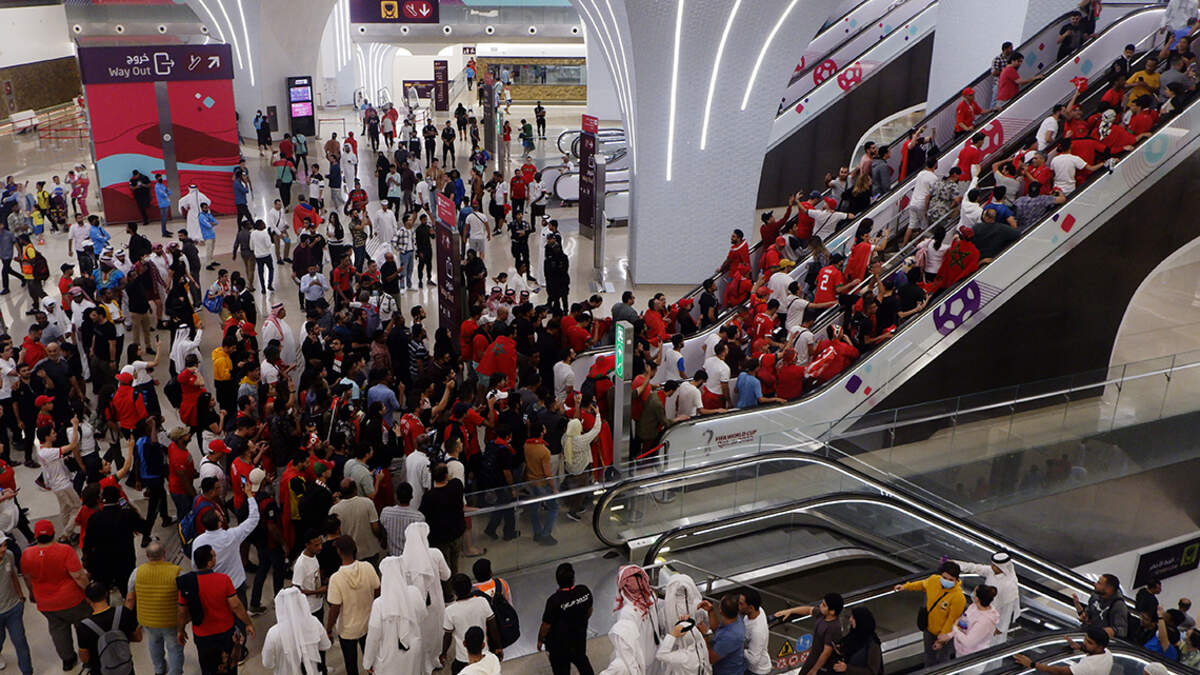
When it hosted the 2022 World Cup, Qatar’s immense infrastructure spending included the expansion of its Doha Metro system.
In Kansas City, we have a bus mall.
As KCUR reports, nearly 250 motor coaches will serve a central hub at 27th Street and Grand Boulevard. KCUR said transit options include a free route to the airport, a match day route to the stadium and a regional service connecting more than a dozen locations to the festival.
Public transit is another social driver of health. Many residents, for instance, rely on buses to get to and from jobs that help pay for all the necessities of maintaining a stable household.
Nevertheless, our region’s bus system is headed in reverse. Deep service reductions are in the offing, even as area governments pull out the stops for World Cup transport.
Johnson County, for instance, has introduced temporary free transport to and from the airport.
And the head of Kansas City’s host committee said last year that one goal was to cut down the bus trip between Olathe and Union Station from one hour and 40 minutes to a mere half hour.
Our call is for area officials to seize on the unifying regionalism sparked by the World Cup to devise a long-term solution for our chronically underfunded bus system. They have made noises to that effect. Now it’s time to turn words into action.
Surely our region’s elected officials — along with the extraordinary staff at the Mid-America Regional Council — can match the energy and creativity surrounding the World Cup to create a bus system we can point to with pride.
For that, they would deserve a gold medal.
Dan Cranshaw is the executive director of the KC Health Collaborative, a 501(c)(3) nonprofit that seeks to advance health equity by connecting patients, doctors, businesses, hospitals, insurance companies and community-based organizations to improve the lives of those in our region affected by health inequities.