Sen. Moran asks the right question on Russian oil | Opinion
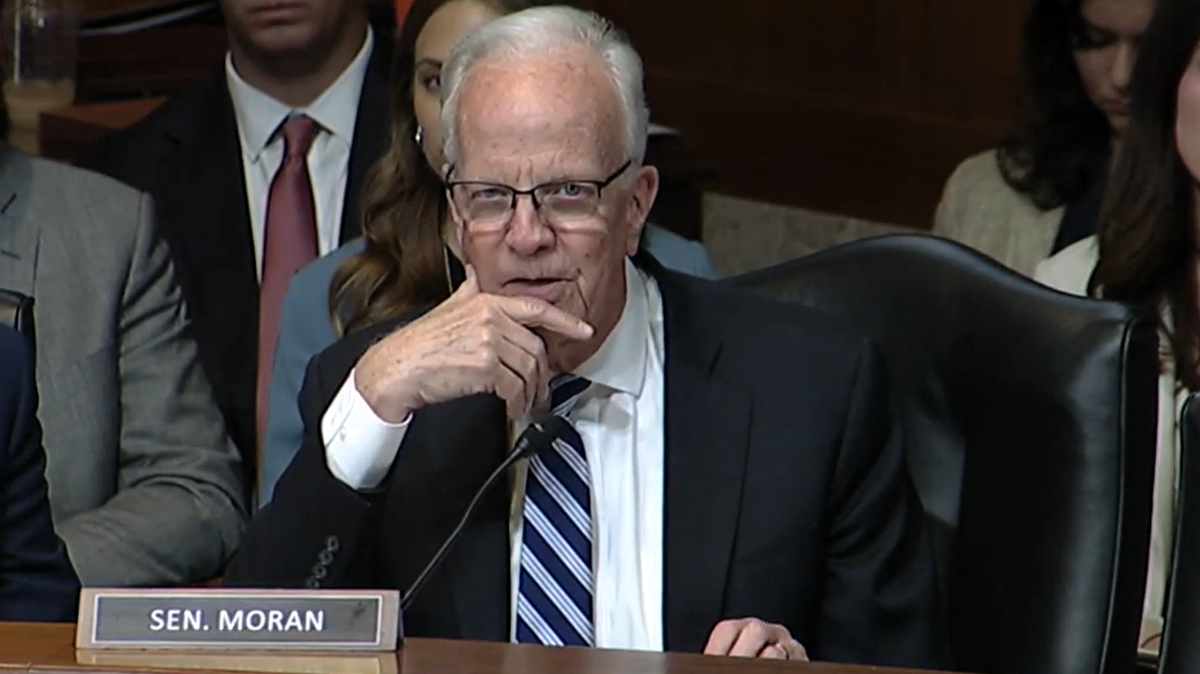
On Russian oil, Kansas Sen. Jerry Moran has begun asking the right questions.
This week, the Republican senator pressed Secretary of State Marco Rubio over repeated waivers of sanctions on the sale of Russian oil since the U.S. went to war with Iran.
Moran’s concern, and it’s a valid one, is that those waivers are helping Russia recover its strength as it continues to press a more-than-four-year effort to conquer the neighboring country of Ukraine.
“I’m concerned about the decisions that have been made on three occasions to issue waivers for Russian oil sales,” Moran said. “President Trump was right to impose those sanctions last fall, but the waivers provide Moscow with badly needed revenue, and I think make little difference to American consumers in the price of gas. But if Russia is struggling to make gains on the battlefield (in Ukraine), I don’t want them to have additional revenue assets to further their cause.”
Rubio’s answer was telling.
“These are short-term waivers,” Rubio said. “The permanent policy of the United States remains that those sanctions are in place. And the reason for the short-term waivers frankly is the trade-off.
“And that is that there are some countries around the world, depending on where they’re located, that are deeply dependent on the straits (of Hormuz) . . . and have no other way to get fuel if in fact those shipments are not getting through. This was a short term sort of decision to make more oil available in the global market to be able to address the needs that some of those countries are facing and to sort of stabilize global oil prices.”
What Rubio is basically admitting here is that because Trump ordered an attack on Iran, and Iran retaliated by closing Hormuz and effectively bottling up about 20% of the world’s regular oil supply, we now have to cozy up to a sleazy dictator, Vladimir Putin.
I’m sure it will be a great comfort to the widows and orphans in Ukraine that sanctions on Russia are still “the permanent policy of the United States” — on paper.
It gets worse.
China is the biggest buyer of the oil that normally comes through Hormuz. In mid-May, during his state visit to Beijing, Trump patted himself on the back for securing Chinese promises to buy U.S. oil to replace some of their lost supply.
“They’ve agreed they want to buy oil from the United States, they’re going to go to Texas, we’re going to start sending Chinese ships to Texas and to Louisiana and to Alaska,” Trump enthused, as quoted on CNBC. “They have an insatiable appetite for energy, and we have unlimited energy.”
The problem is, we don’t have “unlimited energy,” as the president claims. U.S. oil production is formidable, but not inexhaustible.
So before you join the president in cheering U.S. oil being sold to China, you might want to notice that concern for the American energy consumer is missing from the equation.
Selling U.S. oil abroad reduces domestic supply, resulting in higher prices here at home. It’s great for international oil company profits. For the average American motorist, not so much.
So props to Sen. Moran for bringing this up on Capitol Hill. Here’s hoping he keeps the conversation going until we get some relief.
If I may borrow a slogan from the administration, maybe it’s time we put America First.
This story was originally published June 5, 2026 at 5:13 AM with the headline "Sen. Moran asks the right question on Russian oil | Opinion."