Should Kansas City redesign US 71, or pay the neighborhoods it tore apart? | Opinion
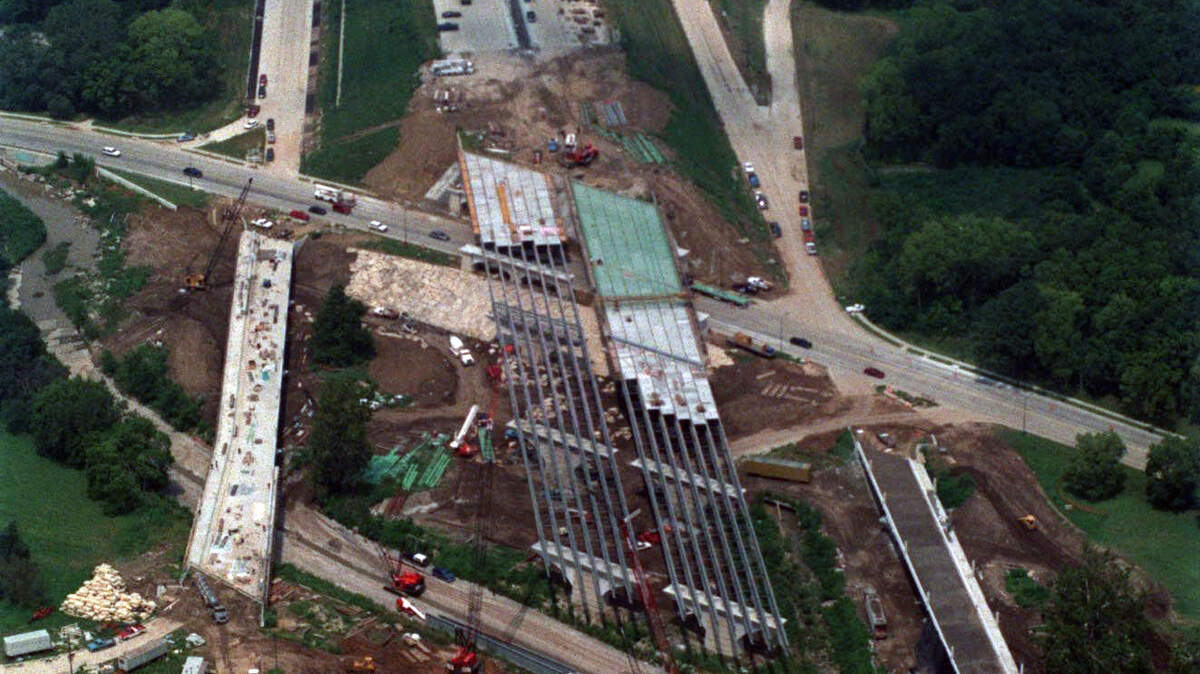
Nearly 40 years ago, Kansas City officials made a huge mistake that damaged a large swath of this city and left a nasty, painful wound smack in the middle of our predominantly Black community.
I’m talking about U.S. 71 Highway, a major north-south thoroughfare traveled daily by thousands of metropolitan area residents — most of whom probably have no idea of the history of the road or about how it has negatively impacted the communities it ripped apart.
Now the city — working with the Missouri Department of Transportation, the Mid-America Regional Council and members of the affected community — says it wants to repair the economic, social, health and safety problems caused when the roadway was built between 1987 and 200l, and in the 25 subsequent years.
That’s a great idea, and the plan should be about people first, with health, safety, and wealth restitution. Rebuilding 71 Highway sounds like an unlikely solution: more pie in the sky than reality.
However, it is a plan, and several proposals on the table are getting community attention. Residents can join the discussion at the next community listening session on the proposed project at 5:30 p.m. on April 7 at St. James United Methodist Church, 5540 Wayne Ave.
More than 8,000 people affected directly
The Black community, which 71 Highway splits, was vehemently opposed to the project when it was originally proposed. Predictions of long-term pain were made. No one listened, though.
The late Bruce Watkins, the city’s first Black City Council member, was opposed to the highway going through the Black community, and once described it as “Kansas City’s Berlin Wall.”
It opened in 2001 and displaced thousands of households. According to city history, officials knew from early studies that running a road through the East Side would directly impact more than 8,000 people. They did it anyway. And by the way, the NAACP estimated more than twice that many lives were impacted.
U.S. 71 Highway, ironically also called Bruce R. Watkins Drive to honor the late councilman, was never built for the people who lived in the neighborhoods it destroyed. It was built for area residents who wanted a convenient north and south pathway from growing suburban communities to downtown.
Indeed, displaced residents were paid for their homes demolished to make way for the highway. But many felt the compensation — an average of $15,000 for property and $3,500 for relocation — was insufficient and unfair. And of course it was. Community leaders have long argued that descendants of those impacted families deserve some restitution. I agree with that, and I’m not the only one.
Listening to community members
Alana Henry, executive director of the Ivanhoe Neighborhood Council, said she has heard many in that area, which was damaged by the road, say they don’t think any discussion about U.S. 71 should be had without first “discussing reparations for the people impacted in the past, those impacted now, and the kids it will impact in the future.”
She’s talking about the generational wealth lost when the remaining homes’ value sank, businesses closed, neighborhoods deteriorated and more. A major roadway through the community also resulted in negative impacts on the health of nearby residents, including higher rates of asthma, chronic heart disease and lung issues, along with sleep disruption, from noise and air pollution.
The city has already held several community listening sessions. Its Reconnecting the East Side website says more than 3,000 area residents have commented on building a better U.S. 71. City officials told me their main goal is meeting community priorities this time around.
My question is, which community? The 10.5-mile stretch of this roadway — from Martin Luther King Jr. Boulevard south to East 85th Street — runs through several neighborhoods. And even there, residents don’t agree on what a new U.S. 71 should look like, Henry said.
‘Physically restoring the heart of the East Side’
Unless the road goes away and the area is restored to green space, housing and neighborhood streets, it can’t physically be reconnected. And while that is apparently one of the suggestions on the table, I’m told by city and neighborhood leaders that it’s the plan least favored by residents. And I don’t blame them.
They worry that trying to put the 10.5 miles back the way it was would be too costly, take too long and therefore probably never happen. Don’t dare to dream.
Other proposals are to turn 71 into something of a boulevard, or make it a full-blown freeway by removing all the stoplights and traffic crossings. The inclusion of traffic signals on the road were ordered by a consent decree in the 1980s, and would take court approval to lift. Without that approval, the lights and crossings must stay.
I believe the city is well-intentioned and recognizes that placing Bruce R. Watkins Parkway where it did — without providing adequate support, guidance and investment into the disrupted communities to help them not only survive but thrive — was a huge mistake.
The Reconnecting the East Side site says “this project is about more than roads — it is about physically restoring the heart of the East Side, by listening to its residents, identifying early action projects, and framing a long-term vision that can be implemented over the coming years.”
I want the city to tread carefully moving forward. Money is available for studying the issue, hosting community listening sessions and designing a reconfigured U.S. 71. The city does not yet have the funds in hand to actually do any construction. And when I asked members of the project planning team, they didn’t know where that money would likely come from.
We all want to see 71 Highway made safe. None of us want to see money wasted studying and designing a project that, in the end, the city can’t afford to make happen. Maybe Ivanhoe residents are right and those dollars could be better used for reparations — this time, to directly help the people in those affected communities with housing development, business loans, health resources, added safety measures, neighborhood restoration and beautification. I hope those ideas are given hefty consideration.