
You can rest, civil rights old guard. Today’s revolution has been digitized | Opinion
The death of civil rights icon the Rev. Jesse Jackson got me and others in Kansas City wondering: Who is left among the old guard activists who championed the national struggle for social justice and equality through the 1960s and beyond?
And not only that, but if most of the older guys are gone — and they are — then who is carrying the baton now through these tumultuous times when the Trump administration seems bent on erasing Black history, denying criminal injustice, and unraveling public education and programs that help level the playing field for poor people and people of color?
These are areas where we as a country have made great gains, and not without the courage and blood, shed for decades by leaders for civil rights. While a lot has changed over the years, in many ways the fight for social justice, criminal justice, civil rights and democracy remains the same — because we are still fighting — even if it looks a lot different today than it did nearly 50 years ago.
But the answer to who’s leading the movement today is not so simple, and I’m not surprised.
The internet and social media play a major role in how today’s civil rights warriors are doing things differently, and believe it or not it works, and they have wins to show for it.
But before we get too deep into that, I want to recognize a few of the living old guard. And, for the sake of history, I’d mention that the Southern Poverty Law Center lists 41 martyrs on the Civil Rights Memorial in Montgomery, Alabama, including famous leaders and rank-and-file activists who were killed during the peak of the movement from 1954 to 1968.
- Andrew Young, who stood on the balcony of the Lorraine Motel in Memphis with the Rev. Martin Luther King Jr. the day he was shot, still chairs the Andrew J. Young Foundation, which focuses on global economic development, peace and education. Young is 93.
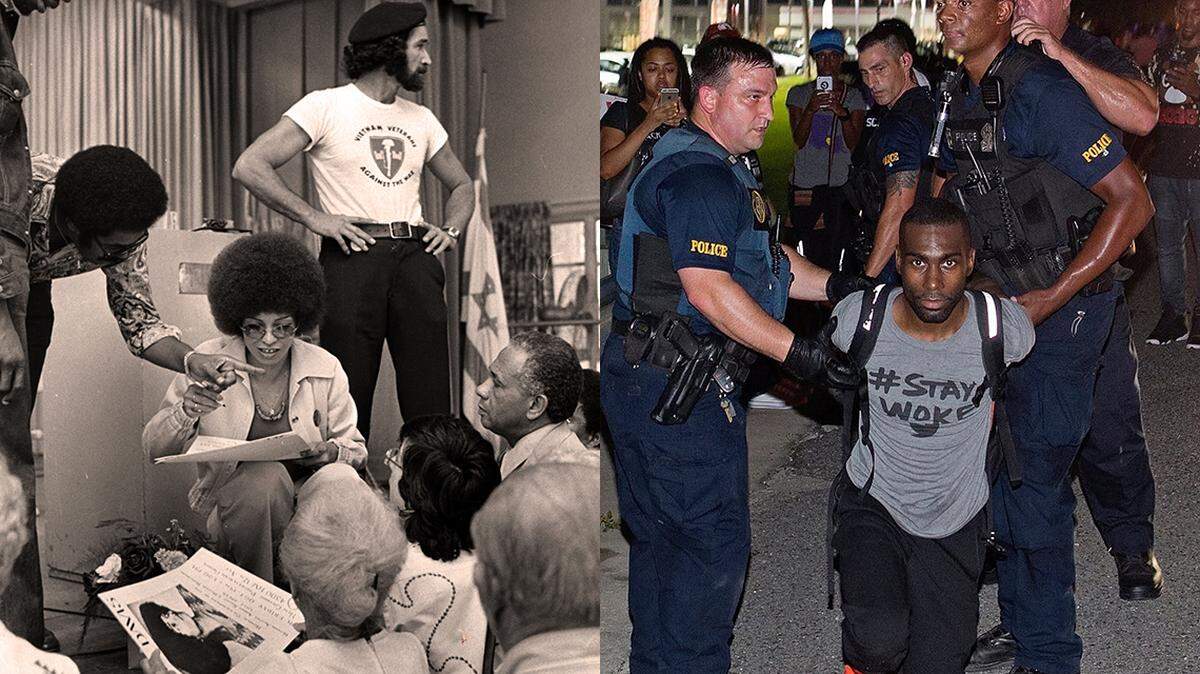
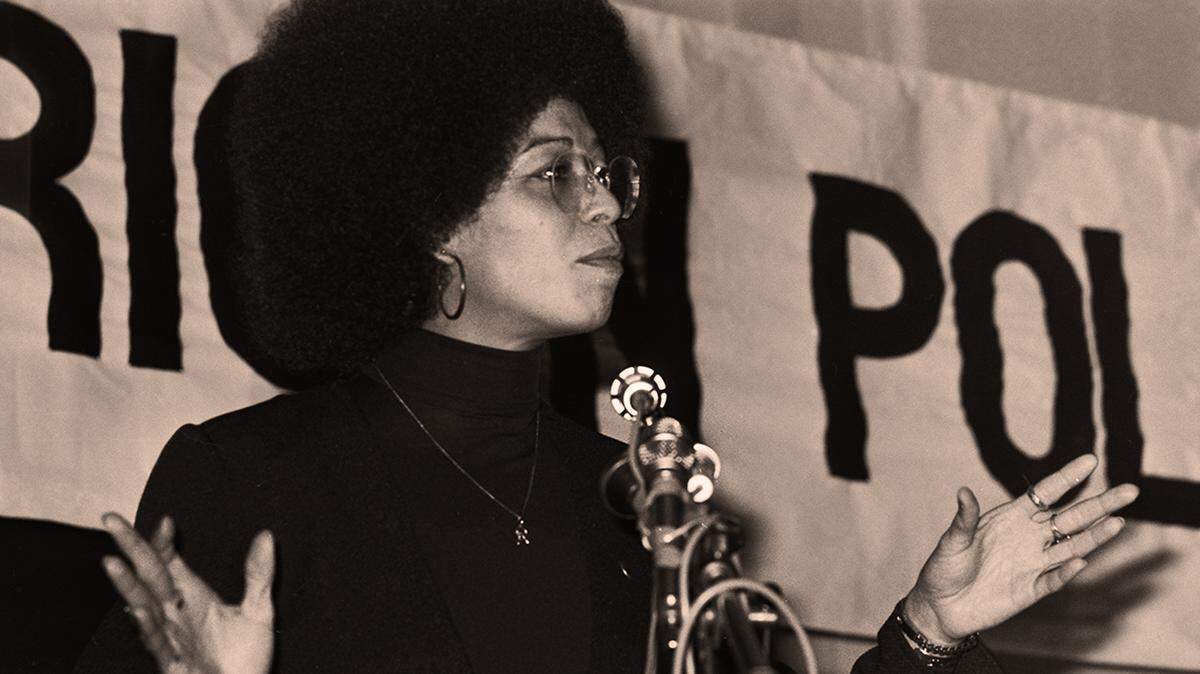
- Angela Davis, known for having been a fist-pumping, outspoken advocate for civil rights in the late 1960s, is a prominent scholar in the History of Consciousness and Feminist Studies departments at the University of California, Santa Cruz. Davis is 82.
- Xernona Clayton Brady, in the mid-1960s, worked as an undercover investigator for the National Urban League to identify racial discrimination, and later with King, David Abernathy, Joseph Lowry (all deceased), at the Southern Christian Leadership Conference or SCLC. In 2023, a statue in her honor was erected on Peachtree Street in midtown Atlanta. Brady is 95.
- Bobby Seale, who identified as a revolutionary during the 1960s and founded The Black Panther Party along with Huey P. Newton. Seale is 89.
- Kathleen Neal Cleaver, the wife of activist and Black Panther Eldridge Cleaver, carried her parents’ torch for social justice activism into the Civil Rights Movement as a secretary for the Student Nonviolent Coordinating Committee in 1966. She joined the movement as momentum began shifting from nonviolent to Black power. Cleaver is 80.
There are others for sure, but most of them — including our local civil rights leaders such as U.S. Rep. Emanuel Cleaver; Bishop James Tindall, who founded Kansas City’s Urban Summit; and activist Alvin Brooks, all still in the fight in some capacity — are in their 80s or older. Cleaver is 82, Tindall is 83 and Brooks is 93. Even the youngest among the old guard are in their 70s.
I learned, after talking with Congressman Cleaver recently, that while there were specific faces that became synonymous with the 1960s movement, there were many others vital to the efforts, but whose faces were rarely seen. The movement, he said, has always been approached from many angles.
Back in those days, Cleaver said, he and Jesse Jackson were the young guard expected to take the movement beyond the streets where most of the early change was forced through marches and sit-ins, boycotts and fiery speeches — not just from King, but also others whose methods did not always align with King’s nonviolent movement. They were activists like Davis, Seale, Malcolm X and Eldridge Cleaver.
What did align, Cleaver said, was the goal: a demand for social justice, voting rights, civil rights and change. The methods may have been different, he said, but “they did work together,” even if it wasn’t planned.
“All the founders of the SCLC are gone,” Cleaver said. And even those mentored by those who have passed on, like him and the Rev. Al Sharpton, 71, and founder of the National Action Network civil rights organization, are no longer “in the street,” protesting and marching.
That wasn’t the plan anyway, he said. The freedom fighters who started the movement “were brilliant visionaries.” They knew, Cleaver said, that once they won the Voting Rights Act and the Civil Rights Act, the fight would have to move into the halls of justice and democracy.
From marching to social media
The plan always was to gain seats in Congress, on the Supreme Court of the United States and to win elections as mayors, city council members and school board leaders in cities around the country.
As of January 2026, a record-setting 67 Black lawmakers are serving in Congress, the highest number in U.S. history. More than a third of the country’s most populous cities are governed by Black mayors. Black leaders today are also sitting at the helm in corporate boardrooms and at social service organizations. Many of those people in positions of power, Cleaver said, are part of today’s movement for civil rights.
He even put Black journalists working for legacy press in the mix. “You all are part of the new civil rights front,” he said. “You guys are the translators helping people to see what’s happening and understand what is going on.” Of course, the Black press has always been a civil rights fixture.
However, nowadays social media and online communication, which don’t expose users so directly as much as public speeches and march-leading did during the 1960s movement, are the new chosen methods of protest among young leaders. It appears Gil Scott-Heron was right that “the revolution will not be televised,” because it’s been digitized.
That doesn’t mean the movement doesn’t exist. It’s just bellowed from different podiums — Instagram, Bluesky, Threads and others.
But it is no less effective. Some would say the opposite is true. A message spreads across the nation in an instant. But because so many are championing their own pet social justice message — police brutality, voting rights, housing access, the wealth gap, equity in education — through online platforms, no one is naming, no person or group is claiming to be the young leader or leaders of today’s civil rights movement. It’s more of a collective.
Messiah-type leader doesn’t exist
To me, that sounds a little like the fight for justice coming from all angles that Cleaver described as going on even in the 1960s. Only today’s leaders, if you must call them that, aren’t moving as a group from city to city.
“The Messiah-type civil rights leader does not exist today. Those times are gone,” said Gwen Grant, president and CEO of the Urban League of Greater Kansas City. “We are in a different time, and it calls for different methods.
“Before it was in the streets and at the lunch counters,” Grant said. “These young people today are leveraging power through social media. The purpose is to motivate people to use personal power to make a difference. I embrace that.”
It’s not the method but the end goal that needs to align. Why would any social justice activist not see the power in social media as a protest tool? It enables rapid, decentralized organizing and global amplification of local causes and actions. From webinars and virtual organizing meetings to calls for a boycott and global virtual fundraising campaigns — like the $1.5 million raised in a four-hour virtual call out for Kamala Harris in 2025 — the use of social media has been a game-changer.
Last year, Pastor Jamal Bryant of New Birth Missionary Baptist Church in Georgia, and an activist, started the Target boycott through online messaging that went viral, protesting the retailer’s decision to roll back DEI initiatives and calling for folks to not shop at the stores. Foot traffic in stores across the county dropped significantly and sales went into a nosedive.
Voting rights activist Stacey Abrams used digital media to help register people to vote across Georgia and to amplify her message that voting is a way to advance change.
DeRay Mckesson, executive director of Campaign Zero, a social justice organization, is known for his online presence, podcasting and his social media and on-the-ground work with the Black Lives Matter movement after 18-year-old Michael Brown, who was unarmed, was killed by a police officer in Ferguson, Missouri, in 2014.
The point is that while many of us can identify old guard civil rights leaders — give them their props and recall their sacrifice — today’s generation of civil rights leaders mostly maneuvers in a digital revolution. These leaders are not so easily pointed to. And they say they would rather not become targets of those who don’t share in the fight.
What’s not so different from legacy protest is when an issue such as law enforcement murdering unarmed people calls for a lot of noise, all at once, people don’t hesitate to take it back to the basics of marching in the streets with signs and chanting with fists in the air.