Country lawyers are an endangered species in Kansas | Opinion
.JPG "Chase County in central Kansas has a lovely courthouse, but it has fewer than two attorneys per 1,000 residents, according to a report commissioned by the Kansas Supreme Court.")
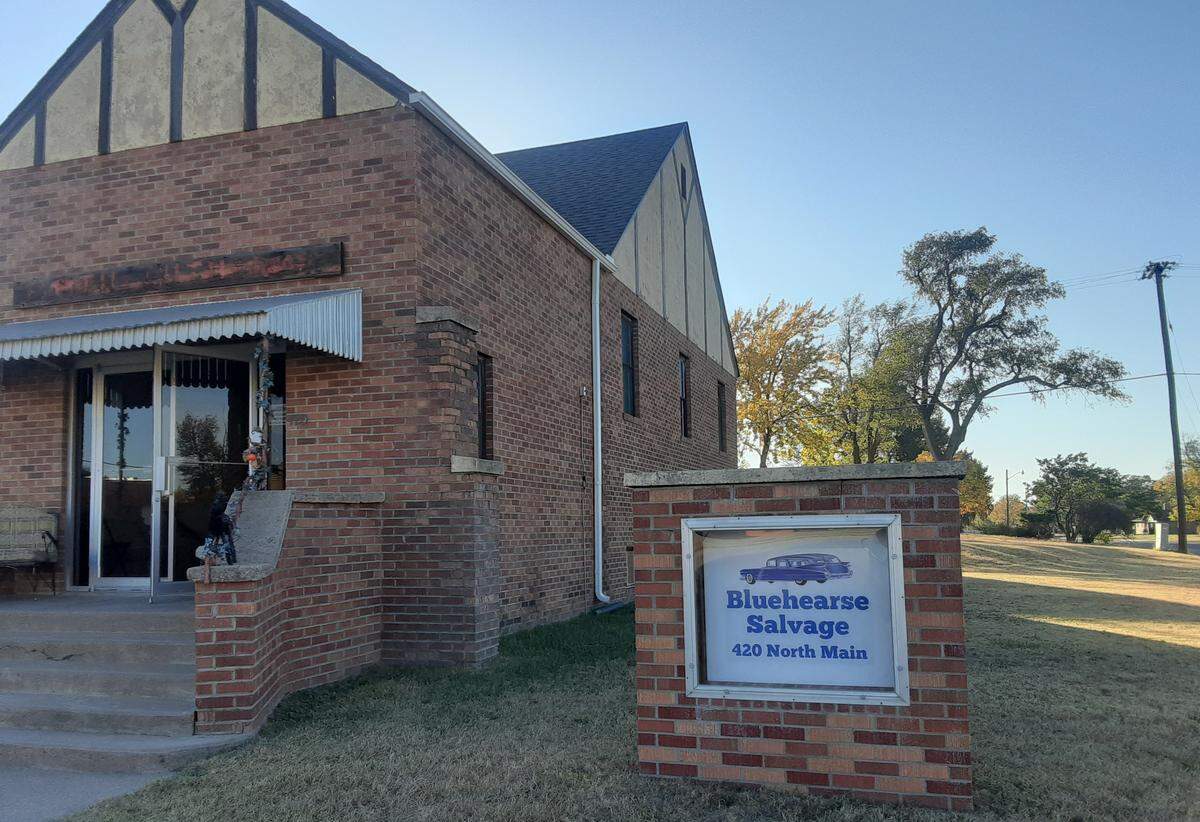
When Dorothy Tobe and Mike Rosseau bought a long-vacant church building in St. John to convert into their home, they moved in to opposition from the owner of a business nearby.
They needed a lawyer, and they couldn’t find one — a common occurrence in small towns across Kansas.
The business owner who wanted Tobe and Rosseau out had deep connections with the city government. The couple found themselves homeless and being prosecuted as criminals, for allegedly violating the city zoning code by sleeping in the church while they worked to convert it into a habitable dwelling.
“It was a terrible experience,” Tobe said. “I would say I called at least 20 or 30 different law offices. I could not find an attorney who knew anything about city, municipal law. It would have been easier if I was looking for a divorce or, you know, personal injury attorney.”
Some law offices said they were too busy. Some didn’t even bother returning calls. Some said they couldn’t legally take the case.
“The one or two of the firms in Great Bend, the city of St. John at one point had used some of these attorneys,” Tobe said. “There was a conflict of interest, so there was no possibility of their helping me.”
More about Tobe and her husband in a minute, but the plight they faced illustrates a major problem facing rural Kansans — a shortage of lawyers in the Sunflower State that’s making it hard to find justice, especially in out-of-the-way small towns.
Lawyer shortage bad and getting worse
It’s the kind of problem that’s difficult for the average Kansan to grasp, when it seems like every other commercial on TV is for one law office or another. Hardly anybody ever thinks about the supply of lawyers until they get in trouble and need one.
I spoke about this with two members of the Kansas Supreme Court last week, acting Chief Justice Eric Rosen and Justice K.J. Wall, who chairs the court’s Rural Justice Initiative Committee.
They said the data shows the problem is very real and it’s getting worse. A report compiled by the committee last year spells it out:
“We are on the verge of a constitutional crisis as individuals struggle to find attorneys to represent their legal interests and judges reach out to attorneys hundreds of miles away to represent indigent clients,” the report states.
About 45% of the state’s population live in rural counties. But only 21% of Kansas attorneys practice there, the report said.
The data collected in the group’s report is thorough and it is stunning.
“In 2006, the number of new attorneys peaked at 509,” the report said. “That number fell to its lowest point in 2018, when only 230 new attorneys were admitted. In 2023, there were 380 new attorneys admitted in Kansas.”
That’s not going to be enough going forward.
There are 6,864 attorneys in Kansas. Of those, 2,375 — a little more than one out of three — are over the age of 60, according to statistics from the University of Kansas Institute for Policy and Social Research.
Under 35 is the smallest age bracket, 921 attorneys, or 13% of the total.
“This data suggests the active attorney population in Kansas will continue to decline,” the report states. “And rural Kansas will be hit the hardest.”
Meanwhile, Kansas City, Mo., is like a lawyer magnet. The report found that 2,335 attorneys live in Kansas but work on the Missouri side of the state line — more than all the lawyers in rural Kansas combined. Full disclosure: My son Braden is one of them. He lives in Fairway and works for a firm in the Crown Center.
And it’s not as simple as just having lawyers from the cities drive out to the rural communities when the need arises. The state’s urban counties also are facing their own lawyer shortages, though not as acute as in the Kansas outback, Rosen said.
Wyandotte County doesn’t have lawyers for appointments, he said. “So while they instituted a public defender program, they’re overflowed . . . So it’s just a crisis, not only in rural Kansas, but in our urban centers.”
Wichita attorney Kelly Schodorf has lived it. She and partner Anna Jumpponen founded their own law firm, SJ Law, in 2021.
“We’re running out to all sorts of counties,” where people can’t get legal help, she said. “There’s just a major shortage.”
But even though SJ Law added a third attorney, the Wichita workload also expanded and the firm has had to cut back on accepting clients in far-flung locations. “Now we’re just too busy,” she said.
Schodorf said SJ Law gets about 15 calls a day from people referred by other law firms. “Everybody’s at capacity.”
Short-term and long-term solutions needed
The Supreme Court justices recognize that the problem has been developing over time and will require short- and long-term solutions.
For the short term, the Supreme Court is backing two bills in the Legislature, Senate Bill 214 and House Bill 2174.
The bills are similar in content and contain two main provisions:
- Creating a state-sponsored training program for rural lawyers, offering up to $30,000 in student tuition assistance at the state’s two law schools, KU and Washburn University — expanding on private foundation-funded efforts already underway at Washburn.
- The second component would provide new attorneys as much as $20,000 a year for five years to pay back student loans if they agree to practice law in rural Kansas for that period of time.
The programs are modeled after existing programs that steer doctors and veterinarians to underserved rural areas of the state.
Rep. Ken Rahjes, chairman of the House Agriculture and Natural Resources Committee, introduced HB 2174. He lives just outside Agra, a town of about 200 just south of the Nebraska border, about halfway between Kansas City and Denver.
“In my district, we have a lot of attorneys that are single practitioners that are going and traveling, you know, 100 miles to represent a client, or to be assigned by the court to go help,” Rahjes said. “You know, we all love to make lawyer jokes, but you need to have somebody who understands the law in these counties. And the other thing we’re running into is a lot of these smaller counties have one attorney, and it’s hard (for them) to represent (local clients), because they may have done business with both parties” in a dispute.
In the long term, it’s about convincing young attorneys that they can have a fulfilling and financially secure career as a country lawyer.
“We found that there is a big misunderstanding about the nature of rural practice, when in fact, there are incredible opportunities,” Wall said. “And we have a lot of folks that are running practices that are as successful, if not more successful, than folks in our urban centers.”
But in surveys of recent law-school graduates, most wanted to gravitate toward urban areas.
“A lot of the people we talk to are concerned about being isolated professionally if they go out and set up shop in southwest Kansas: ‘Am I going to have somebody to help me go from a relatively green attorney to a seasoned professional?’” Wall said.
To counter that, “we’re starting to build out some of those networks . . . the Patterson Family Foundation granted a $1 million dollar grant to Washburn Law to expand paid summer internship programs across the state, so our law students can get better exposure to practicing in those areas — and to build a network where our rural attorneys can have a voice and begin to develop programs and materials that just help them practice in a rural setting.”
A key advantage of being a rural lawyer is you have more control over your practice than you would at a larger firm in the city.
“Because you’re setting your hours, you can begin to specialize in areas that you’re interested in,” he said. “So it’s an incredible opportunity that exists. But part of the work that we needed to do is to educate folks about that reality, because there is a misunderstanding that there isn’t money in the rural parts of our state and that the practice opportunities are not diverse, when in fact our data shows the opposite.”
Which circles us back to the story of Dorothy Tobe and Mike Rosseau, and how they finally found a lawyer: I wrote a column about their travails in St. John and an attorney contacted me and asked me to pass his contact information along to the couple.
I did.
Once they got legal representation, the city dropped the criminal zoning charges against them without explanation.
For about a year, the couple attempted to get a zone change or variance, sleeping in their real estate agent’s guest room and spending their days at the church they owned.
They finally got to move in via a legal loophole. St. John city code allows dwelling units above downtown businesses, so they declared their basement an online sales business and put a business sign in their front yard.
So the moral here is that if you have a case so compelling in its injustice that it becomes front-page news in the state’s largest newspaper, you can probably get a lawyer in rural Kansas.
That’s not good enough.
Both Senate Bill 214 and House Bill 2174 received hearings in their respective chambers this year, but didn’t come to a vote — partly because the proponents needed time to educate legislators on the problem and partly because the session was shorter than in recent years.
Legislative sessions technically run two years, so both bills remain active and can be voted on any time after the lawmakers return to the Capitol in January. Passing one bill or the other should be at the top of the agenda.
Bills dealing with courts and lawyers are nearly always processed through the House and Senate Judiciary committees. But the rural lawyer bills are being handled by the Agriculture committees, which by nature are more concerned with rural issues.
Rahjes said he expects movement on the legislation in the upcoming session.
“We’re working with our colleagues in the Senate try to get a buy in, and to also get their suggestions of what will work,” Rahjes said. “I want to do it right. I don’t want to rush something through, and then we’re a few votes short because we didn’t answer enough questions.”
Whether you’re facing criminal charges or are a party in a civil case, “You need to have that opportunity to have counsel,” Rahjes said. “The bottom line is justice.”
The pending legislation may only be the start of bringing justice to the remote areas of Kansas. But it has to start somewhere.
This story was originally published November 15, 2025 at 6:21 AM with the headline "Country lawyers are an endangered species in Kansas | Opinion."
CORRECTION: This story has been updated to reflect that acting Kansas Supreme Court Chief Justice Eric Rosen said Wyandotte County doesn’t have enough lawyers for appointments. An earlier version of this story stated the wrong county.