
Our approach to crime isn’t working. Go back to the policies of the 1980s | Opinion
You’d be well within reason to ask what is happening in America, amid a breakdown in civil discourse and law and order. A major political figure was assassinated in the midst of peaceful discussion. Meanwhile, in order to tackle the crime and disorder in cities across the country, our president has deployed the National Guard, first to Washington, D.C., and now to Portland, Oregon, and likely to other cities soon — moves that have become highly contentious in certain quarters.
Drawing upon my experience working on criminal justice issues, as a former Kansas state senator for 28 years, as a member of the Commission on Accreditation for Law Enforcement Agencies and as chairman of the U.S. Parole Commission and ex-officio commissioner of the U.S. Sentencing Commission, I feel perfectly qualified to speak out on the subject today.
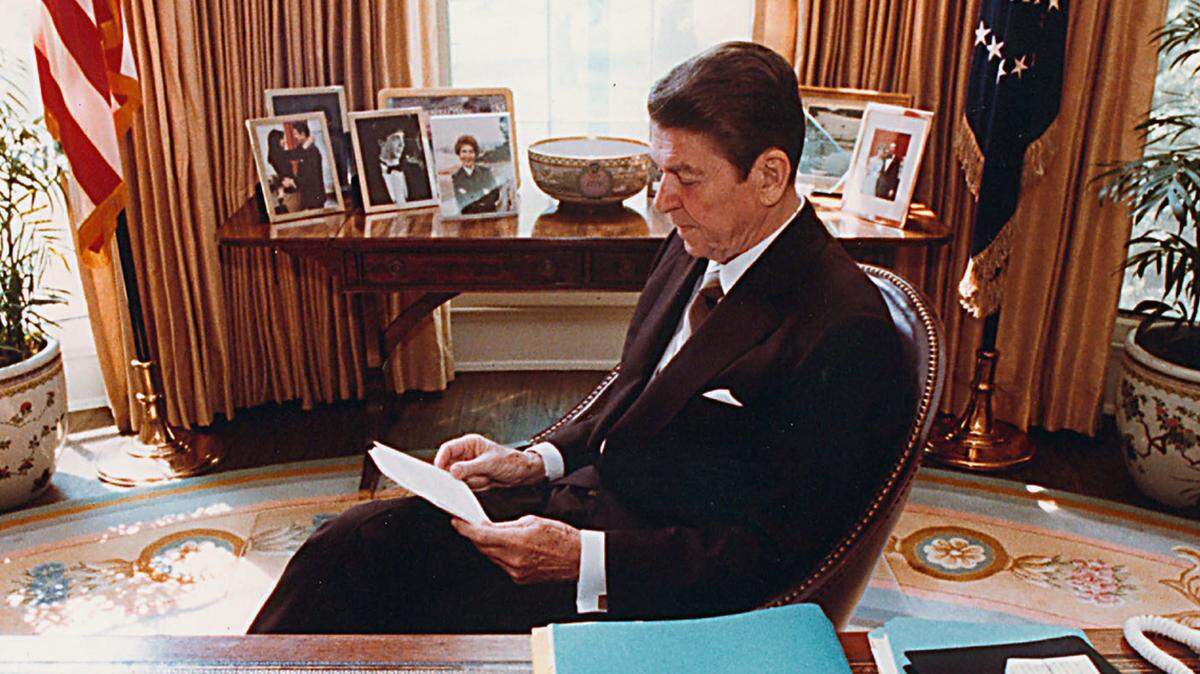
I came to the nation’s capital in 1992 to head the U.S. Parole Commission. I was given the mandate to close that very body by November 1997, when it was to be replaced by the U.S. Sentencing Commission. These two commissions were key subjects of the Reagan-era bipartisan criminal justice reforms — namely the Comprehensive Crime Control Act of 1984 and the Sentencing Act of 1987. President Reagan and the Democratic-run Congress were reacting to the epidemic of violence associated, as many readers will know, with crack cocaine and heroin.
Sentencing guidelines altered
The president appointed a Sentencing Commission with the charge by Congress to create federal sentencing guidelines, which replaced the more subjective system that prevailed before. This resulted in the implementation of mandatory minimum sentences, which became very controversial. Judges had a limited prerogative to deviate from the guidelines, and consequently, many young offenders and others received mandatory sentences requiring that 80% of statutory terms of incarceration be served. Meanwhile, the U.S. Parole Commission was stripped of its jurisdiction over most people who committed federal offenses after Nov. 1, 1987.
It was my job to see to it that the Sentencing Commission replaced the Parole Commission entirely. In 1996, I reported to then-Attorney General Janet Reno that we were on schedule to do just that. Our efforts were disrupted when we learned that Congress was preparing to close down the D.C. prison in Lorton, Virginia, and to therefore move thousands of new prisoners into the jurisdiction of the US Bureau of Prisons. Most crimes in Washington, D.C., are under federal jurisdiction and handled by the Superior Court of the District of Columbia. The 1980s legislation was not applicable to many of these prisoners, who still maintained eligibility for parole review. In view of the new workload thereby presented, we obtained several extensions for the U.S. Parole Commission, which is still in existence.
My mission from Congress during the 17 years I served on the Parole Commission was clear: to get tough on crime. And I have the battle scars to prove it, including multiple break-ins and even threats to firebomb my home. But I consider my sacrifices to have been worth it: We achieved peace and security for ordinary Americans of a kind not seen for decades before or since.
Now let’s consider where we find ourselves now. The federal sentencing guidelines have been altered, providing judges with more opportunities to adjust sentencing. We have experienced the easing and undoing of what Congress intended to accomplish with the 1984 and 1987 legislation, and seen a return of not only rampant drug abuse but also the return of random acts of all kinds of violence.
Crime in recent years has subjected countless Americans to insecurity, and in many areas a reluctance even to go out at night or into the cities. We have witnessed the rise of repeat offenders, who are let out by certain district attorneys on no cash bail, and not subject even to parole supervision. Because of lax enforcement by multiple jurisdictions, countless Americans have been subjected to horrendous acts of violence, including carjackings, murders while taking a walk in the park and brutal attacks while riding on our public transit systems, just to name a few examples.
Judges, prosecutors too lenient
The perception by a majority of Americans today is that crime is epidemic, and in many cases the type of crime is of even greater concern. As a result, crime has once again come to the fore of the U.S. political and policy agenda.
So, where are we today? Crime will always be with us, and bad people who don’t comport to a civil society or have respect for law and order will always be present in America. We, as public servants, be it legislators, members of Congress or officials in the executive branch have been given the charge in our oaths of office to preserve, protect and defend the God-given rights of all Americans to life, liberty and the pursuit of happiness.
In the grand scheme of where we find ourselves today, we are exactly where I worried we might end up when I came to Washington some three decades ago. The federal sentencing guidelines prescribed that “if you do the crime, you will do the time,” instead of allowing for all manner of modifications by judges and even negligence to prosecute at all by prosecutors. The return of subjective and politically driven prosecutorial lenience has resulted in a significant increase in crime.
This should make obvious the need to reinforce the 1980s sentencing reforms. We don’t even need another law — just a commonsense, proactive return to the civil, bipartisan approach the Democratic Congress and President Reagan adopted decades ago to address the rampant crime in America.
Edward F. Reilly served as a Kansas state senator for 28 years. He was formerly a member of the Commission on Accreditation for Law Enforcement Agencies and U.S. observer to the International Peace Fund for Northern Ireland.