Charlie Kirk aftermath: Speaking without fear and moving forward | Opinion
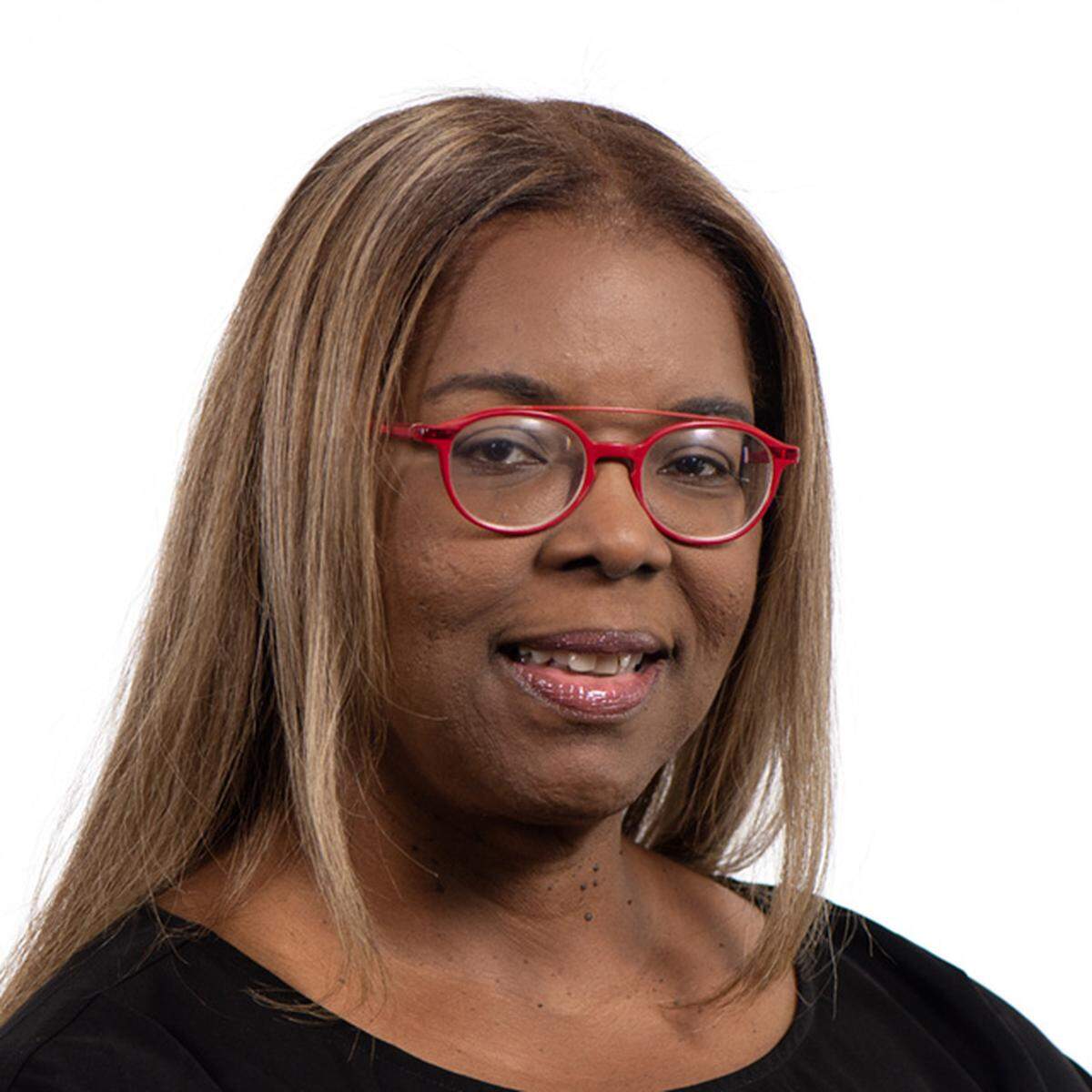
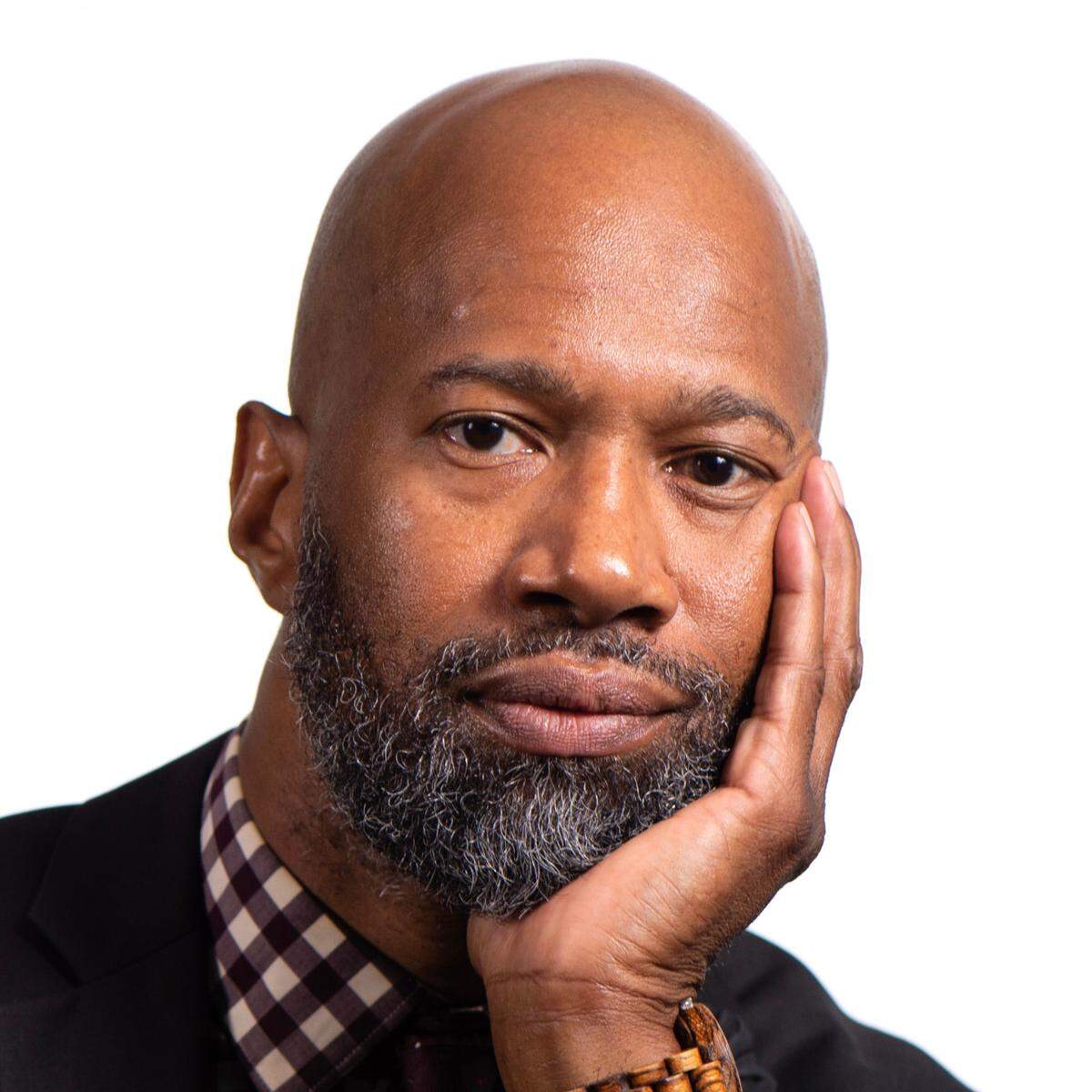
Toriano Porter and I participated in American Public Square’s “Diversity, Equity, Inclusion and Controversy” panel conversation Tuesday night, not even 24 hours before conservative icon Charlie Kirk was shot and killed. As I reflected on this, I realized that one of the questions I didn’t get to ask because of time is possibly the most important, in light of Kirk’s tragic death on Wednesday.
“Is this conversation too dangerous to have? How do we create space for dialogue without shutting people down?”
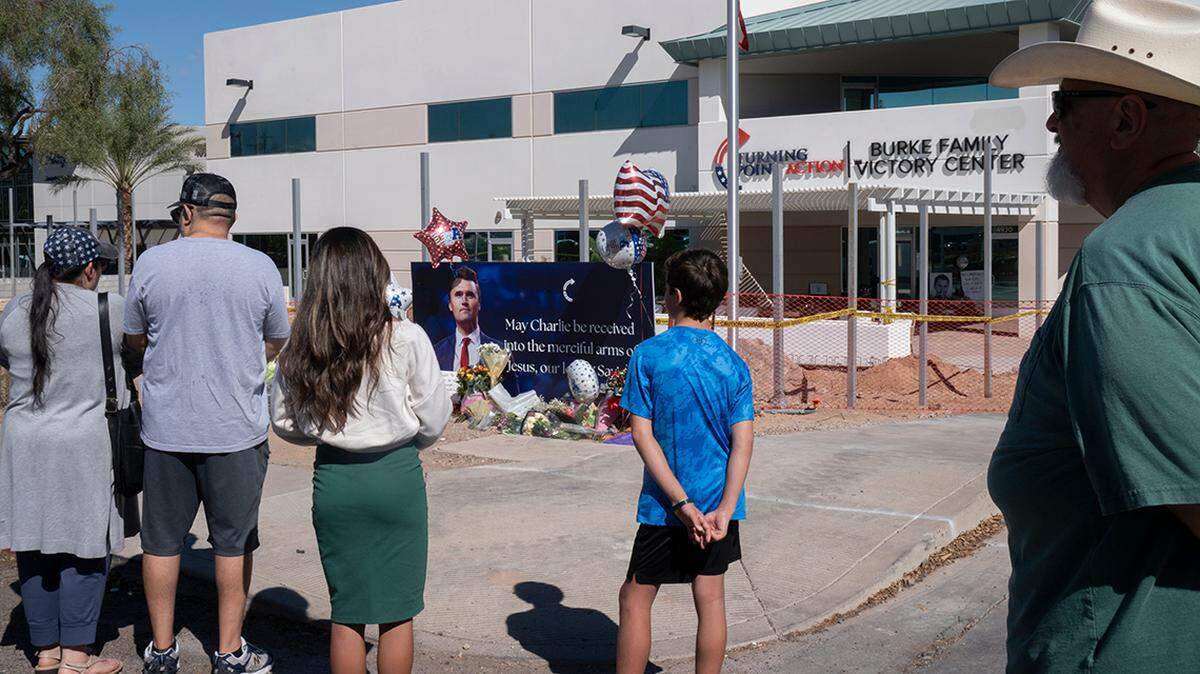
Kirk died after he was shot in the neck at an event at Utah Valley University. He was speaking about free speech at the time of the shooting. As of this writing, we don’t know whether the shooting was politically motivated.
Kirk’s death has shocked the nation. And yes, it’s true: I couldn’t help wonder how that DEI conversation would have gone if this shooting had happened the day before.
Would his death have stunned us into silence? Would we have felt uncomfortable talking about race and diversity in front of a live audience?
I do think we have to be able to talk to one another, even if we disagree. While Kirk could be pointed and combattive on stage, I’ve seen examples where he could be civil on points of disagreement as well. No matter, violence is never the answer and I condemn his death in the strongest terms. As columnist David Mastio wrote, “Without speech to resolve our differences there is only violence.”
At the DEI event, opinion columnist and Star Editorial Board member Toriano Porter served as the roving reporter, presenting questions from the audience. I asked him what he thought about that question I didn’t get to ask.
Porter said: “Conversations about America’s ugly truths are important. We cannot ignore the systemic issues that are pervasive in our society. But violence is never an answer. Gun violence shattered my family. When I read the news alert that Kirk was shot and later died, my heart sank. I am still in disbelief. I hardly agreed with any of Kirk’s takes, but my heart goes out to him and his family and the people who love and support him. And that is not just talk. I actually feel for him and his loved ones.”
In a new guest commentary from American Public Square’s executive director and board chair: “The violence that took place against Charlie Kirk on a college campus where he was invited to engage in free and open debate reminds us exactly why a commitment to facts, civility and a desire to understand our fellow Americans is a not a luxury but a necessity and something worthy of striving for.
“At APS, we know Americans are better than this. We can choose the path that leads to greater understanding through respectful and passionate disagreement, or we can retreat into our corners and let this country we love be ripped apart by our divisive politics.”
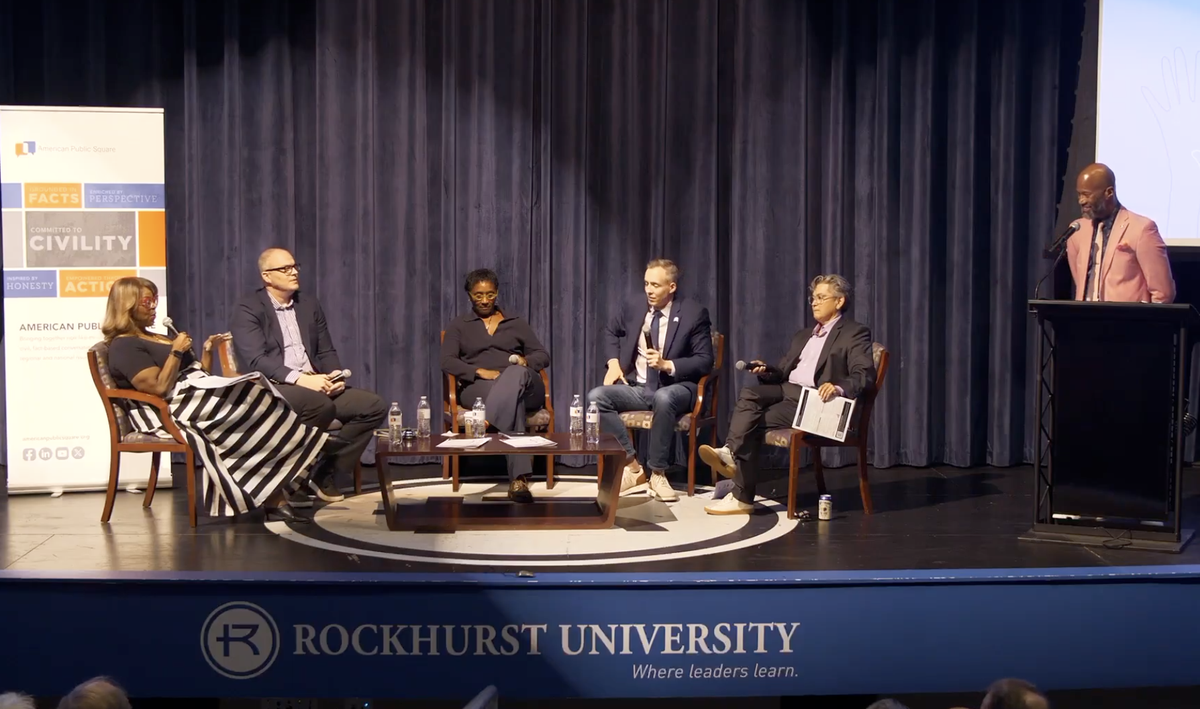
Recapping the DEI conversation
As it happened, talk did get a little heated on stage Tuesday night at Rockhurst University’s Pedro Arrupe, S.J., Hall. As moderator, I can confirm that yes, it was an animated stage and an audience member rang the civility bell several times (more on that later).
Below, Porter and I give our thoughts about the night, and about the four panelists who bravely dived into difficult subject matter from personal perspectives:
- Monica Harris, executive director of Fair For All, a nonpartisan multidisciplinary organization committed to bridging the ideological divide by focusing on our shared values and interests.
- Pete Mundo, a Kansas City conservative talk show host on Mundo in the Morning on KCMO Talk Radio 95.7FM and 710AM.
- Graham Parsons, a visiting professor of philosophy at Vassar College and an adjunct instructor at the Bard Prison Initiative. He recently resigned from a tenured position at West Point in protest of changes to its academic program.
- Mary Ann VillaReal, Vice President of Institutional Excellence of the American Association of Colleges and Universities. She is a historian, and her research has centered on the intersections of race, gender and class in U.S. history.
YVETTE: I began asking what seemed like a basic question, but the panelists’ answers were deep. “What is DEI and what is DEI actually trying to accomplish?” Guests Parsons and Villareal, both representing universities, said it was about providing access to institutions, removing barriers, and creating conditions where the optimal excellence of someone is not at the expense of someone else.
But while Harris of FAIR is for the principles of DEI, she said it doesn’t happen in practice. She believes we must remove barriers of class, not race or gender. Talk show host Mundo called DEI a “large grift” and said DEI in 2025 unfairly excludes people.
To me, diversity, equity and inclusion means opportunity. Opportunity for underrespresented people to get chances they might not otherwise have even dreamed of, and those who feel stuck on a level they can’t seem to move from.
Toriano, what does it mean to you?
TORIANO: To me, DEI in theory means exactly that: creating a diverse, equtiable and inclusive environment for all to thrive. I loathe the fact that the term and practice have been demonized as being racist or discriminatory. It is not. There is nothing wrong with checking our inherent biases.
YVETTE: I asked if panelists could show examples where DEI initiatives were implemented well. Parsons, who once had been in a DEI position at his university, discussed a time when he said a player in an NCAA team was “racially abused.” The incident was causing divsion in the team, he said, and he helped lead a discussion about the students’ experience with racism.
“It was really powerful. Some players were crying, they really shared things they had never shared before. I think they were a tighter team as a result of it. That’s DEI to me, and I think it can be very effective.”
Civility bell
YVETTE: So, we heard the civility bell. The bell is used at all American Public Square events (it’s like an office countertop bell, not a school bell). It’s given to a few members of the audience, the moderator and American Public Square leaders to ring in case the conversation gets “overly dramatic or hyperemotional.” When the bell rings, the speaker is supposed to stop talking.
Toriano, were you surprised to hear someone ring the civility bell?
TORIANO: Yes. And this is no knock to the person who rang it. All evening, I thought the conversation was civil and respectful, even when the panelists disagreed. At the same time, it was good to see the conversation continue and not get off track, so I have to commend the bell-ringer for the preemptive strike.
YVETTE: It came after an interchange between Pete Mundo and MaryAnn Villareal. Mundo made a statement about African American families having the largest number of households without fathers and how that’s troublesome. Here’s what they said:
Mary Ann: “I think I’m offended though.”
Pete: “Those are facts, you can’t be offended by facts.”
Mary Ann: “I guess I’m offended by the delivery of the facts.”
Pete: “All I did was state numbers; you can’t be offended by numbers.”
YVETTE: Toriano, we were about to go back to you for more audience questions, but it was then the audience member rang the bell.
TORIANO: To Pete’s point, his statement was supported by fact-checkers on hand, so I had no problem with what he said or how he said it. But to turn a blind eye to long-standing practices that have led to generations of poverty and other socioeconomic issues affecting minority people and other marginalized groups would not be good for anyone.
Next steps
YVETTE: Thanks so much for presenting the audience’s view, Toriano. It added a lot to the conversation, didn’t it? Was it hard keeping up with them?
TORIANO: No. Thanks to the help of APS Program Director Tricia Maxfield and staff in attendance, we were able to sort through some of the most engaging audience questions of the night in a timely manner. There were so many thought-provoking questions being asked, I wish we had more time to get to them all.
YVETTE: The conversation ranged over an hour on a variety of subjects, and there was so much I didn’t get to. Watch the whole event on YouTube.
Readers, we’d like to hear from you. Do you think talking about controversial subjects such as race, gender and politics is too dangerous in today’s political climate? Send your answer to the question, “ How do we create space for dialogue without shutting people down?” to ywalker@kcstar.com and we’ll publish some answers in Star Opinion, our weekly newsletter. It’s free every Thursday.
This story was originally published September 11, 2025 at 1:56 PM.