
Quantrill’s Massacre scarred Lawrence and the memories of survivors | Opinion
There’s no single engagement in the Kansas-Missouri Border War quite like Quantrill’s Massacre, which took place Aug. 21, 1863. I am not referencing the notoriety of the event, the one-sided brutality or the torching of entire blocks of buildings. From one perspective, these have just been talking points in a longstanding border war debate whose time has come and gone.
I’m referring to the multiple perspectives on the massacre: from William Quantrill and his guerillas, the surviving Lawrence residents of 1863, white and Black, and their descendants.
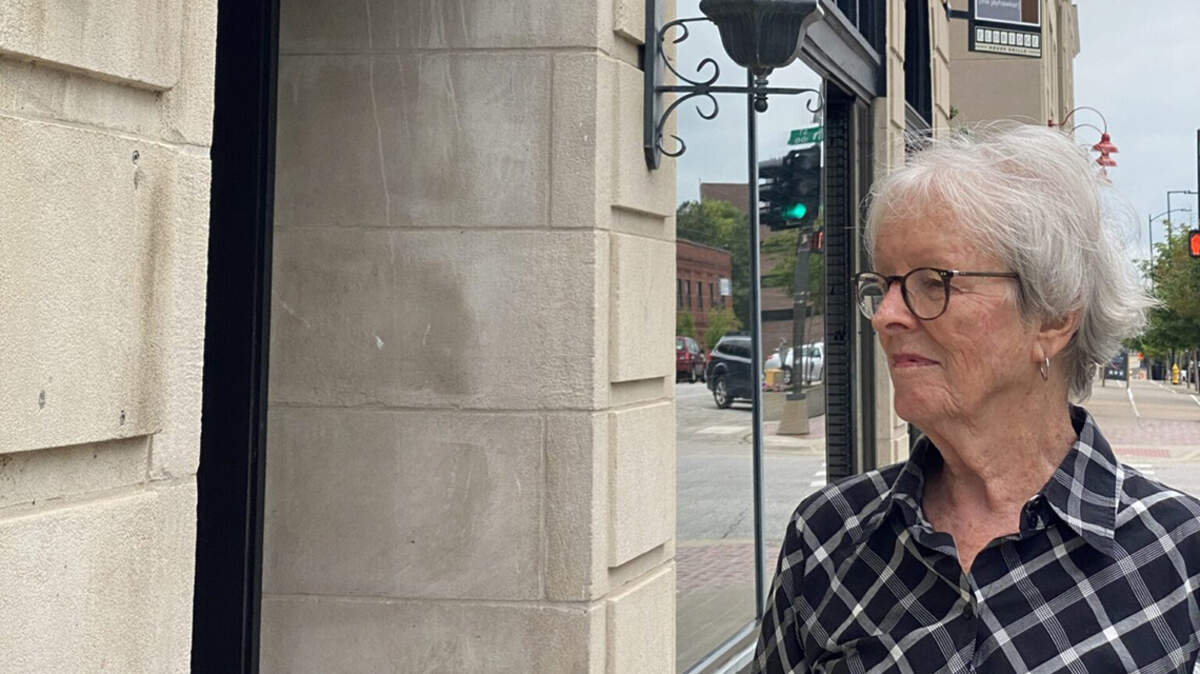
Pat Kehde is one of them. She’s a retired bookstore owner whose great-grandfather Ralph Dix was murdered in front of his wife, Jetta. Kehde’s 40-page account, “High Hopes and Great Loss: The Story of Ralph and Jetta Dix,” includes Jetta’s four-page recollection of the massacre, written in 1913, 50 years after losing her husband.
Through Kehde’s research through primary sources, along with some speculation based on those documents, we learn details of Ralph and Jetta’s life in Lawrence. Then we read of Jetta’s two marriages after losing Ralph. Lastly, in an hourlong interview with Kehde, I heard her story as a descendant of both a victim and survivor.
Kehde said she couldn’t recall being told directly about Quantrill’s Massacre while growing up.
“I don’t have a clear recollection of sitting down and learning what happened,” she said. “But it was general knowledge that there was a great-grandmother who lived in Lawrence and her husband had been killed. Then around age 9 or 10, my mother told me of Jetta’s first-person account of the Massacre.”
A young Pat Kehde was ready to read it. Exactly 100 years after Jetta wrote the account, Kehde wrote about it.
Jetta’s account is at the heart of Kehde’s chronicle:
“I was awakened at 5 o’clock by the yelling and shooting of the guerrillas as they approached the Eldridge House. Our colored man, Tom Pardee, came running in, yelling ‘Boss, boss, come with me. The Secesh are here and we must all hide.’ I awakened my husband and said ‘Ralph, hurry and dress, get Steve and the others and go hide.’
Pardee was a free Black man who worked in Ralph’s blacksmith shop. Jetta employed a Black woman, Phebe, as a nurse, who hid in a closet as soon as she heard the warning, understanding her fate if found by the “Secesh,” meaning “Secessionist.” Steve is Ralph’s brother, who lived in the Dix’s adjacent boarding house. He survived.
“What I recall the most from reading Jetta’s account as a child were the heroics of my great-grandmother,” she said. “And my grandmother, who was just a baby, about 20 months old.”
Kehde writes: “She had time to frantically implore Ralph to hide, time to run with her three children out to the coal shed, time to place a ladder up to the second-floor window, time to free the black nurse, Phebe … time to search the street and near buildings for where Ralph and her brother-in-law Stephen had gone.
“There was time to cling to her husband’s arm, alternately begging the mounted and armed men to spare her husband and begging her husband to try and run, while the guerrillas tried repeatedly to separate her from her husband by riding straight towards her. And then there was time to cover his face with his straw hat and wander aimlessly stunned and in shock.”
Kedhe holds no anger toward the state of Missouri. Just indifference.
“I never had any interest in going to Missouri to search documents, or exploring the plight of slaveholders,” she said.
She’s far more animated when speaking of the ignorance, or refusal to see, how the community attempted to “move on” from its abolitionist origins.
“I think that Lawrence’s legacy is not very admirable when it comes to race relations,” she said. “You only have to look at the lynchings. Or when I moved to Lawrence in 1968, pools were not integrated. And that was just yesterday for me!”
The lynching Kehde refers to happened in 1882, just 17 years after the close of the Civil War. It’s worth noting that on the evening of the lynching, members of the city’s Black community held a meeting at the courthouse to speak out against the injustice.
If they are legacies of our border war past, then efforts led by civil rights activists to plant historical markers and hold remembrance observances are more positive legacies to recall.
The Watkins Museum of History on Massachusetts Street in downtown Lawrence presents Lawrence’s much-storied history. With exhibits, artifacts, documents, public programs and remarkable knowledge and accessibility, you learn histories you can’t walk away from, even as you leave.