
Underground treasure of Quindaro shows multiracial coalition could flourish in Kansas | Opinion
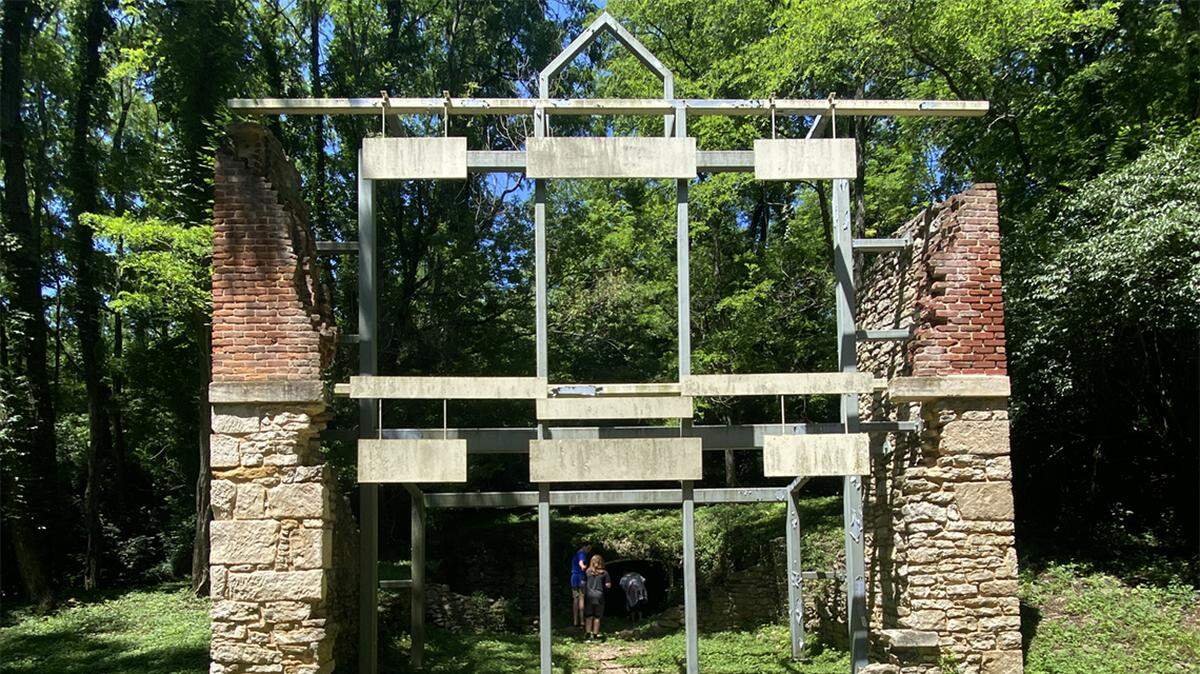
You can’t get much closer to the Kansas-Missouri border than the Kansas community of Quindaro. Perched high over the Missouri River, just northwest of the Interstate 635 bridge, sits one of the most historic communities in the state. In the late 1850s, it represented freedom to the scores of enslaved people laboring across the river in Missouri.
White owners on the Missouri side constantly warned their enslaved people of those who would slaughter them if they crossed. Regardless, in the winter of 1856, Robert Monroe, likely 28 years old, ran from the tobacco farm where was enslaved. He led 12 family members across the frozen river, despite the uncertainty of what awaited at the top of the hill.
Anthony Hope is Monroe’s great-great grandson. He represents the Old Quindaro Museum and Information Center, describing to visitors the history of freedom seekers and the Wyandot tribe.
“This whole area is sacred to me,” he says.
“I get chills every time I walk up this hill, thinking as a freedom seeker would, not knowing what will happen,” says Louisa Libby.
She’s the second chief of the Wyandot Nation of Kansas. Her tribe pioneered the abolishment of slavery in 1793 in Ontario, Canada. The Wyandot tribe adapted freedom seekers if they chose to stay, as did the Monroe family.
“We told them, ‘You are people of the earth.’” Libby says.
Like the Black freedom seekers, the Wyandots were all too familiar with uprooted lives. Their displacement was forced under the 1830 Indian Removal Act. They relinquished their land in Ohio. Six hundred and sixty four individuals walked or rode horses to Cincinnati, then boarded two steamboats to Kansas City in the summer of 1843. Those who died waiting for the land promised to them, are now buried in the Wyandot National Burying Ground, located at Seventh and Minnesota in Kansas City, Kansas. It’s a must-see if you visit.
A group of abolitionists, Wyandot, free Black people, suffragettes and settlers from the New England Emigrant Aid Company established Quindaro in 1856. It was named after Nancy Quindaro Brown Guthrie. Quindaro means “a bundle of sticks.” As in strength in numbers.
“Everyone is working towards a common goal of freedom,” observed Holly Zane, a direct descendant of Ebenezer O. and Rebecca Zane, who owned and operated the Wyandot House hotel. It was a demonstration of what multiracial cooperation could achieve, she added.
By 1857, there were 100 buildings in Quindaro. It was the only free port on the Missouri River. Six steamboats a day arrived by the following year. By January 1859, Quindaro, population 800, boasted two hotels, three dry good stores, four groceries and two meat markets, partly due to that port.
But Quindaro was not part of the reservation. Slave catchers could operate in the light of day. The Fugitive Slave Act of 1850 set fines and imprisonment for any person aiding a runaway slave.
“There was very little law and order on the border. It was really people’s commitment to equality and justice that made this work,” historian Steven Collins says.
Quindaro residents were engaged participants along the Underground Railroad. The brewery had a hidden entrance on the top where freedom seekers could descend into the cold storage space. It was likely America’s largest station on the Railroad.
“‘Uncle Tom’s Cabin’ was dedicated to emancipation without proclamation, and as such one of the most convenient stations on the Underground Railroad,” wrote abolitionist Clarina Nichols, who also harbored freedom seekers.
Quindaro declined after the Civil War. The emancipation of enslaved people, a downturn in the economy, the state Legislature revoking the city’s charter and the failure of a campaign to attract a rail line to town all played a part.
But a community rich in human resources doesn’t simply fold. The first Black college west of the Mississippi, Western University, was established in 1865. Starting small, the university ultimately established a nursing school and hospital, programs in industrial arts, auto mechanics, and, in 1903, a music school. The Jackson Jubilee Singers had the opportunity of performing with some of Kansas City’s jazz greats. The Depression, World War II and increasing competition from other Black colleges closed Western University in 1943.
In the 1980s, a landfill proposed at the site might have wiped Quindaro off the map. When you listen to residents scuh as 86-year-old Luther Smith, you understand why that was never possible. He shows up every day at the Quindaro Underground Railroad Museum to talk about the town’s history.
The Kansas State Historical Society says of the 100 buildings identified, 20 could potentially be uncovered. A National Historic Site application is the first step in the process of reclaiming the structures and the rich history that lies underground.