
In Africa, Biden should have explored the whole, complex truth about slavery | Opinion
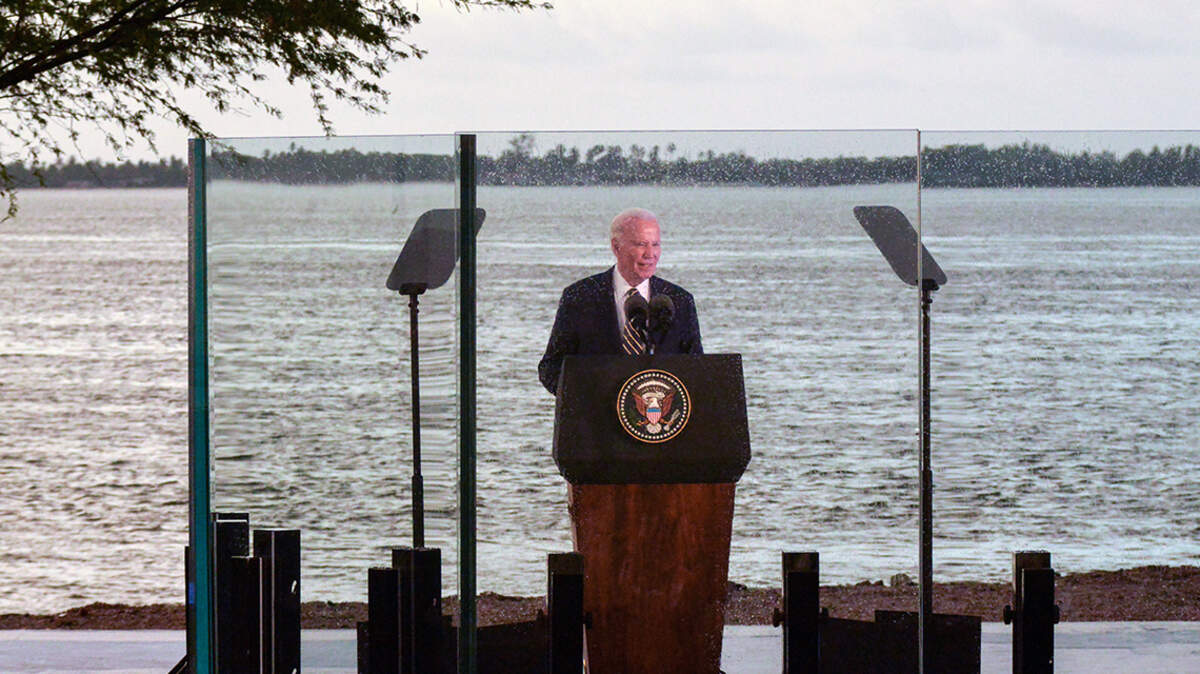
Joe Biden, making the first trip by an American president to Angola, delivered a speech at the nation’s slavery museum where he had some wise words about history. “I have learned that while history can be hidden, it cannot and should not be erased,” Biden said. “It’s our duty to face our history: the good, the bad, and the ugly — the whole truth. That’s what great nations do.”
But that’s not what he did in his speech. He rightly painted a picture with words of the horrific nature of slavery, “We hear them in the wind and the waves. Young women, young men born free in the highlands of Angola, only to be captured, bound, and forced on a ‘death march’ along this very coast to this spot by slave traders in the year 1619. In the building next to us, they were baptized into a foreign faith against their will … Then they were condemned to a slave ship bound for the Middle Passage, packed together in hundreds by hundreds. A third of those souls did not survive the journey. It was the beginning of slavery in the United States. Cruel. Brutal. Dehumanizing. Our nation’s original sin — one that haunted America and casts a long shadow ever since.”
“Our people lie at the heart of a deep and profound connection that forever binds Africa and the United States together,” Biden said. “We remember the stolen men and women and children who were brought to our shores in chains and subjected to unimaginable cruelty.”
But he did not say a word about how slavery came about in Angola and how Portuguese traders came upon the hundreds of slaves they put on their ship.
“The story of Angola and the United States holds a lesson for the world,” Biden continued. “Two nations with a shared history, an evil of human bondage. Two nations on the opposite sides of the Cold War, the defining struggle of the late part of the 20th century. And now, two nations standing shoulder to shoulder working together every day,” he said. “It’s a reminder that no nation need be permanently the adversary of another.”
Notice how he doesn’t exactly say that Angola and America were on opposite sides of slavery, but only implies it. That vagueness is a missed opportunity to address the whole, complex truth of slavery.
When Biden’s defense secretary, Lloyd Austin, traveled to the same site in the same nation to give a speech last year, he was a little more blunt in the picture he painted. “We all know that the United States and Angola were first connected by the slave trade,” Austin said. “And four centuries ago, slavers from far away put the men, and women, and children of this country into shackles — people who looked just like you and me.”
But that’s missing some important facts about who first put people into shackles. The slavers who did the capturing and kidnapping in Angola were primarily native Africans – the ancestors of many of the Angolans at the slavery museum to hear Biden’s speech. The slavery that came to American shores was the product of powerful institutions both Black and white – British, Portuguese and Angolan. Slavery had been an institution in the land that is now Angola at least since the 1300s before the first Europeans showed up on their shores. The same was true throughout much of Sub-Saharan Africa.
Foreigners from “far away” did play a role as a market for slaves, but those foreigners were Arabs fresh from the Muslim conquest of North Africa who created trade routes deep into the rest of the continent trading their sophisticated goods for human flesh and ivory.
While the Atlantic slave trade focused on men to work sugar plantations primarily in South America and the Caribbean (less than 5% of enslaved Africans were sent to North America focused on tobacco and cotton), the Arab slave trade focused its evil on women who after suffering horrific conditions in trafficking were destined for sexual exploitation.
Back in the United States there is a conflict between those who want to remember slavery as America’s defining sin and those who want to whitewash the despicable, racist abuse of millions of human beings by our countrymen.
There has to be a middle ground that puts America’s sins in the context of the global practice of slavery that stains the ancestry of almost everyone and does not yield one inch to those who would downplay its evil and impact here in the United States. American racism and slavery are part of our national story that needs to be told with brutal honesty, but our public reckoning shouldn’t be an easy morality tale that leaves out complexities that paint the tale in shades of gray.
When Biden delivered a speech without that gray, he failed to deliver the “whole truth” that he said he wanted us to hear.
This story was originally published December 6, 2024 at 9:38 AM.