Rural central Kansas couple has key win in battle to live in former church | Opinion
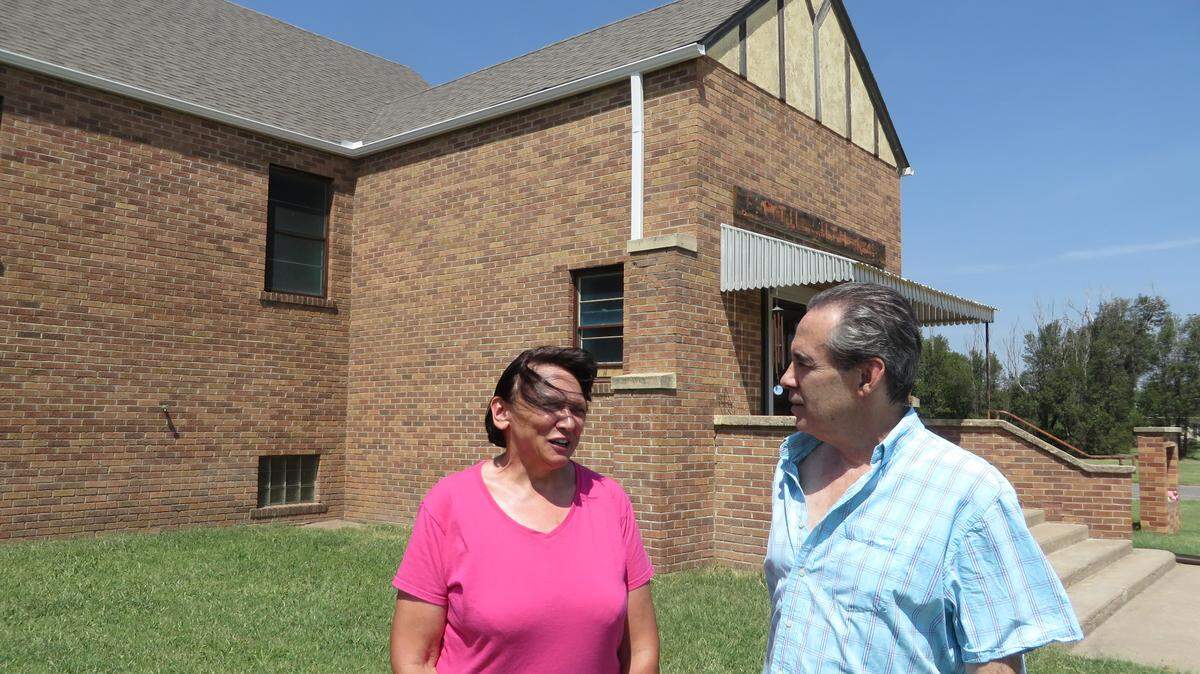
Mike Rosseau and Dorothy Tobe have moved a step closer to not having to live out of suitcases in the guest room of their real estate agent’s home – which they’ve been doing for the past nine months.
And St. John has moved a step closer to ending a controversy that has pitted much of the community against its municipal government – and that never should have happened in the first place.
Yes, St. John may finally be coming to its senses – and adding to its census.
On Tuesday night, Rosseau and Tobe won a key victory in their quest to finally move into an abandoned church building they bought last year, after they were displaced from the house they rented in Denver for the previous 30 years by a developer building luxury apartments.
St. John’s combined planning and zoning board voted 4-0, with one abstention, to allow the couple to finally start living in their church building, which they’ve spent their days fixing up while sleeping nights at the home of the agent who sold it to them.
Tobe said what it means to her: “I’m not crying after this meeting.”
It’s not a final victory, yet.
They still need City Council approval before they’ll actually be able to sleep in the building.
That meeting’s in two weeks, after a protest period to allow the owners of property within a 200-foot radius to object.
Rosseau points out we’ve been here before. And it went poorly.
A locally prominent business owner and former City Council member, Kevin Davis of Davis Electrical, and Jeni Jones, who owns a beauty salon next door to Davis, torpedoed the church conversion last time it was up for a vote, in July of last year.
Davis owns more than 20% of the land within the 200-foot radius of the former church, according to Dennis Veatch, the chairman of the planning and zoning board.
That means Davis can make things difficult again all by himself, because if the owners of 20% of the land around the church file a formal protest, it will take a four-out-of-five supermajority on the council to accept the planning and zoning board’s recommendation.
Nine months ago, that would have seemed insurmountable.
But a lot’s happened since then.
The issue of how they were treated by City Hall divided this community and exposed some good-old-fashioned good-old-boy decision-making that not only blocked Rosseau and Tobe’s plans to convert the church to their home, but also got them treated like common criminals for even trying.
Rousseau and Tobe are the only people who have ever been criminally charged with violating the St. John zoning code, for sleeping in the church for a few days back when they first bought it. The charges were later dropped, without explanation, but it’s progress.
The situation brought about a backlash.
A GoFundMe campaign has raised $3,500 for their legal battles as of this week, an anonymous donor gave them another $500 and Davis’ sister-in-law staged a pop-up root-beer-float social in the town square that kicked in another $400.
In November, voters removed a Davis employee and business partner from the council via a write-in campaign.
In the latest news, Veatch has engineered a compromise that would allow Rousseau and Tobe to live in the former church building, but preserve the potential for it to return to commercial use down the line.
The property would stay zoned as commercial, but the couple could live there under a special-use permit. If they fail to comply with the city’s residential zoning requirements or sell the property, it would revert back to commercial zoning.
And Veatch has also started the process at the planning and zoning board to create what’s called a “protective overlay” for other homes in the downtown commercial zone to prevent problems in the future.
“I’ve identified five residential structures in the downtown commercial zone, and they’re all grandfathered in (because) they were built well before zoning ever existed,” he said. “I bet you there’s not too many of those people who own those houses that even know they’re in the downtown commercial zone.”
A protective overlay would give those homeowners more flexibility if they ever decide to sell or change the use of their property.
The owner, or future owners, could continue to live in those houses, or, if they chose, convert them to a commercial use by upgrading the plumbing, electrical and disability access.
It’s a good plan.
As the retired planning and building director of Dodge City, Veatch is an experienced and savvy city planner, possibly the only one St. John has.
The City Council would do well to listen to him.
This story was originally published March 28, 2024 at 9:45 AM with the headline "Rural central Kansas couple has key win in battle to live in former church | Opinion."