Kansas Sen. Warren opposes bill that would mean fewer wrongful convictions | Opinion
There is a reason that Kansas lawmakers, both Republicans and Democrats, overwhelmingly support a law that would limit the use of jailhouse informants, who, let’s face it, usually only come out to play when a prosecutor has such a rickety case that he or she needs an emergency assist from some felon who is only pretending to have heard a fellow inmate’s confession in return for some kind of deal.
That is how it works. Which is why this bill, which would make prosecutorial misconduct just a little harder, should be such an easy call.
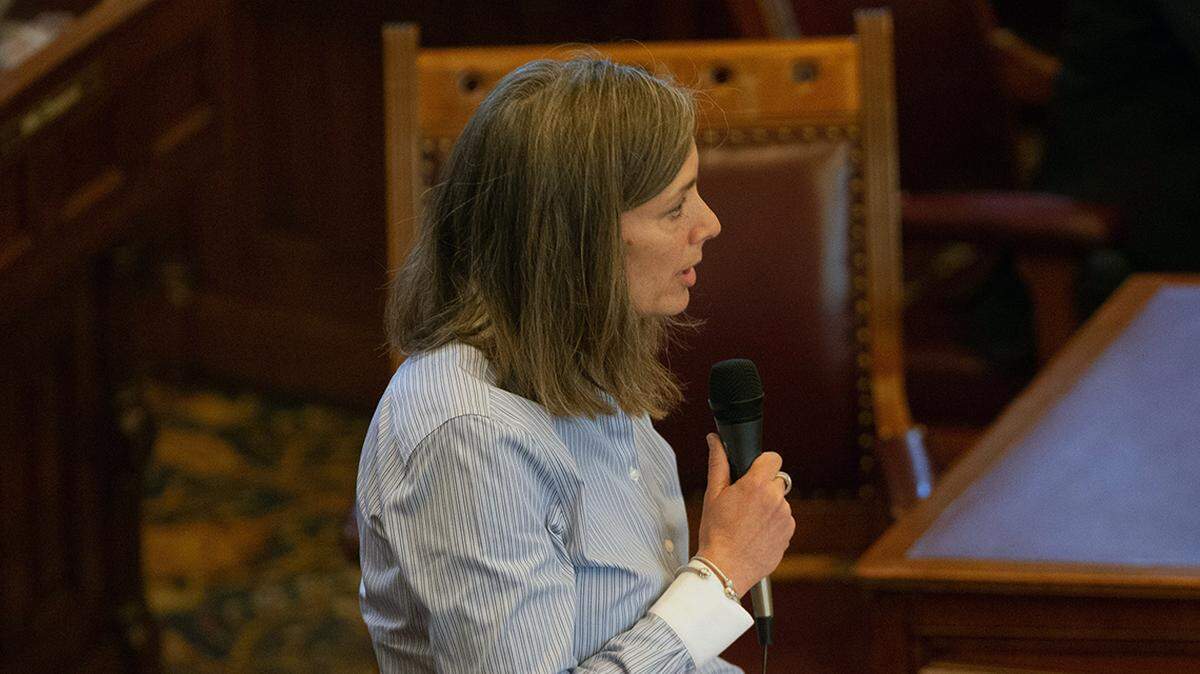
And it would be, except that it’s being opposed by the Leawood Republican Kellie Warren, who chairs the Senate Judiciary Committee, and by Senate leaders. They note that Kansas Attorney General Kris Kobach and Kansas prosecutors don’t like the bill.
Do you think, Senators, that that might be because they want to preserve the ability to win cases that never should have been brought in the first place?
Warren answered my email by insisting she’s all for the bill, and in fact continues to advocate for it, but she voted twice against a motion that would have gotten it a vote. And had it gotten a vote, it would have passed. Here is Warren “advocating” for the bill on Monday, urging her colleagues to vote against the motion:
“In the Senate committee, we did hear opposition as I recall from our prosecutors that the procedure that the bill would require would create a lot of repetitive issues and procedures that our prosecutors already follow, and when you create in a bill additional procedures it could cause more appeals to be filed because the procedure would be -- because there needs to be more work done on the bill, which is why I believe it has been” in limbo “since last session. This is a procedural motion, and my understanding is that after the bill got out of committee, there might have been some further objections to the bill.
“I would ask the body, because this is a procedural motion” which has been on hold “for more than a year, for reasons that probably some further objections from prosecutors that the bill is not in a position to be” voted on. “I would ask the body that we not support the motion.”
The bill is named for Olin “Pete” Coones, a Kansas City, Kansas, mail carrier and father of five who spent 12 years in Kansas prisons for a murder he didn’t commit. He died of previously undiagnosed cancer at age 64, only 180 days after his release in 2020.
Judge cried at hearing
At the hearing where his 2009 conviction was vacated, even the judge cried as he talked about all of the wrongs done to Coones — by the Kansas City, Kansas, police detectives who missed crucial evidence, by the Wyandotte County medical examiner who blew the autopsy, and by the prosecutors who suppressed exculpatory evidence and coerced testimony from a mentally ill inmate.
These were not honest mistakes, Wyandotte County Judge Bill Klapper said at that hearing: “The state suborned perjury,” and the prosecutor, Ed Brancart, “failed to disclose the threats he made” to get the testimony that put Coones away.
First, Coones was set up by the alleged victim, Kathy Schroll, who killed her husband Carl and then herself after framing Coones. Schroll had been “caring for” and repeatedly draining his ailing father’s bank account, and Coones was trying to get his modest inheritance back by taking her to court.
Knowing that she was about to be fired from the credit union where she worked for embezzling funds there, too, she shot her husband and then herself. But before her suicide, she called her mother to say that Coones was there, had stolen her lawnmower — nice touch, I always thought — and was saying he was going to kill her and her husband.
To believe this, you’d have to believe that she let him in the middle of the night, and then, after making his murderous intentions known, he nonetheless let her place a leisurely 45-second call from her landline.
Coones’ family said he was home that entire evening, and that when he got up to go to the bathroom in the middle of the night, he’d told his daughter and her boyfriend not to stay up too late, and sleep in their own rooms, please. Police solved that problem by theorizing that he must have climbed out a window and back in again.
All evidence at the crime scene pointed away from Coones, too: There was no sign of a struggle; when police arrived, they found the front door ajar. Inside, nothing suggested that Coones had ever been there.
The gun used to kill the couple was Schroll’s own weapon, and there was gunshot residue and blood spatter on her left hand. The gun was found next to her body, on her left side, with only her fingerprints on it.
Yet after two trials, in large part thanks to the testimony of a jailhouse witness with a history of both mental illness and dishonesty, Coones was found guilty of killing Kathy Schroll, though not Carl, and was sentenced to life in prison.
Under duress, the jailhouse witness told prosecutors what they wanted to hear, which is that Coones, who had always insisted on his innocence, told him that he’d committed the crime
.
Pete Coones begged Legislature for reform
Before Coones died, he begged the Kansas Legislature to reform the use of jailhouse informants.
Since then, the Kansas House of Representatives has twice unanimously approved the bill named for him. But Warren and other state Senate leaders reject this completely common sense reform.
“I spoke with the Attorney General,” Senate Majority Leader Larry Alley, a Winfield Republican, told his fellow lawmakers. “The Attorney General does not support this bill and neither do the prosecutors.”
Of course they don’t, just like Big Pharma doesn’t want to make prescription drugs more affordable and the banking lobby doesn’t want banking reform.
But the result of this bill would be fewer wrongful convictions, and everyone should want that, if for no other reason than to avoid the payouts that Kansas fights so energetically against making to those who have already spent years incarcerated for crimes they did not commit.
To his credit, Sen. Robert Olson, an Olathe Republican, tried to force a vote on the measure but fell three votes short of the two-thirds supermajority his procedural move would have required.
That was thanks to Alley, Warren and Senate Vice President Rick Wilborn, a McPherson Republican, who urged their colleagues to listen to the Kansas County and District Attorneys Association.
With only a week left in this legislative session, backers of the bill haven’t given up.
“We’re still trying,” said Sen. Cindy Holscher, a Democrat from Overland Park.
If you care about justice, call Alley, Warren and Wilborn right away and let them know. And tell them Pete sent you.
This story was originally published March 27, 2024 at 5:15 AM.