
In the Trump era, news too has become predictably partisan
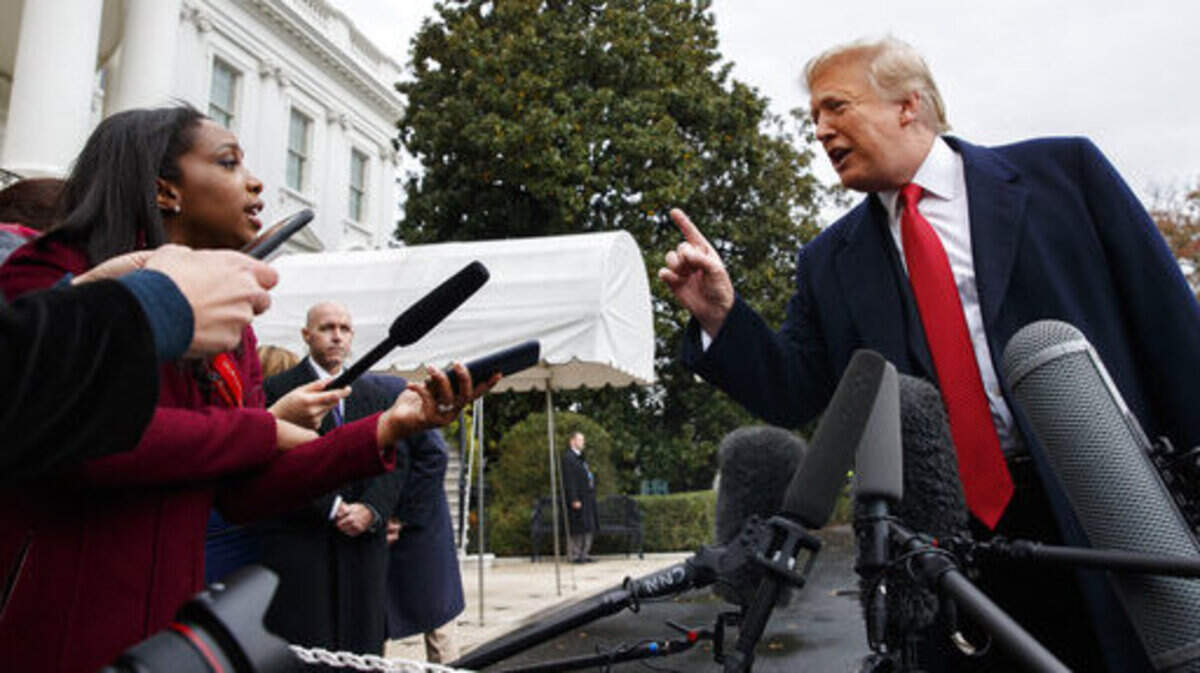
Once upon a time, news in these United States was, well, new. And people wanted to know the latest happenings.
Now, however, much of the nation’s news and the people in it — even what they end up saying during these events — are pretty predictable.
That’s in large part because so many Americans have fallen into ruts of partisan thinking that aren’t really thinking at all, just safe recitations of talking points that require no listening or manners.
Take this impeachment business, please. Months before the 2016 election, Democrats and even a handful of GOP infidels were talking and organizing to defeat Donald Trump in the preposterous, unlikely event he became the Republican nominee. And then they shifted their focus to the even more absurd possibility that he somehow managed to usurp the Oval Office from its intended inhabitant, the woman who’s still sharing the bitterness over her defeat 167 weeks later.
Predictable too was the collusion among Capitol Democrats, their sympathizers within the FBI and Washington’s insular media, desperate to prove themselves right after being so wrong in campaign coverage and election forecasts. Trump campaign collusion with Russia was the initial cover story.
Totally predictable was the gullibility of individual DC media members in swallowing scores of fallacious tips from unidentified sources with anti-Trump agendas that were not identified for naive news consumers.
Quickly, the obstreperous new president’s M.O. became counter-punching most every allegation, even when his often over-the-top reactions only served to sustain the life of negative news for needless extra damaging days.
Even a cursory knowledge of U.S. political history made GOP congressional losses a likely result in the president’s first midterm elections of 2018. That happens to most every new president. Think especially Barack Obama in the historic 2010 devastation of Democrats at all levels from which his party has yet to fully recover. A recent exception was George W. Bush, who was still receiving high job approval ratings in November of 2002 after his handling of 9/11.
Last March, in an initially wise political move leaving Trump’s second-term hopes in the hands of 2020 voters, House Speaker Nancy Pelosi rejected impeaching the man. “Impeachment is so divisive to the country,” she assured The Washington Post, “that unless there’s something so compelling and overwhelming and bipartisan, I don’t think we should go down that path.” Key word there: bipartisan. She added that Trump was simply not worth the trouble.
Experienced eyes filed that quote for her predictable flip-flop. Sure enough, that came in the fall announcing an “impeachment inquiry” fueled by Trump’s perfectly inappropriate conversation with Ukraine’s president about investigating Joe Biden and his son’s shady doings over there.
With his now predictable hyperbole, Trump has routinely proclaimed that the discussion was “perfect,” which of course it wasn’t. But given the velocity of news cycles nowadays, we quickly moved on to House Democrats’ predictable decision to stage impeachment proceedings.
Anyone with a memory stretching back 10 years might recall the ramming-speed subtlety of Speaker Pelosi driving the massive Obamacare legislation through the House with not much time to actually read it and, importantly, not one single Republican vote in favor.
With familiar ham-handedness, this time Pelosi’s minions drove the impeachment proceedings with an overzealous enthusiasm, even glee, to finally get Trump that belied any appearance of judicious public servants actually pondering the serious constitutional issues at hand. Never mind countermanding voters’ verdict in 2016.
The president, of course, was not going to like any of it, calling it a sham at every opportunity. The haste and predictable outcome allowed Trump to don the convenient cloak of victim that is the epoxy of his political base. Like the Obamacare tally, the final House results for impeaching the president of the United States did not contain one single Republican member.
The only thing bipartisan about the outcome was that a pair of Democrats jumped ship to join a unanimous GOP caucus in opposition.
Pelosi, who’d been describing impeachment as urgent, sat on the impeachment documents for most of a month, perhaps hoping to keep Trump’s political wounds fresh and worried that the issue would grow dusty and forgotten over the holidays. Then, last week in a jarring ceremony full of gleeful smiles, congratulatory handshakes and souvenir pens, Pelosi and posse finally signed and delivered to the Senate papers to unseat the nation’s duly-elected chief executive.
There, a wiser Republican tactician named Mitch McConnell will steer a solemn trial of undetermined length that will certainly acquit President Trump, leaving his continued White House tenure in the hands of next fall’s voters. Predictably.
This story was originally published January 22, 2020 at 5:00 AM with the headline "In the Trump era, news too has become predictably partisan."