
Gaffes, lies and missteps — how much will voters forgive in presidential politics?
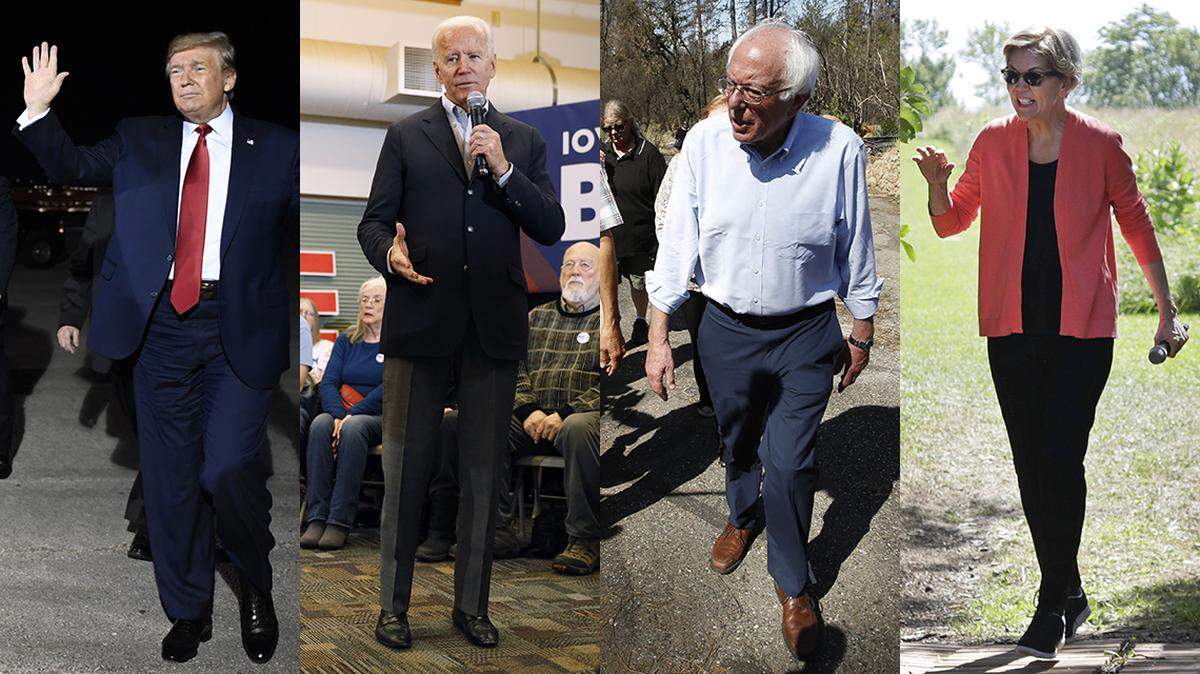
Quietly, with little public notice, Americans seem to be changing their standards for judging presidential candidates as people and as potential chief executives, at least the older ones.
Gaffes, health issues, behavioral traits do not have the same significance they once did. In fact, such faults and missteps seem to glide right on by voters’ consciousness like a leaf on a stream. And this holds true regardless of party.
Examples of such statements or behavior by President Donald Trump are legion and notorious, any one of which would likely have been disqualifying in previous political eras.
Recall the trouble President Gerald Ford brought on himself in a presidential debate back in 1976, simply by proclaiming erroneously, “There is no Soviet domination of Eastern Europe.” That was 15 years before the fall of the Berlin Wall and the Soviet Union. Ford lost his reelection bid.
Before that, in 1964, New York Gov. Nelson Rockefeller was denied the Republican presidential nomination in part because (whisper) he was divorced — once.
Trump was a longtime celebrity but a political newcomer when he announced his improbable presidential campaign in mid-2015. Soon after came the opening GOP primary debate when Megyn Kelly confronted Trump with some of his past statements: “You’ve called women you don’t like fat pigs, dogs, slobs and disgusting animals.”
Afterwards, Trump said, “There was blood coming out of her eyes, blood coming out of her wherever.” Later, he claimed he was referring to her nose.
Then, there was the tape of him boasting about grabbing women’s genitals. Soon after, he became the 45th president of the United States with about 57% of the electoral vote.
Now, after three years and some 17,000 often-controversial tweets as a politician and more than 13,000 misstatements, according to The Washington Post, Trump is poised for a second GOP nomination. His approval rating has increased and disapproval decreased as House Democrats pursue their partisan impeachment inquiry.
But these examples are not confined to him. Former Vice President Joe Biden has been caught on an open mic using the f-word. He’s lamented the passing of people very much alive. He routinely touches and invades the personal space of women in public. This fall, the 77-year-old asked an Iowa audience about the infrastructure there in Ohio. His debate answers have wandered, often incoherently.
Largely ignored so far by everyone except Trump’s opposition researchers is Biden’s boast about forcing Ukraine to change prosecutors by threatening to withhold aid, a quid pro quo by most judgments.
In the last Democratic debate, standing a few podiums from Sen. Kamala Harris, Biden declared he had been good friends with Illinois’ Carol Moseley Braun, the only black woman ever elected senator. Veteran Democratic strategist David Axelrod says, Biden is being kept in “the candidate protection program.”
Yet, Biden still leads most national polls of primary voters.
Then, there’s Sen. Bernie Sanders, a democratic socialist who becomes a Democrat every four years for political convenience. Sanders was born before Pearl Harbor. If elected, he would be not only the oldest incoming president, but also older than every other president leaving office, even after two terms. Being Sanders’ vice-presidential partner could be a coveted job.
In October, the 78-year-old Sanders suffered a heart attack. Since then, he’s campaigned with renewed vigor to record crowds, and his standing in some early states has improved, such that party establishment types worry the leftist could actually get the nomination and hand Trump an easy victory.
Sen. Elizabeth Warren, too, has had her share of gaffes. Never mind her fantastical spending and taxing plans, she falsely claimed Native American heritage. And her stump story about being denied a renewed teaching contract over her pregnancy has been proven false. She’s still running second in many national polls.
Do you notice a pattern here? All of these get-out-of-jail-free cards have gone to septuagenarians. Sanders is 78, Biden 77, Trump 73, Warren 70. They are familiar faces with familiar personas and familiar traits and habits that spur a surprising but universal forgiveness.
If South Bend, Indiana Mayor Pete Buttigieg, who is 37 and very new to the national stage, committed any one thing close to these stumbles, his campaign would end abruptly.
This is a particularly disruptive time in American politics, as both parties have stoked turbulence for their own purposes. One possible explanation for the current Kevlar-quality of our senior candidates is that with 48 weeks still to go, many people have tuned out the turbulence altogether. And candidly, this is also a partisan time. Do you know anyone following politics whose opinions are subject to change?
Biden, of all people, may have made the point best. “The reality,” he says, “is the media makes a lot more of these debates than voters do. And it’s not like they’re real debates about policy. These are TV shows.”
This story was originally published December 3, 2019 at 5:00 AM with the headline "Gaffes, lies and missteps — how much will voters forgive in presidential politics?."