
Why it took more than 50 years to open this North Kansas City park
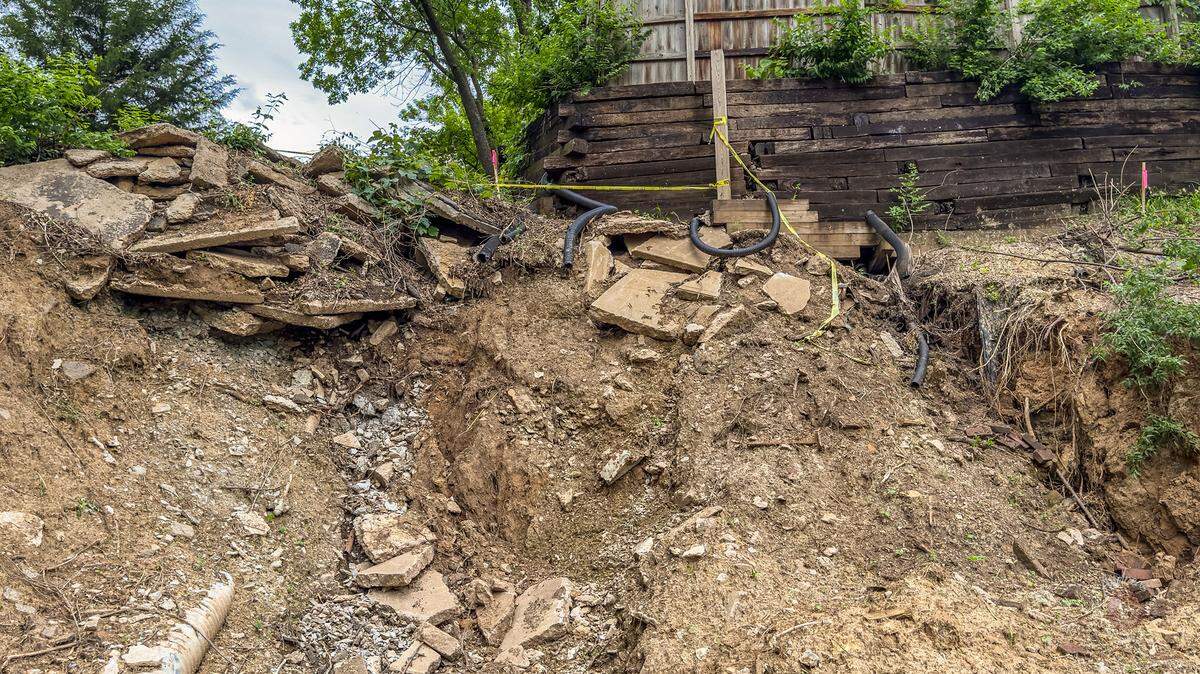
North Kansas City bought the River Forest Park site in 1973. For a long time, though, it wasn’t developed as a neighborhood park and was mostly forgotten.
What’s Your KCQ?, a partnership between The Star and Kansas City Public Library, looks at how this city park is finally getting the attention it deserves.
In September 1978, North Kansas City resident Jerry Hartgrove welcomed a reporter from The Kansas City Star into his backyard to show how heavy rainfall was damaging his property.
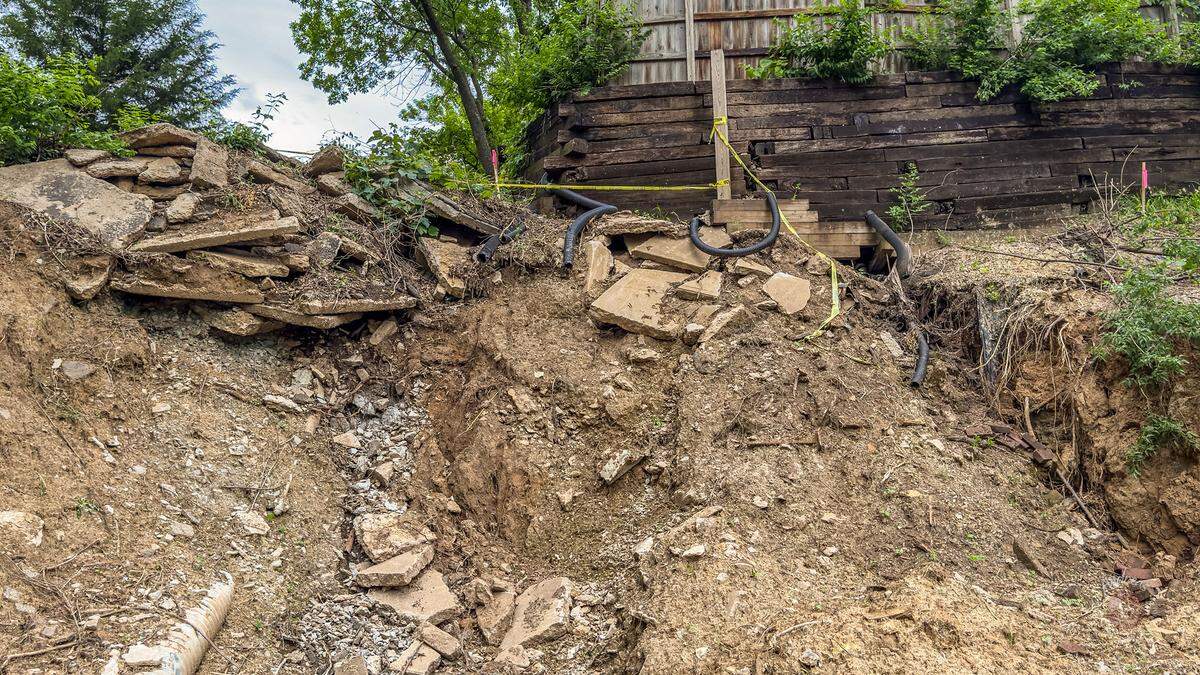
Hartgrove talked about losing trees and seeing parts of his land collapse into the ravine behind his house. Neighbors on East 26th Avenue were dealing with the same issues.
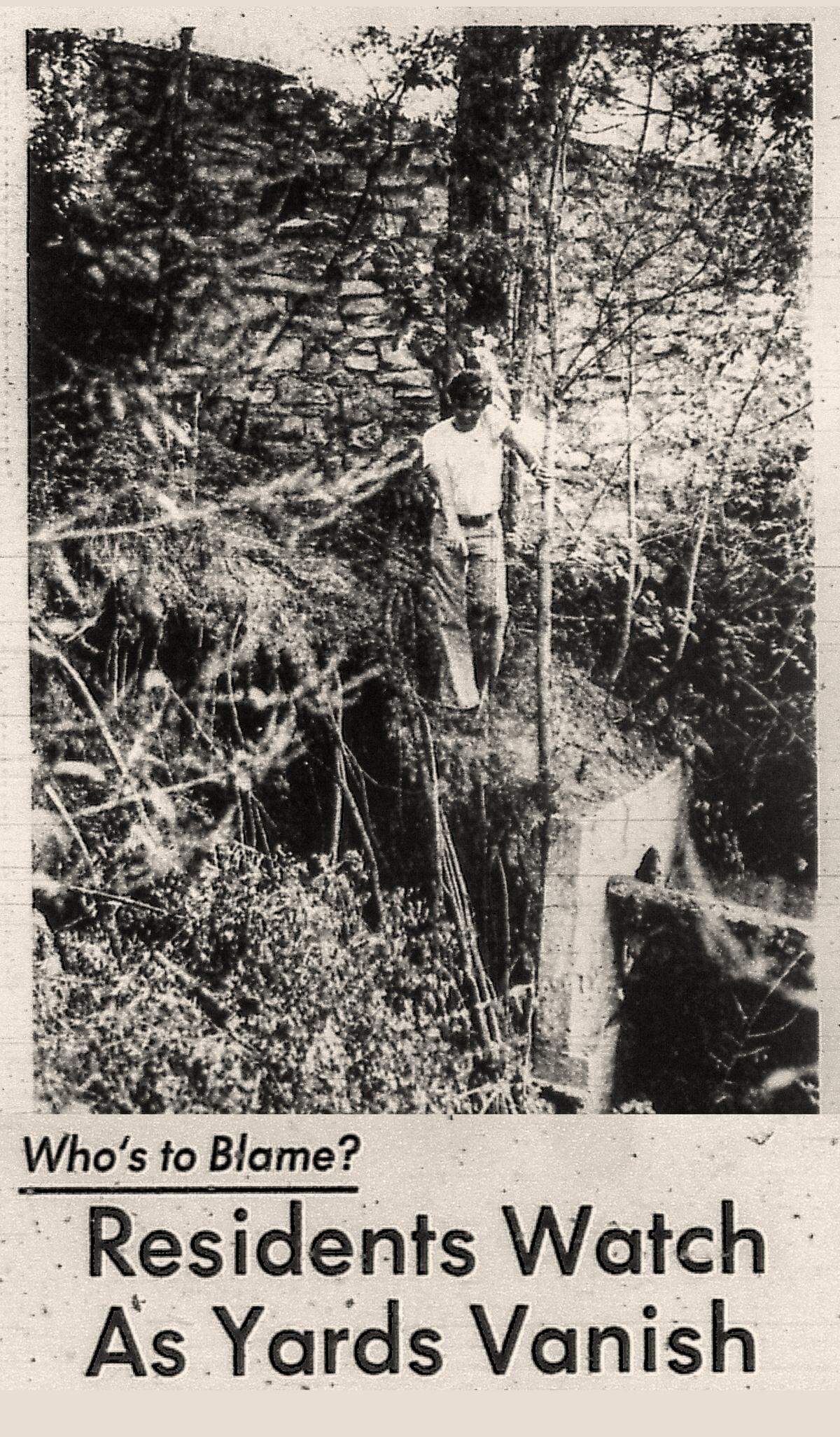
He said he’d reported the problem to local officials but was told the drainage and erosion issues were not the city’s responsibility.
The area to the south — where trees and chunks of soil were giving way — was River Forest Park. Backyards had been slowly disappearing ever since the adjacent subdivision’s construction in the mid-1950s. With just over 7.5 acres of dense woods and brush and no amenities, it was barely a park at all.
Nearly 40 years later, not much had changed.
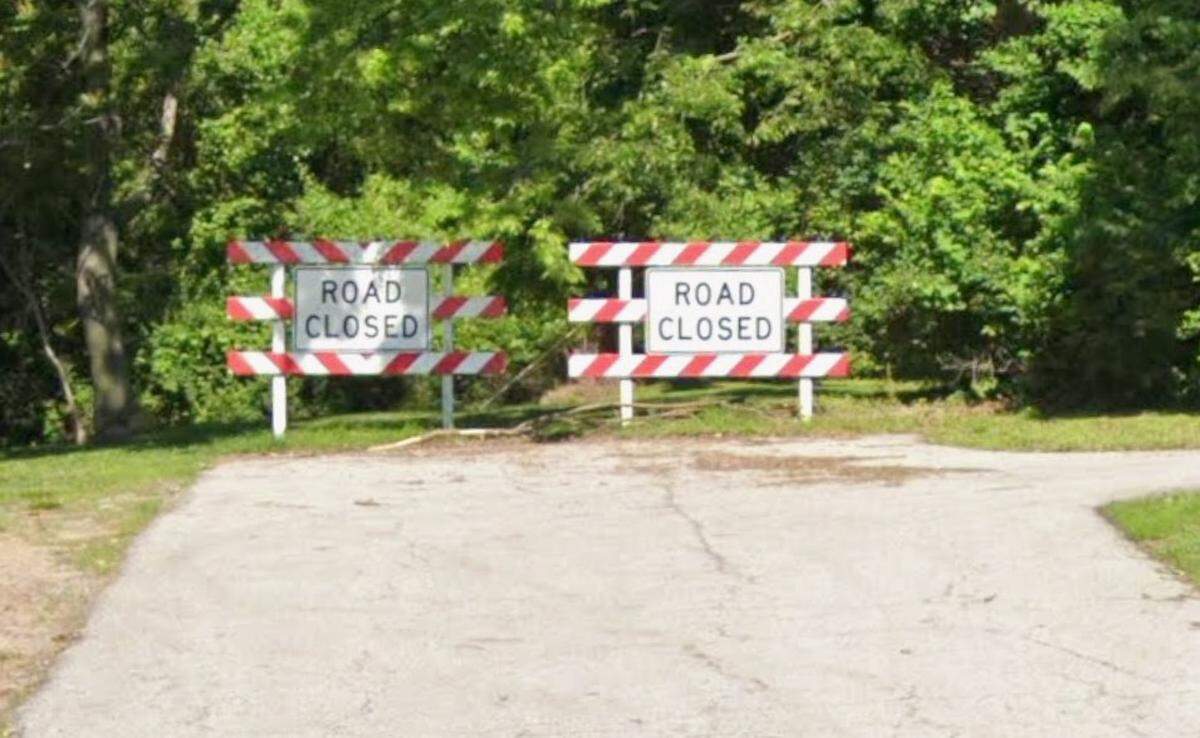
When Amie Clarke moved to River Forest in 2015, she knew the wooded area only as a place where neighbors walked their dogs. She had no idea it was a city park. There were no signs, just a pair of “Road Closed” barriers facing Vernon Street where the road from NKC Health ended.
Clarke loved that her new home was in North Kansas City, a small town of about 5,000 residents, according to the 2020 Census. Located just north of the river from downtown Kansas City, Missouri, its 4.6 square miles felt like the perfect spot — small-town charm while remaining just a stone’s throw from the big city.
She also appreciated that River Forest was affordable, and when she noticed a Human Rights Campaign sticker on a door across the street, she felt that she and her partner would be safe living there.
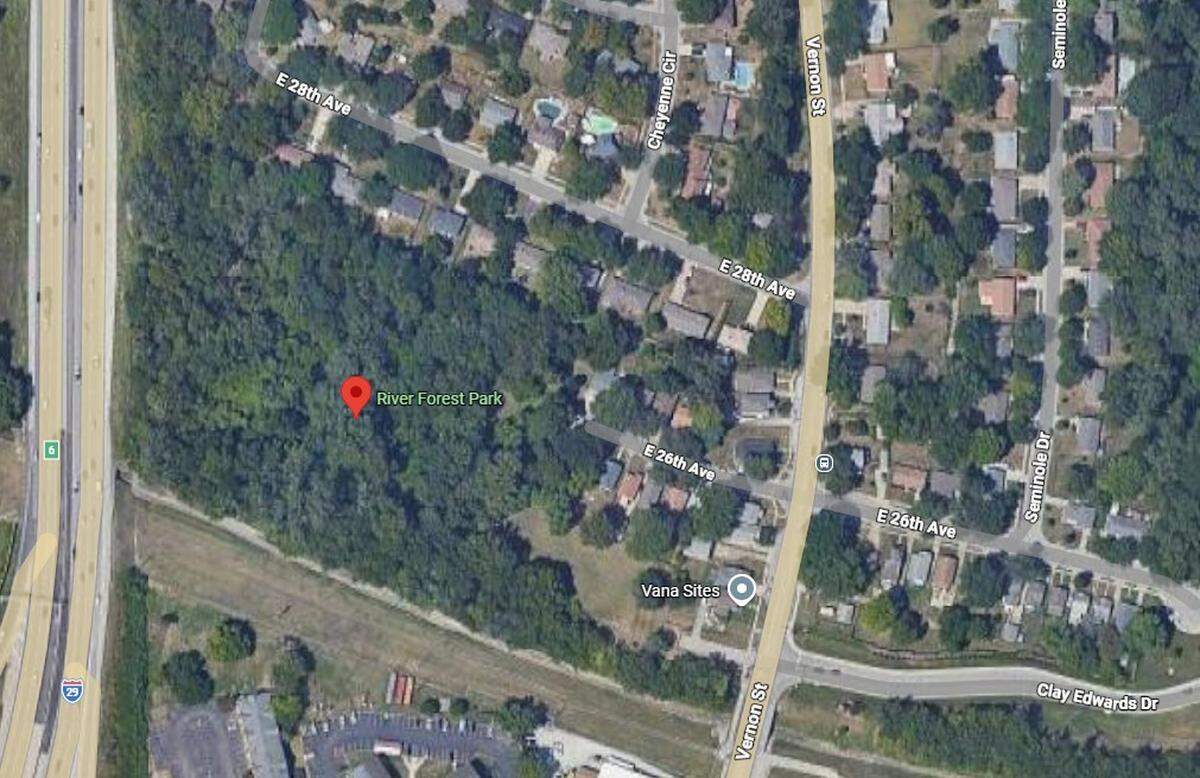
But Clarke also felt that the neighborhood was cut off from the rest of North Kansas City due to the Interstate 29/35 corridor that splits the town in two. Unlike the west side of the city, River Forest did not have any parks or public green spaces.
When a new family moved in next door, they asked why there was no park nearby for their children. During the COVID-19 pandemic, Clarke and her neighbors became increasingly frustrated by the lack of easily accessible green space.
“Some of my older neighbors also told me my house had once been owned by a longtime resident named Jim Rich,” said Clarke. They explained how he spent years trying to get the park on the city’s radar without success.
Clarke started thinking about picking up where Rich left off.
How River Forest Park began
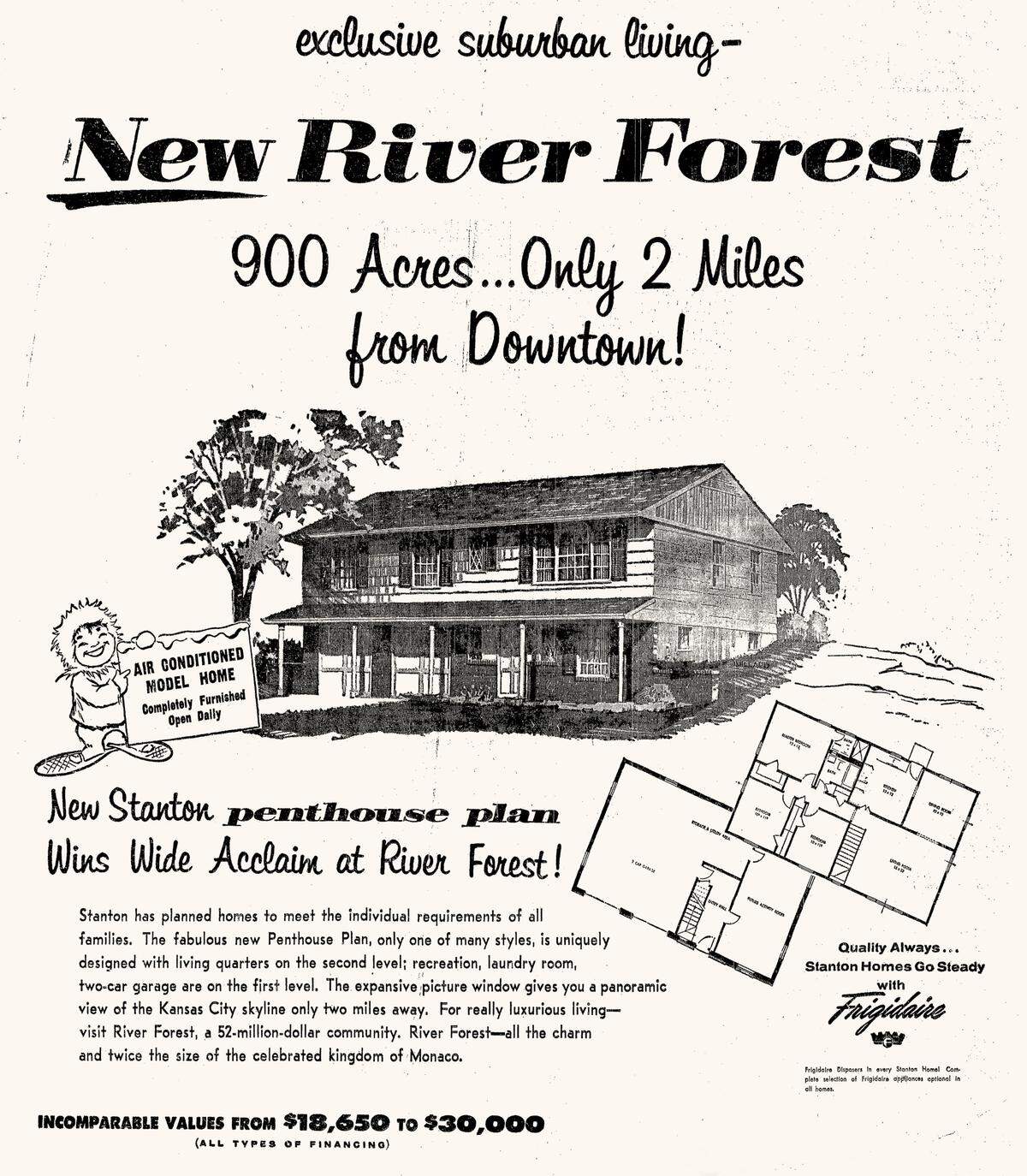
Back in 1916, the North Kansas City Development Company, the real estate firm responsible for founding the city, had ambitious plans for a new subdivision atop the Clay County Bluffs along Euclid Avenue — now Vernon Street. A handful of houses went up along East 26th Avenue, but the Great Depression and World War II brought new home construction to a standstill.
Development took off after World War II, with modern suburban homes constructed just minutes from downtown Kansas City. To create larger backyards along East 28th Avenue, the property developer built fill slopes above the future park site.
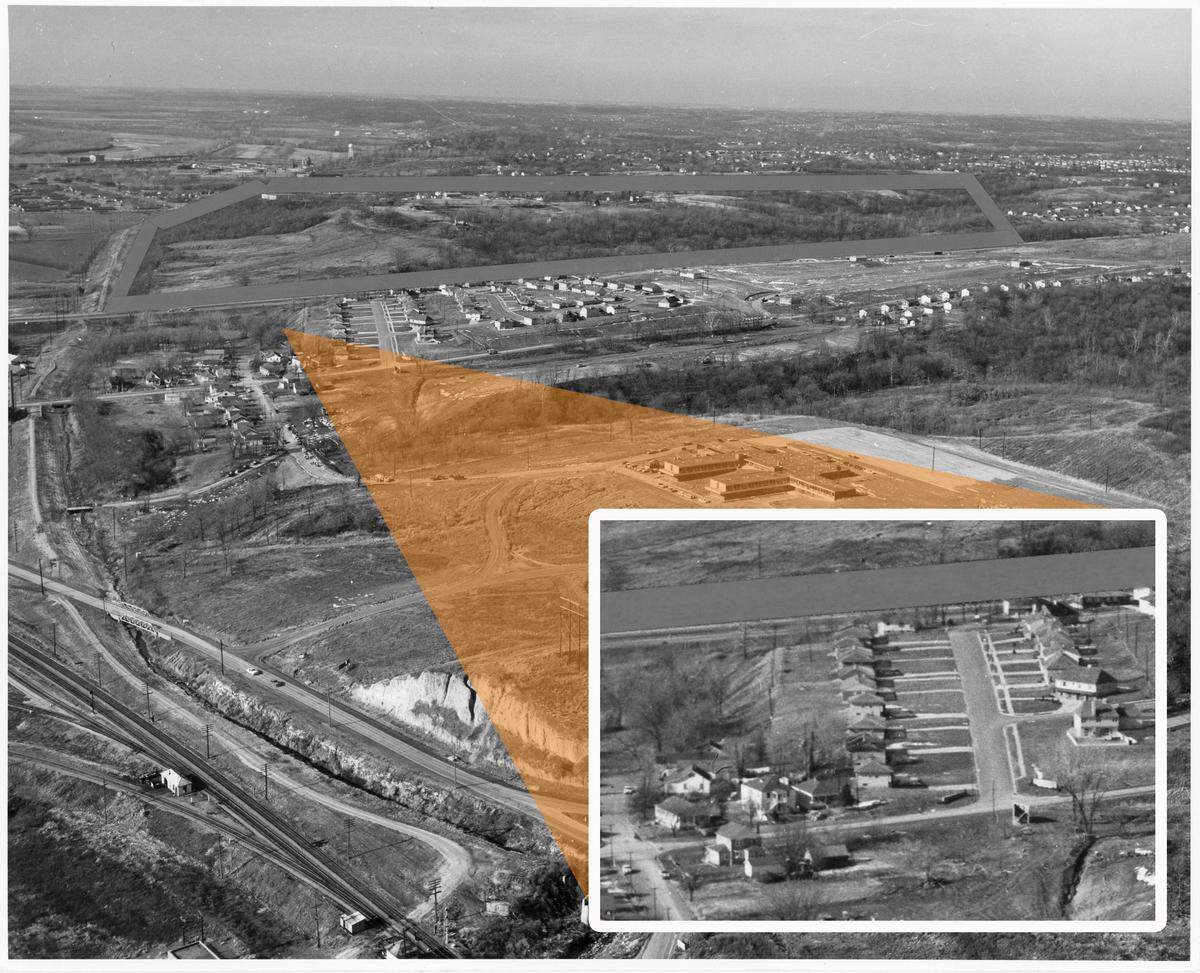
The city purchased the River Forest Park site in 1973 to add to the neighborhood’s amenities. An engineering study revealed that the fill slopes were failing due to years of stormwater runoff and recommended two actions — improve the drainage system and build a retaining wall to stop erosion on nearby private properties.
City officials doubted they could get compensation after more than 20 years had passed, and the study’s recommended actions were not implemented.
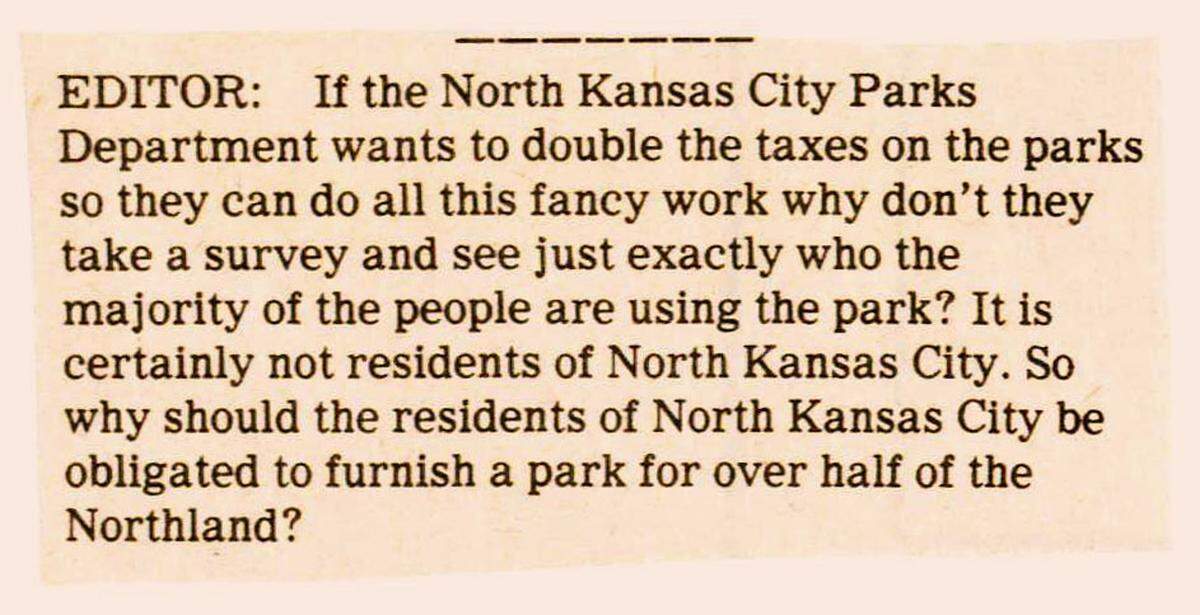
The North Kansas City Historical Society maintains a collection of newspaper clippings from now out-of-print Northland publications.
“At one time, The Star published a section on the Northland,” said NKCHS Secretary Christina Golding, “but a lot of our clippings come from out-of-print papers like The Press-Dispatch, The Sun Chronicle, and others. The clippings are invaluable for documenting what life was like for Northtowners.”
The collection contains little mention of River Forest Park beyond occasional references to preserving its natural character. “It seems like we mostly forgot about the park after we bought it,” said Golding.
Revival attempts begin
In 1981, a local Eagle Scout drafted a proposal for the park that would preserve its natural character while adding basic amenities. Later that year, the Parks and Recreation Department included a development plan in its comprehensive plan, but funding never materialized.
And that’s exactly why River Forest resident and Scoutmaster Jim Rich — the former owner of Clarke’s home — along with Troop 301, conducted a study of the land in 1994.
Their survey found that many “active and knowledgeable citizens” were not even aware the park existed. The group proposed a low-cost plan to preserve the site’s natural character while making it usable for residents.
But nothing happened.
So, the park sat unused. Each year, native trees and plants were crowded out by invasive species. Camping and litter became growing concerns. And, as before, backyards along the park’s northern edge continued to erode.
Clarke became increasingly involved in civic affairs and neighborhood advocacy. “Society needs more ‘nobodies,’ — everyday people willing to step forward, do the work, and serve their communities,” she said.
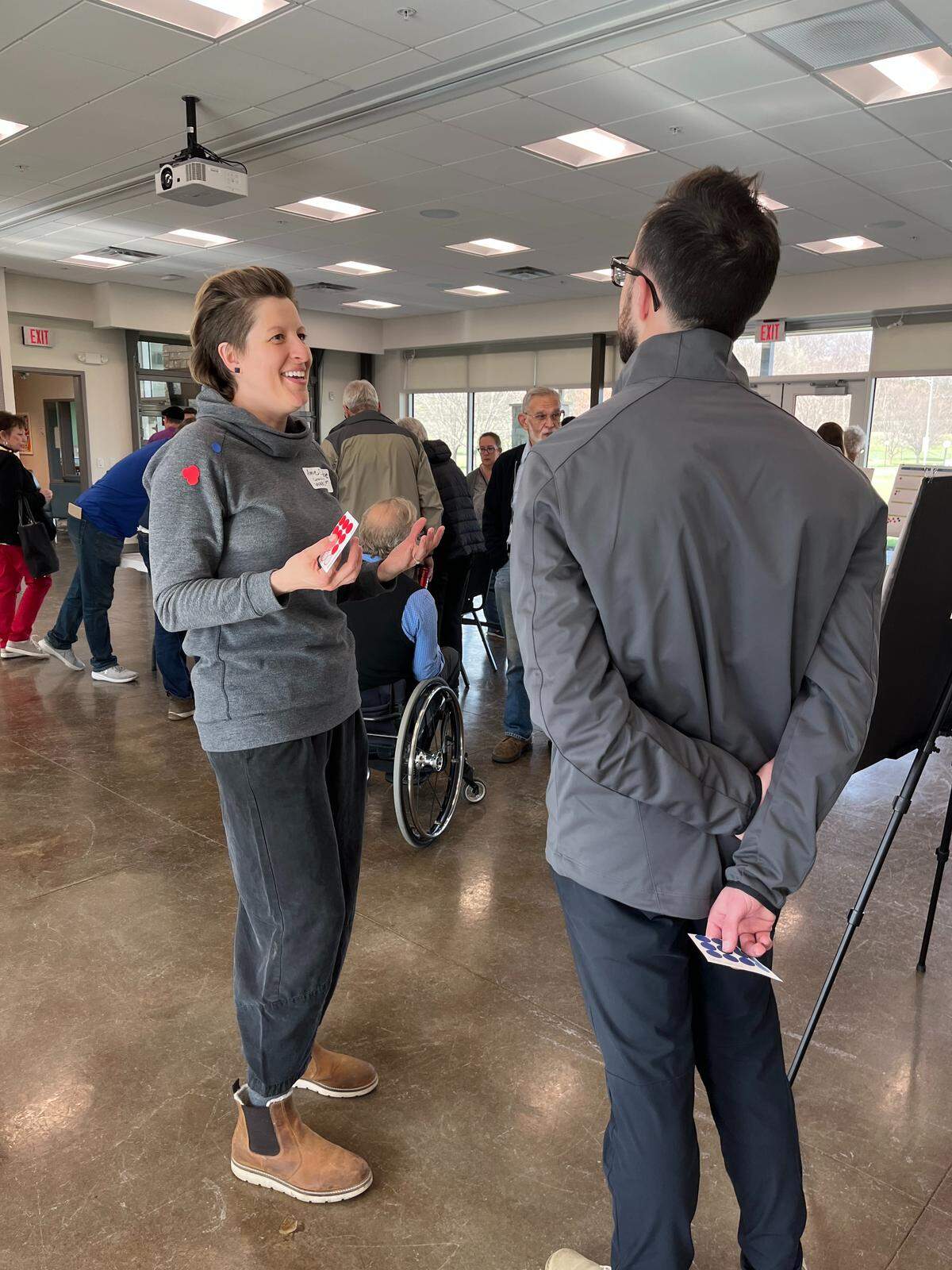
Clarke ran for City Council, going door to door to raise awareness about the park. When she spoke with her neighbors living along the northern edge of the park, many asked how she would address the erosion issues if elected.
When the votes were tallied, Clarke had lost by a razor-thin margin of fewer than five votes. Later, when one of Ward Four’s two representatives moved, she was appointed to fill the vacancy. In 2021, she ran again — this time against two other candidates — and won.
Modern revitalization project
But building a park is no small task. She needed an ally who knew how to get a major project off the ground — Deputy City Administrator Kim Nakahodo.
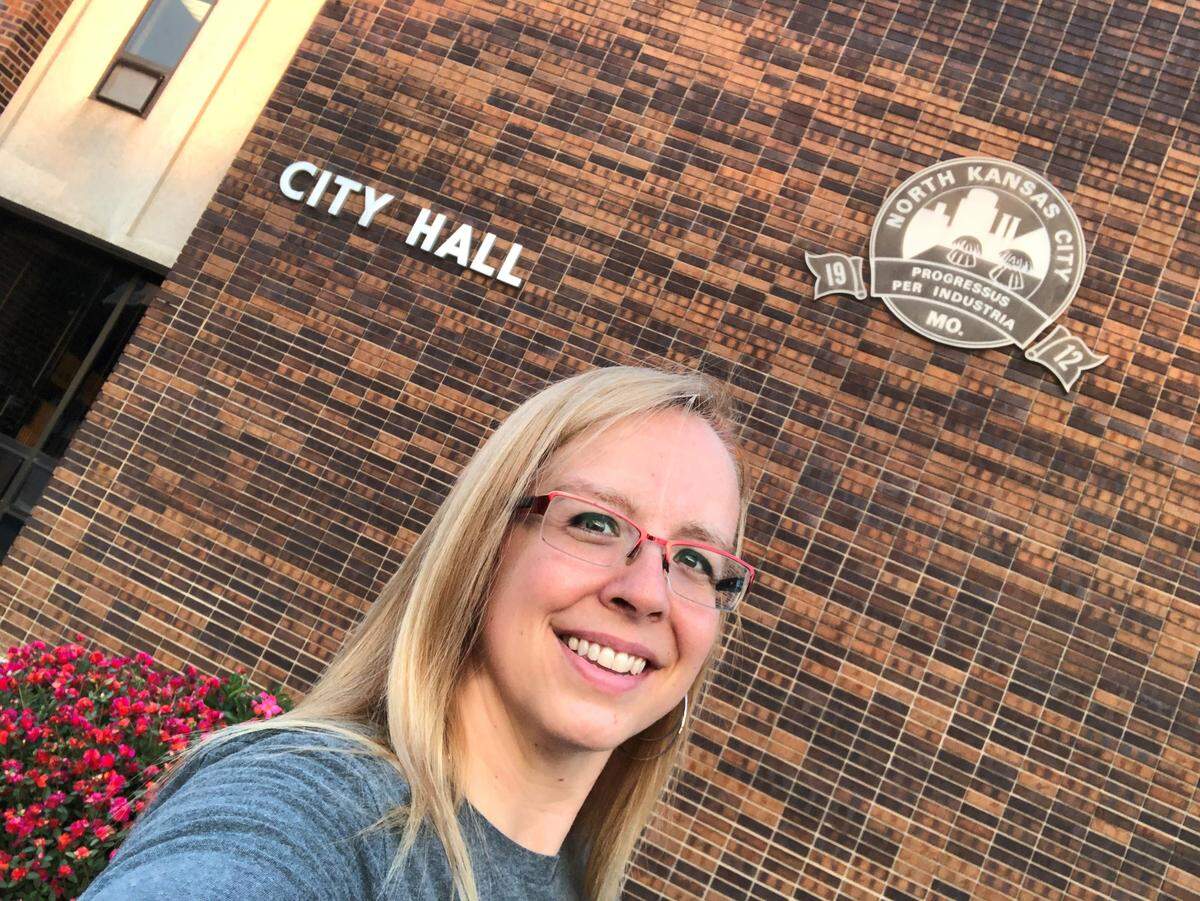
Nakahodo did not initially plan on a career in local government. After graduating from the Kansas City Art Institute, she started out in graphic design. She accepted a job in Kansas City, Missouri’s Communications Office and eventually moved into public administration. In 2018, she brought her experience to North Kansas City.
Nakahodo said she knew about River Forest Park when she started her job, but it wasn’t part of any comprehensive planning strategy.
She realized the first step to move the project forward was to do a feasibility study.

Nakahodo had worked on similar studies before and told Clarke they needed to answer three key questions: Is what we want to do possible? Do we have public support? And, most importantly, how much will it cost?
After some initial research, they realized their vision was similar to earlier proposals: to create a park that preserves the site’s natural character and addresses the erosion issues affecting nearby residents.
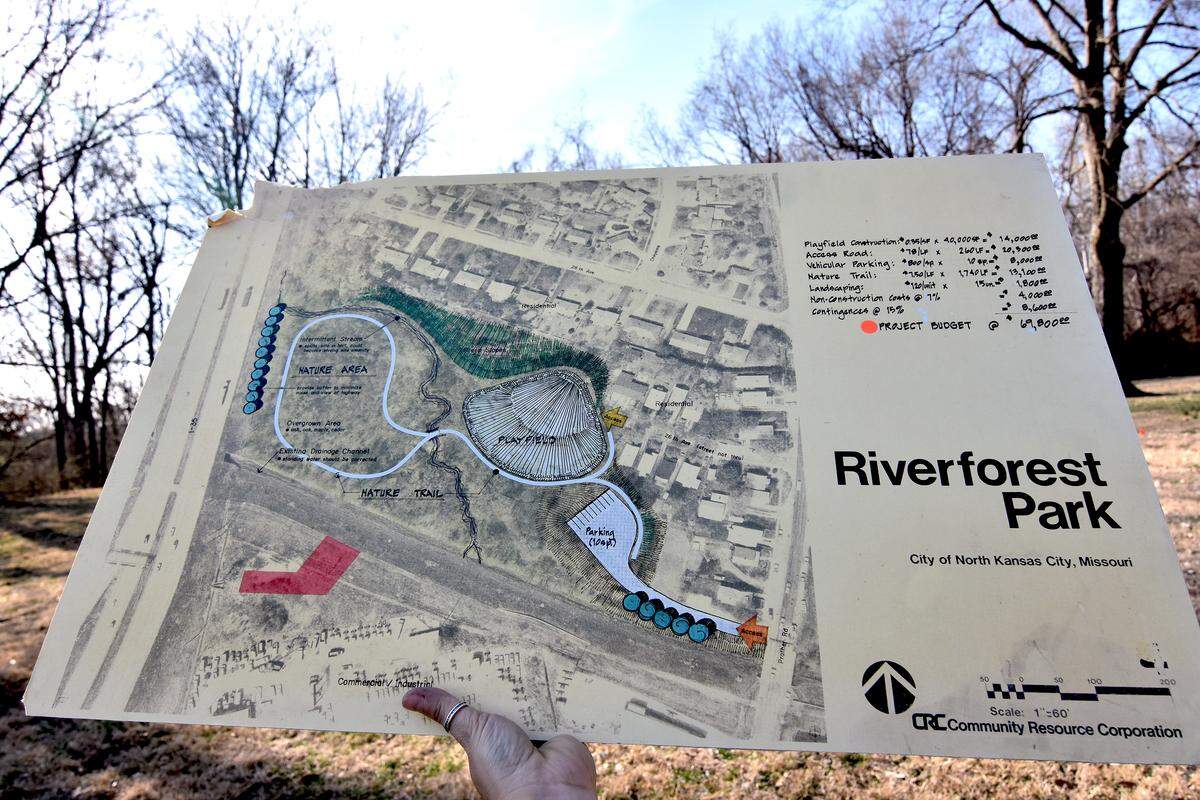
To this day, Nakahodo keeps a large, hand-colored copy in her office of the 1981 development plan found in the basement of the water treatment plant. She brings it to meetings with stakeholders as a visual reminder of the city’s long-unfulfilled obligation to residents.
Nakahodo said residents “had been telling anybody who’d listen” about the erosion problems for years, but nothing happened. “I had one resident tell me she had spoken to five different mayors about it,” she said. As a result, they had significant work to do to rebuild trust.
But things began to change. Nakahodo explained that slowly but surely, a sense of cautious optimism took hold in River Forest.
Next came broader public engagement across the city. They held public meetings and collected feedback online. The feasibility study suggested adding trails and basic amenities, restoring the forest, and undertaking major stabilization work. The estimated cost was more than $2 million.
When Nakahodo looks at the 1981 plan, which projected costs at about $70,000, she wishes she could travel back in time. “Fastest check I’d ever cut,” she said.
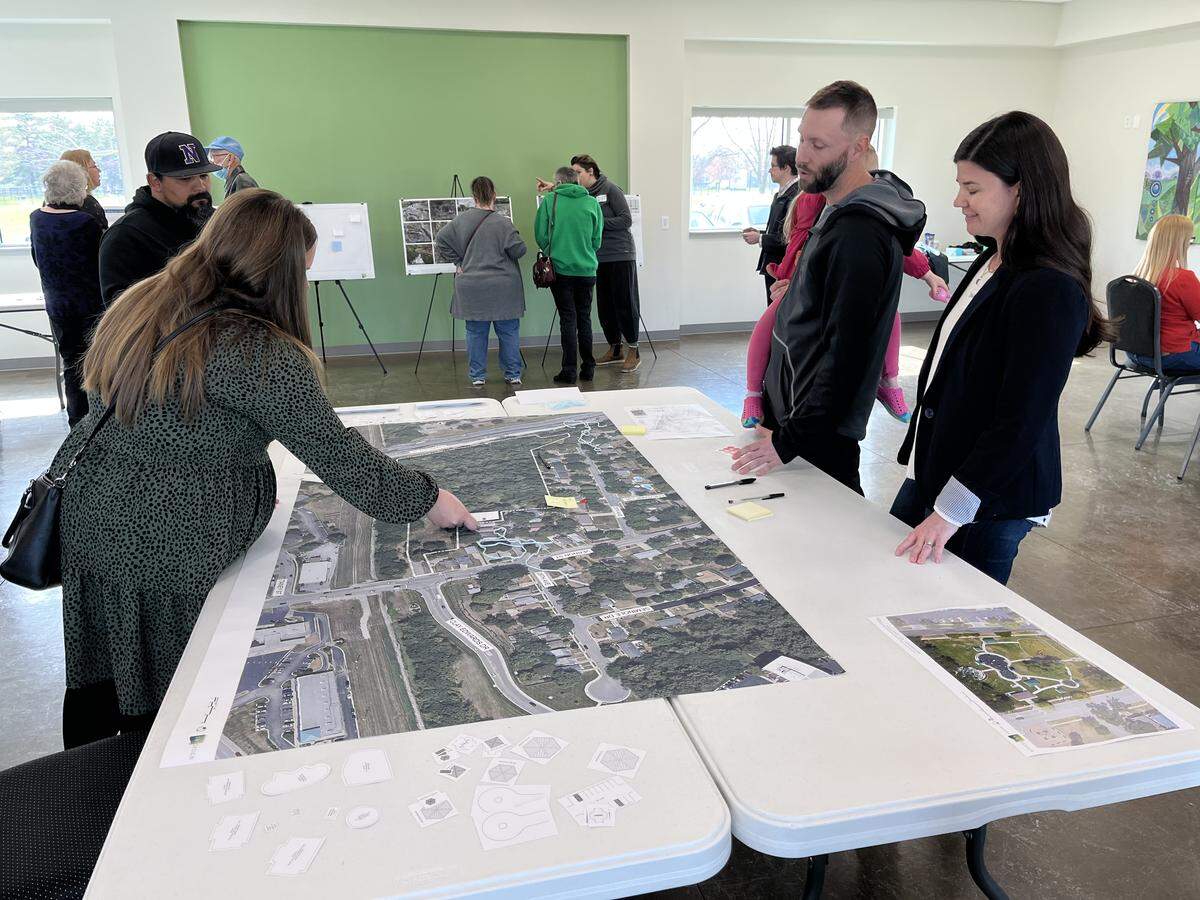
At first, she said the effort was viewed primarily as a park project. But once they began exploring the site — more like “bushwhacking,” as she put it — it became clear the stabilization work would be much more complicated than they expected.
“We had to separate the projects a bit so voters wouldn’t think we were spending all that money on a park,” Clarke said. “There was the park component, which had broad, citywide appeal, and then there was the hillside stabilization work, which would directly impact only the residents along the north edge of the property.”
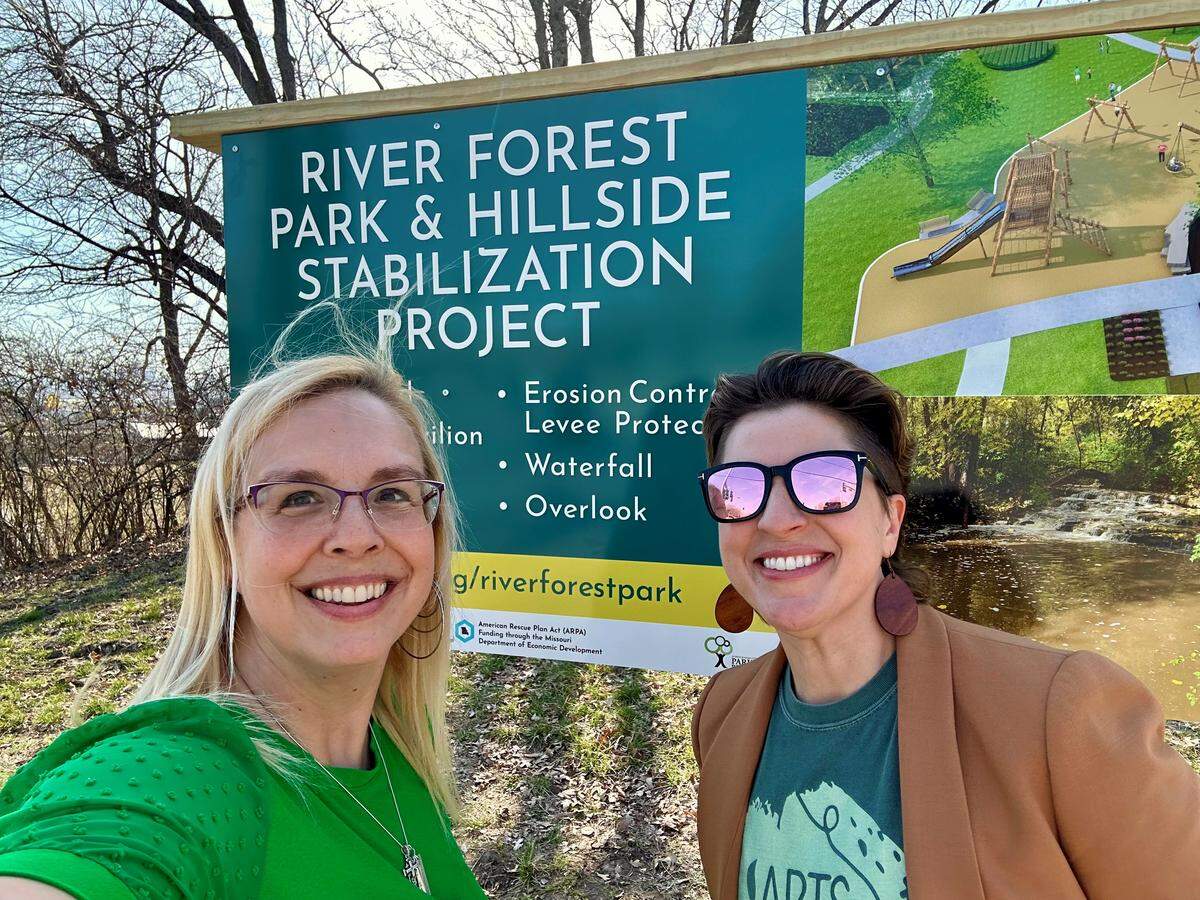
The feasibility study helped North Kansas City apply for a Community Revitalization Grant through the American Rescue Plan Act (ARPA). In early 2023, the city learned it had been approved for a $1,250,000 grant — 50 years after first buying the land.
Clarke took center stage at the groundbreaking on March 13, 2025. Like other city staff and elected officials in attendance, Nakahodo — after placing her 1981 park plan on an easel — donned a hard hat and grabbed a shovel for the photo op.
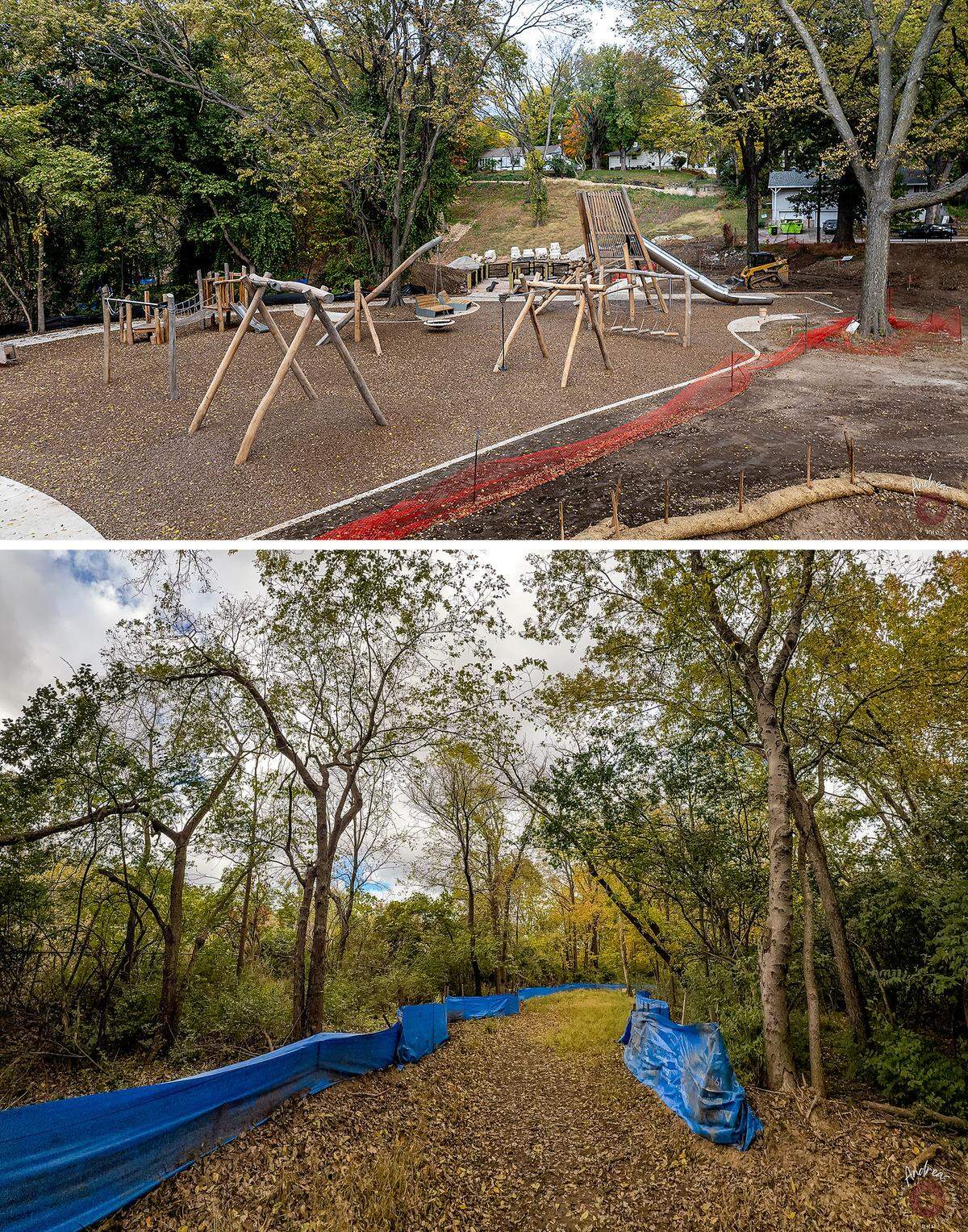
“When we were going door to door to build support for the project, I remember one longtime resident saying, ‘I think I’ll be dead before this actually happens,’” Nakahodo said. “But I think she’s going to make it.”
A ribbon cutting for the opening of River Forest Park at 2400 Vernon Street takes place on Thursday, June 18, at 4 p.m.
Outside of his work with the library, Michael Wells recently began serving on the North Kansas City Council. This story was written and researched before his appointment.
This story was originally published May 27, 2026 at 8:40 AM.