
Alligators were a popular attraction at early 1900s Kansas City amusement park
What’s Your KCQ? previously examined the history of Electric Park, a popular turn-of-the-20th-century amusement park founded by the Heim brothers — Joseph, Ferdinand, and Michael — to draw thirsty visitors to their brewery in the East Bottoms.
As the city expanded south, the Heims followed suit and relocated Electric Park to 46th Street and The Paseo, just north of Brush Creek. A reported crowd of 53,000 attended the grand opening on May 19, 1907. The new park featured a giant swing, water chute, scenic railway, and other amusements.
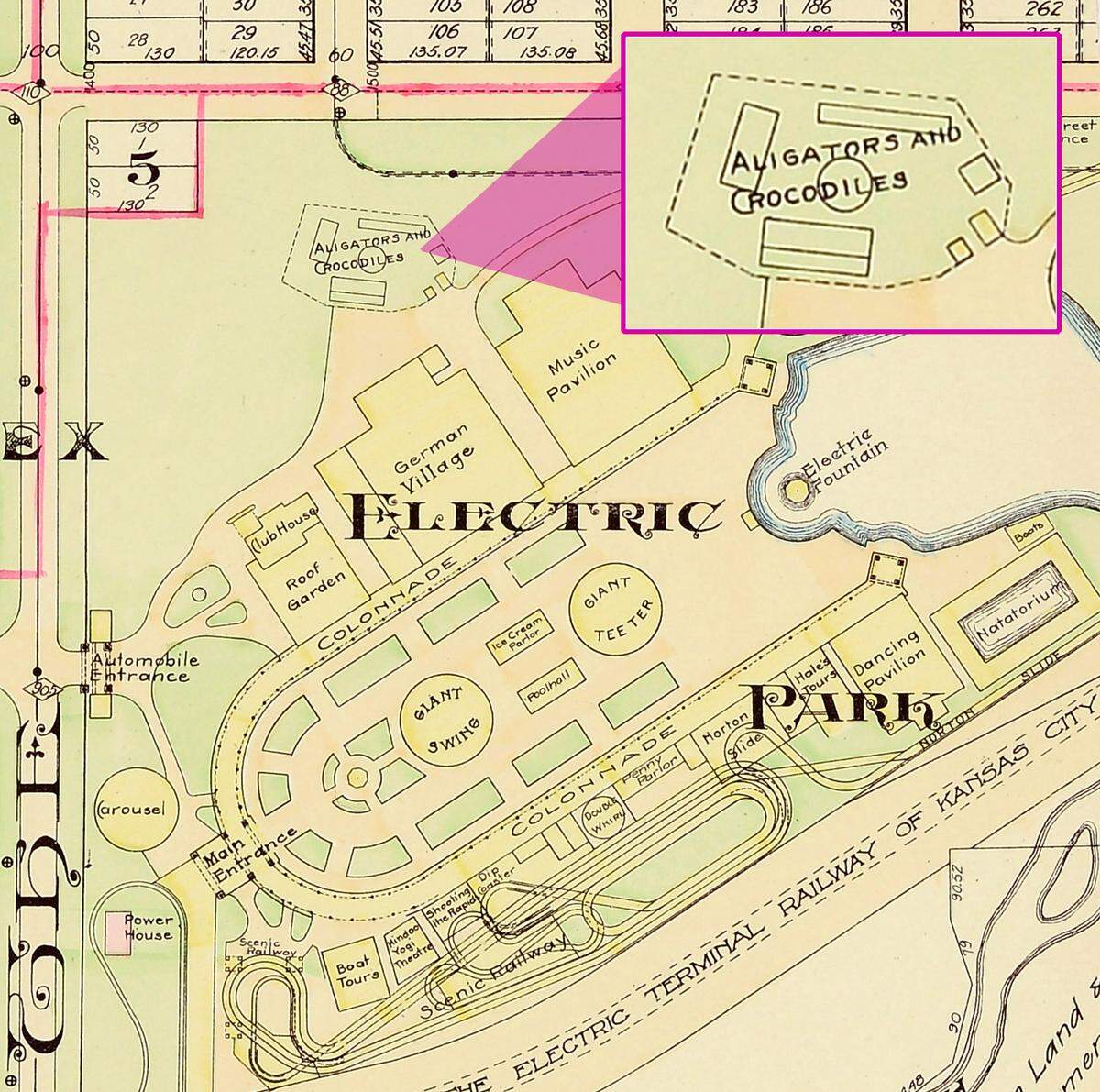
But it was an entirely different type of thrill — alligators and crocodiles — that caught the eye of a reader examining a 1907 map of Electric Park. They asked the KCQ team to investigate the backstory of the toothy attraction and how long it remained at the park.
In researching the question, we discovered a ’gator-wrestling Floridian called Alligator Joe, his public wedding at Electric Park and crocodiles on the loose in Brush Creek.
The evolution of Electric Park
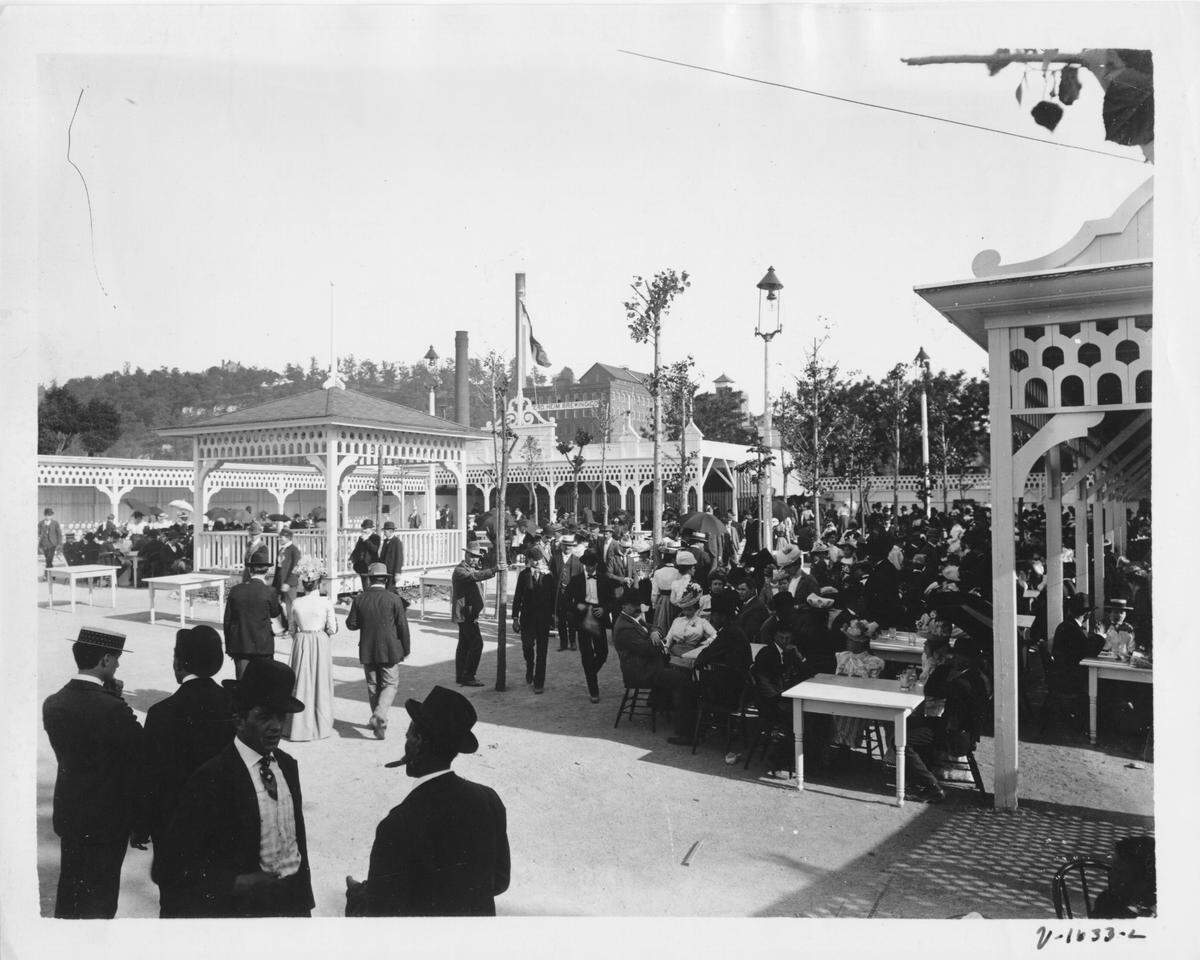
The original Electric Park opened north of the Heim Brewery at Montgall and Nicholson avenues in the East Bottoms. It was an immediate hit with the public, who enjoyed the park’s open-air theater, German Village, and majestic Electric Fountain. It was dubbed “Kansas City’s Coney Island.”
New attractions, including live animals, were added to keep the public coming back. Monkeys were introduced for the 1904 season and a popular touring act called the High Diving Elks, which featured elks trained to jump from heights of more than 20 feet into a water tank. But it was the arrival of several hundred alligators and crocodiles in 1906 that generated the most excitement among park-goers.
Two carloads of the creatures arrived in Kansas City by rail from Miami, Florida, on the morning of May 6. Curious onlookers watched as large alligators and crocodiles with muzzled snouts were unloaded from the rail cars, along with hundreds of smaller ones. Three otters and several rattlesnakes were also among the cargo.
‘Alligator Joe’ arrives in KC
Warren Frazee of Palm Beach, Florida, better known as “Alligator Joe,” oversaw the transfer of the animals to Electric Park. The burly, often bare-footed Frazee operated a popular alligator farm in his hometown, where guests paid for up-close views of reptiles and to watch him wrestle large crocodiles and perform other stunts.
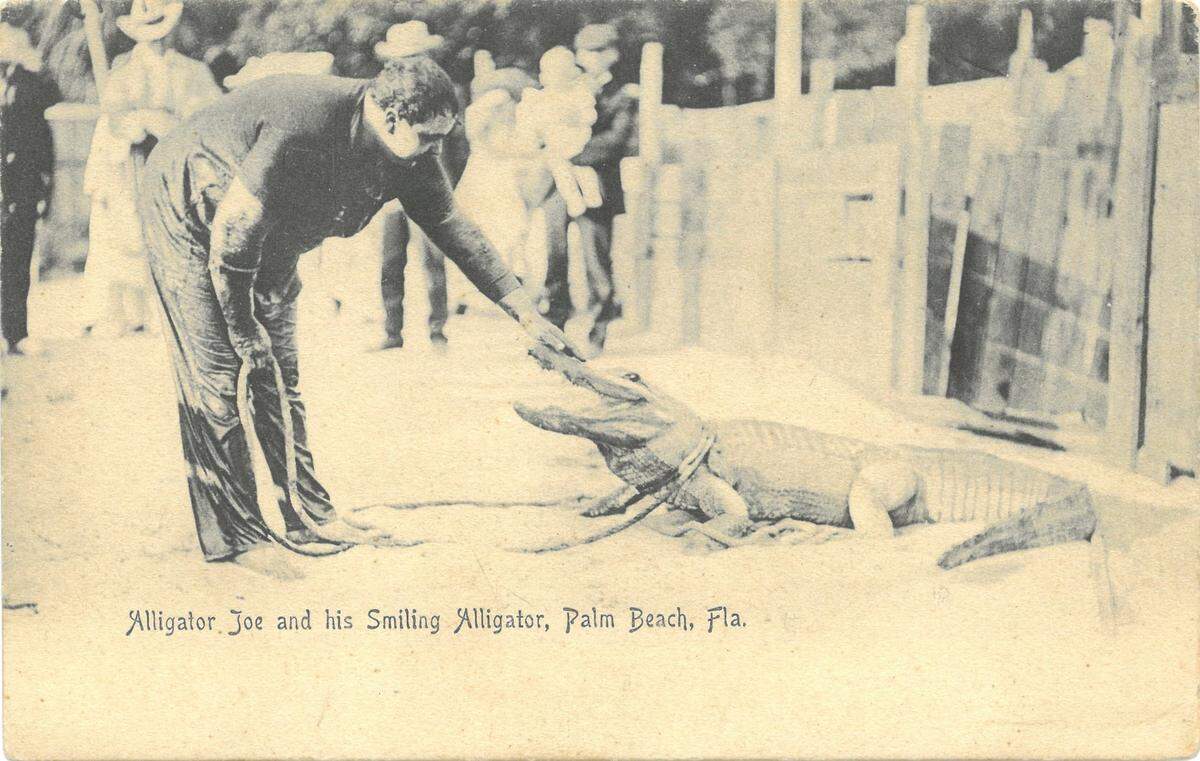
Frazee was born in Jacksonville, Florida in 1873 and was legendary in the Sunshine State for his trapping and hunting prowess. Part of his business was selling exotic animals to zoos, including two rare manatees purchased by the New York Aquarium in 1904.
He took his reptile show on the road during the warm-weather months, traveling northeast to Atlantic City, Boston and New York. In 1906, Frazee brought his alligator farm west to Kansas City – perhaps at the request of Michael Heim, who went on winter fishing excursions in Florida.
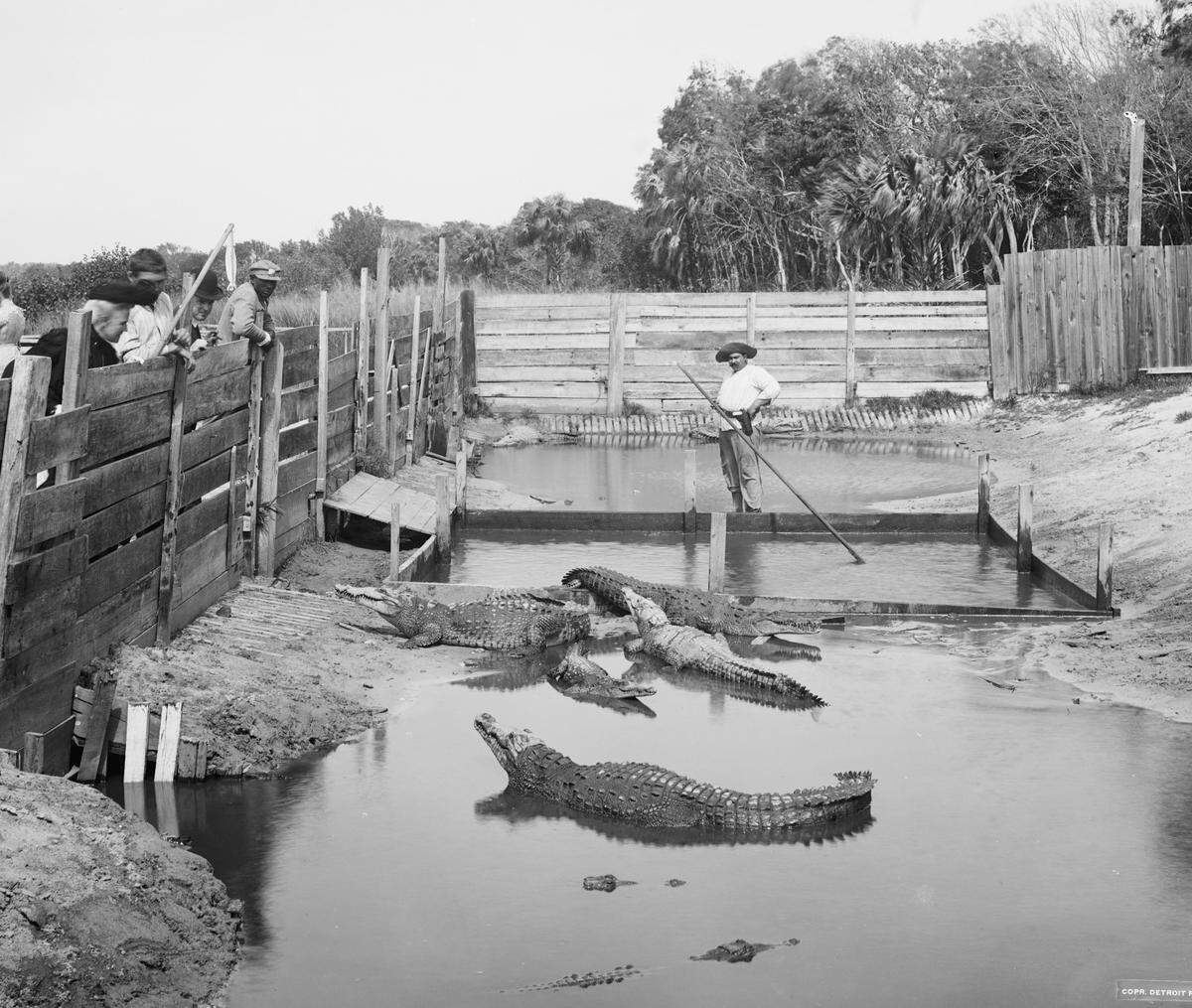
In preparation for the new attraction, Electric Park expanded by three acres, and a 100’ by 300’ rectangular enclosure was built containing manmade pools and sandy slopes. Tropical plants completed the jungle scenery.
With the Swope Park Zoo still three years from opening, this was the first opportunity for many Kansas Citians to see such exotic reptiles firsthand.
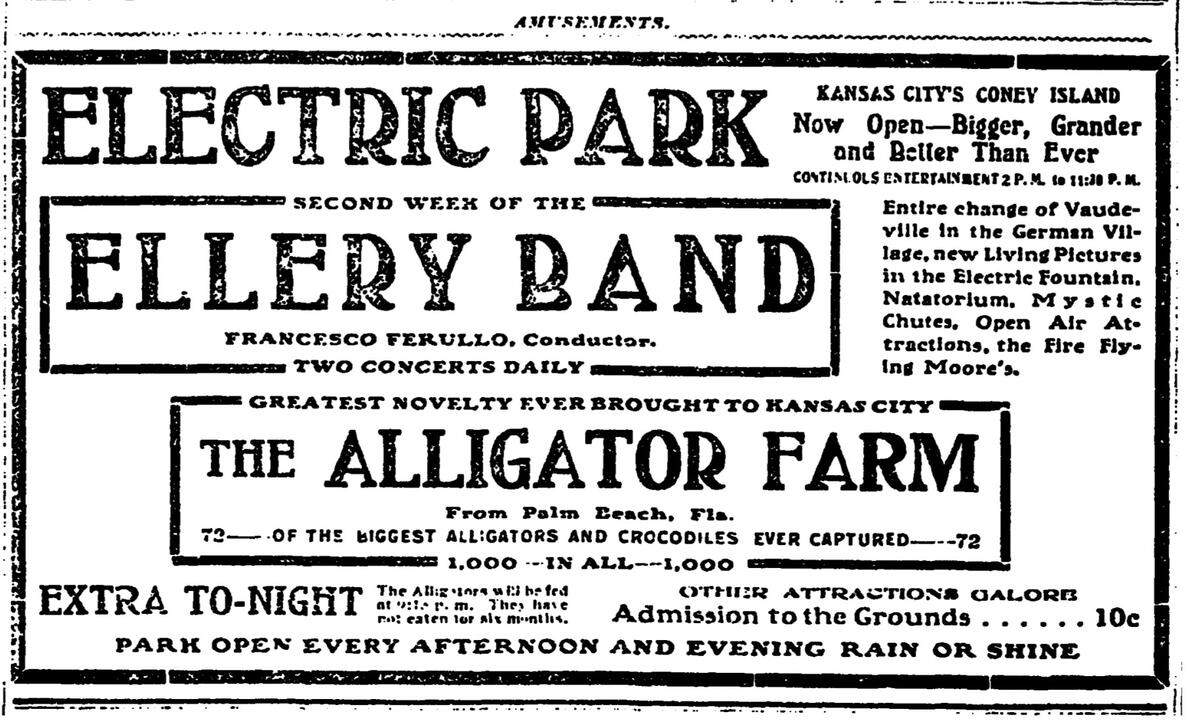
The alligator farm returned as an attraction in 1907 when the new Electric Park opened. In addition to his collection of alligators and crocodiles, Frazee brought with him two sea turtles, each weighing as much as 300 pounds.
Tragedy at the alligator farm
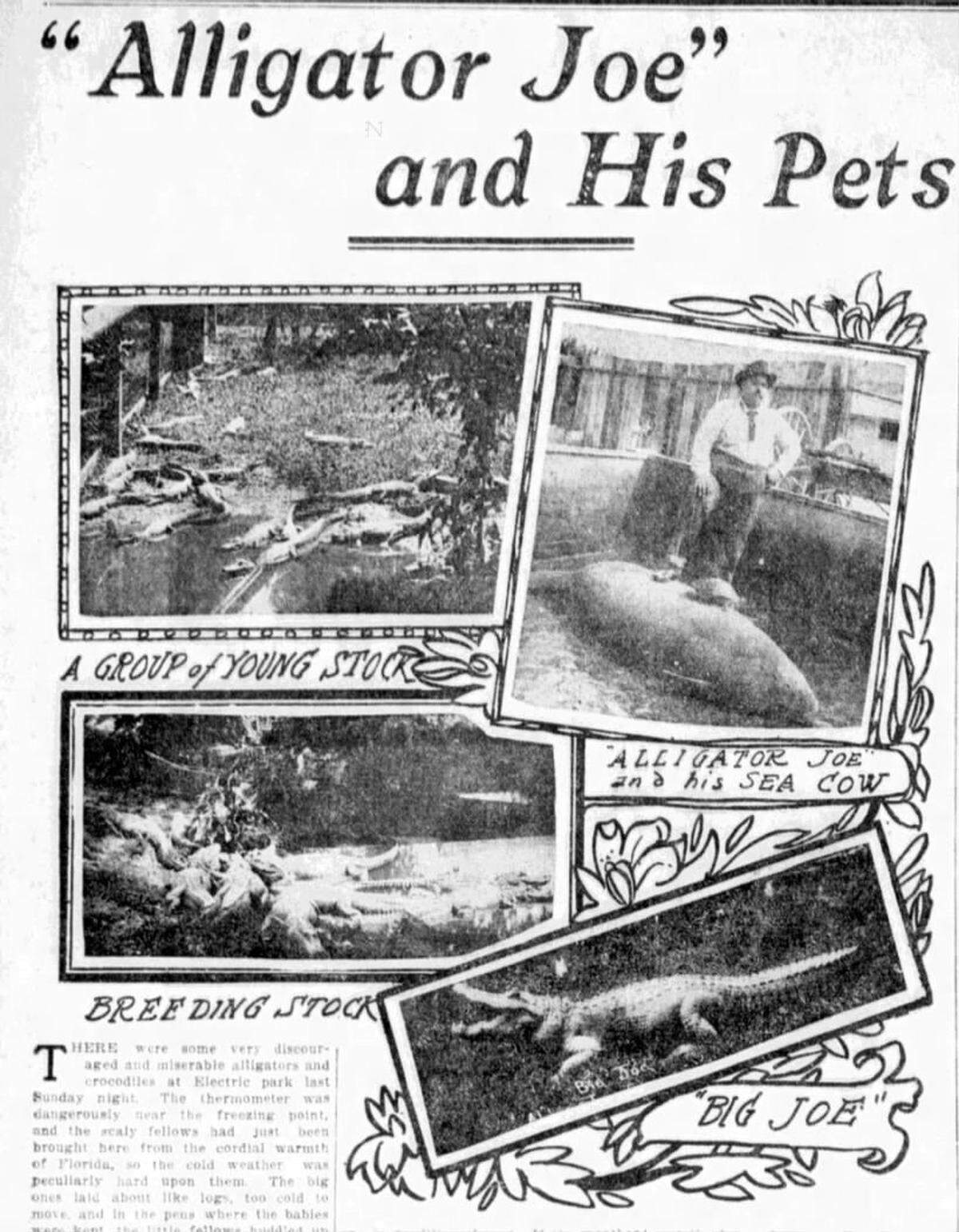
However, the season got off to a precarious start when a late May frost endangered the health of the reptiles, and it was necessary to light fires to keep them warm. Although none were lost due to the freezing temperatures, tragedy struck later that year resulting in the death of “Big Joe,” among the oldest and largest alligators exhibited at Electric Park.
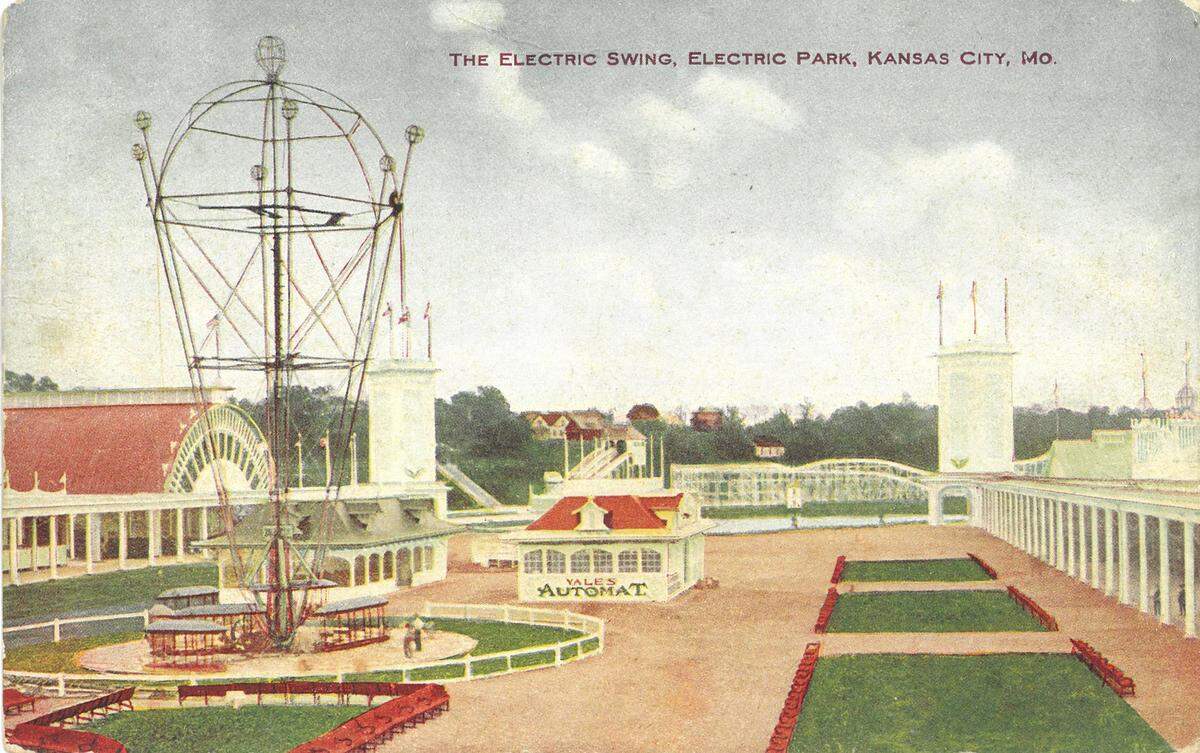
On June 11, the Giant Swing ride in the main courtyard of Electric Park crashed to the ground due to a mechanical failure. While no person was seriously injured, the loud noise and ensuing pandemonium agitated the occupants of the nearby alligator farm.
The commotion caused Big Joe to begin aggressively biting other alligators. Then, according to a Kansas City Post report, “All of the alligators, little and big, combined and made an attack on Joe.” Severely injured and weakened from the onslaught, the once alpha alligator fell from a rock, plunged into a pool, and “in a few minutes was dead.”
Frazee returned to Electric Park for the 1909 season, bringing with him some 2,000 alligators and crocodiles of various sizes, as well as a special attraction: a one-ton manatee he had captured and named Hortense. It was purported to be the first manatee to survive the inland journey to the Midwest and one of only a few in captivity.
Alligator Joe’s extravagant wedding
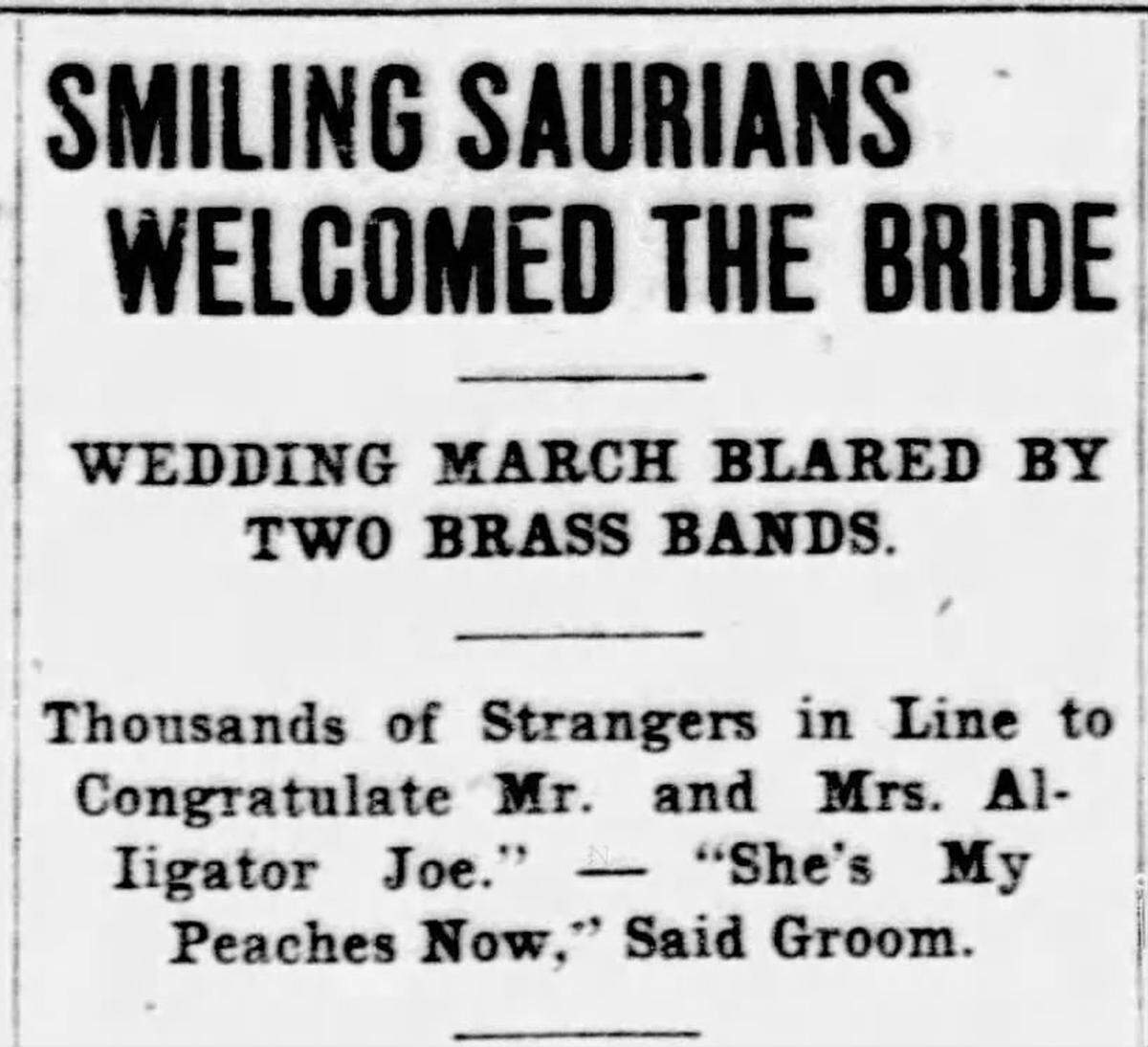
That same year Frazee proposed to 19-year-old Cleopatra Croff, a farmer’s daughter from Carthage, Missouri, whom he met at Electric Park. Ever the showman, Frazee agreed to a public wedding at the park during the Missouri Valley Fair, held in conjunction with the annual Priests of Pallas fall festival.
More than a thousand spectators paid 10 cents each to attend the October 3, 1909, nuptials. The bridal party made a grand entrance into the park by automobile with a police escort and accompanied by two brass bands.
The service took place on a platform that crossed over a tank of alligators. Adding to the spectacle, Frazee later “hypnotized” an alligator for the guests, one of the tricks he performed in his shows, while his bride sold six-inch baby alligators to those wanting to take home a unique wedding souvenir.
Alligator escape in Kansas City
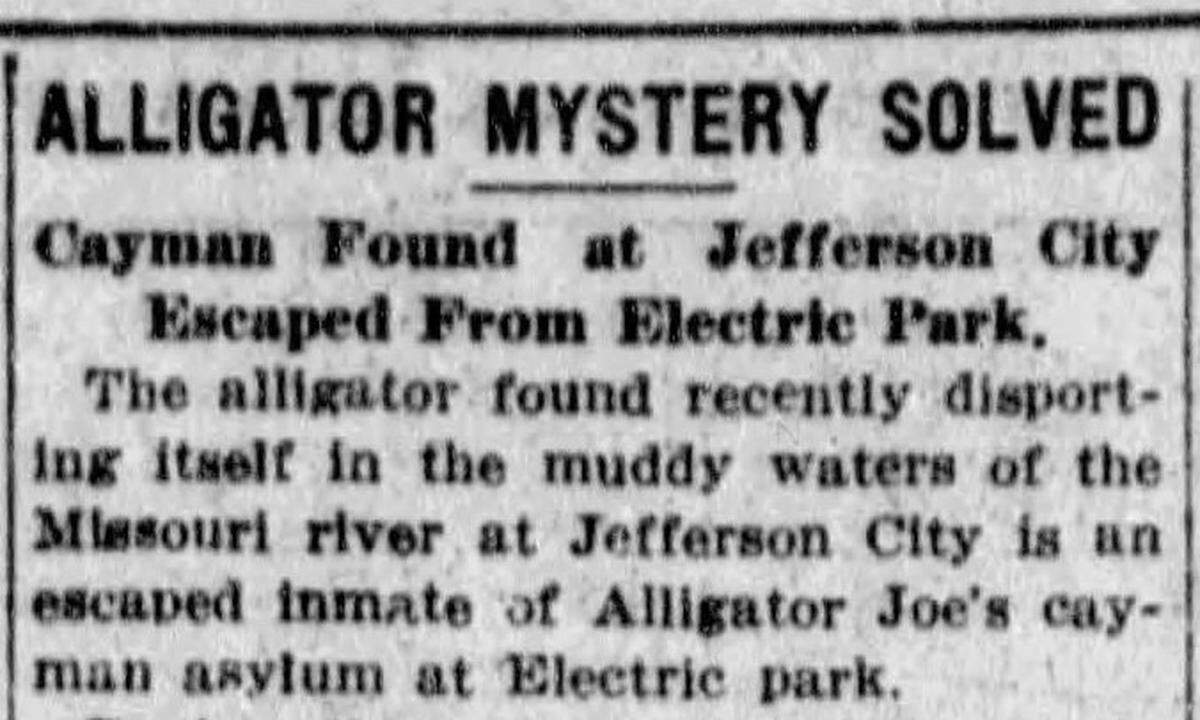
The alligator farm at Electric Park made little news until May 29, 1915, when several specimens escaped their enclosure. Torrential rains caused major flooding of Brush Creek, spilling over into the park grounds. The high water allowed several smaller alligators to slip away by wriggling under a fence.
Three were eventually recovered from Brush Creek. At least two made it to the Missouri River – the first captured in Boonville, Missouri, and the largest, a 3-footer, pulled from the river near Jefferson City by a fisherman, nearly three months after its escape.
What happened to the Electric Park alligators?
Later that year, Frazee tragically died from pneumonia while showcasing his reptiles at the Panama-Pacific Exposition in San Francisco, California. Before his death, he sold 10 alligators to the Kansas City Park Board for exhibition at the Swope Park Zoo.
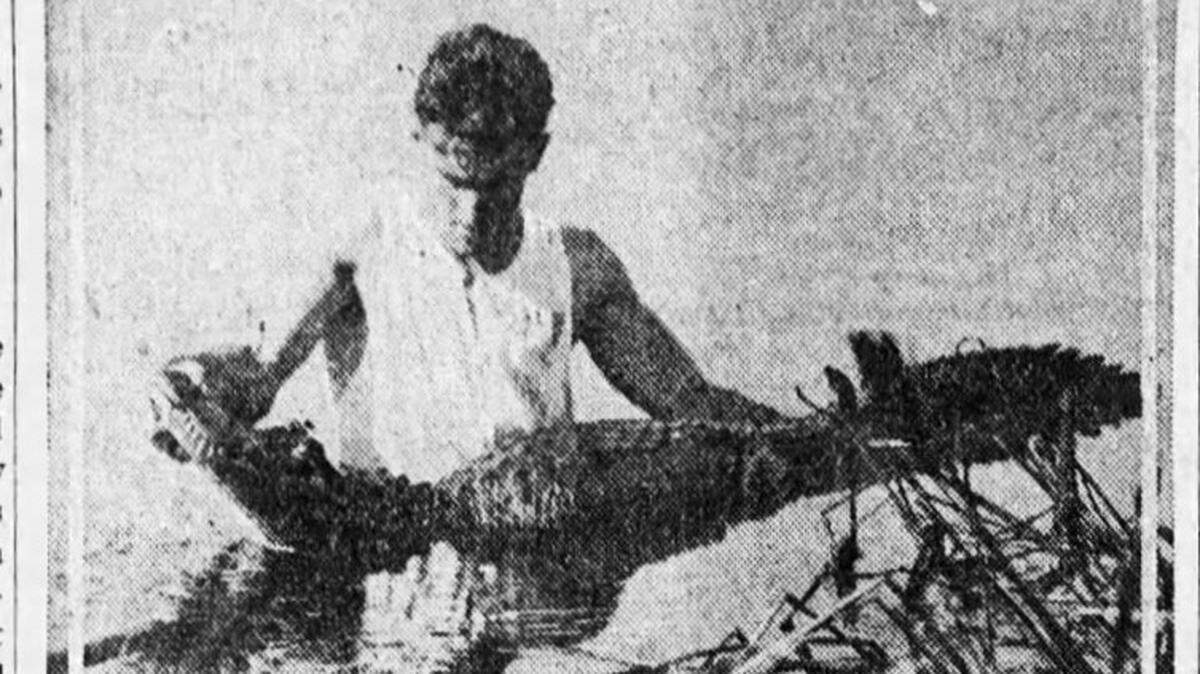
The 1921 season at Electric Park featured another reptile tamer in 23-year-old Henry Coppinger Jr. Performing as the “Alligator Boy,” he entertained park visitors nightly by diving into a pool containing two dozen or more of the reptiles and capturing one with his bare hands. Like Frazee before him, Coppinger hailed from Florida and had hunted and raised alligators and crocodiles from a young age.
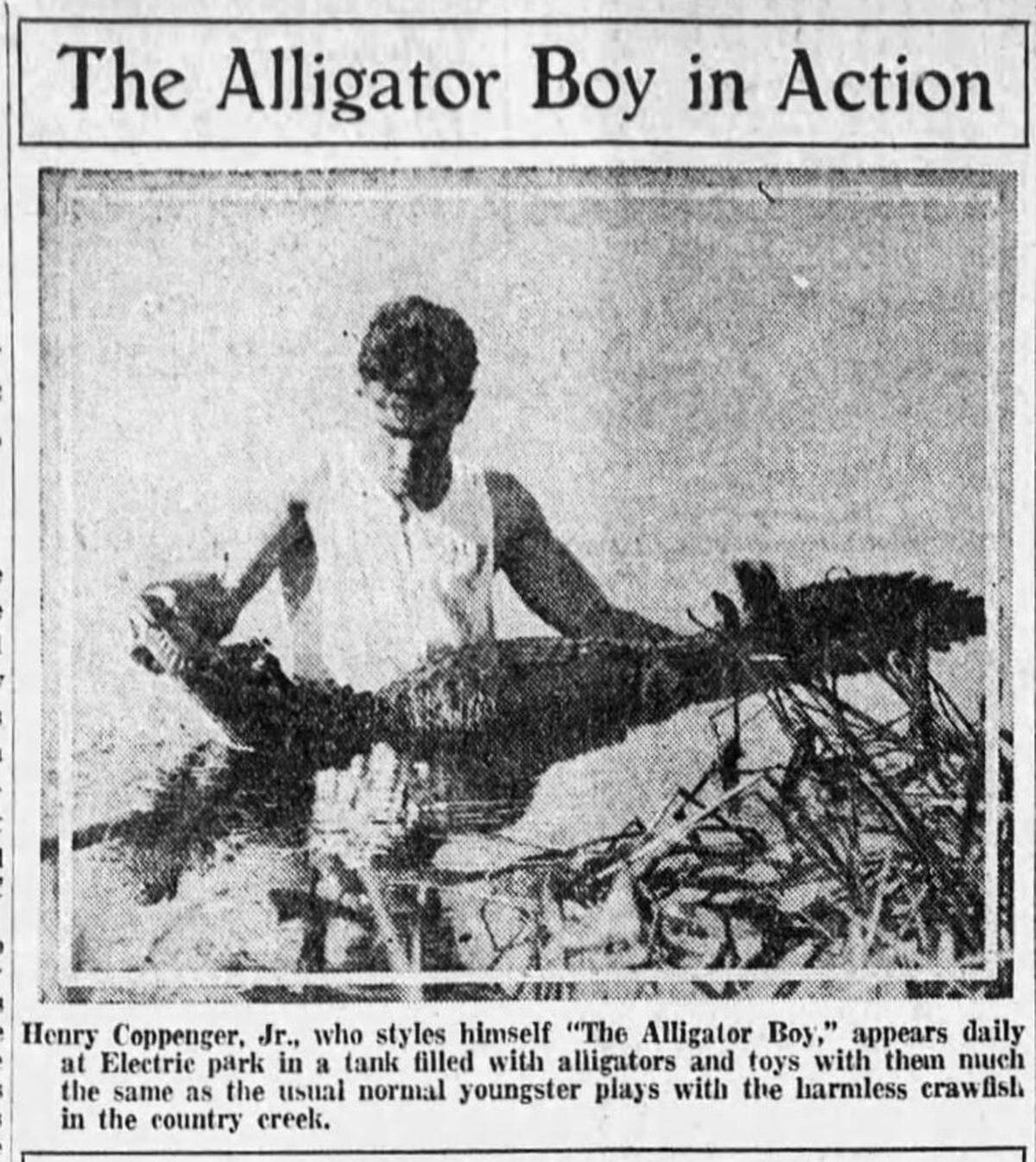
Coppinger’s stint at Electric Park was short-lived, however, after suffering a bite to his arm during a performance. Undeterred, he would continue to perform at other parks across the country for the next decade.
It is unclear if the alligator farm at Electric Park remained an attraction after the 1921 season.
Park attendance lagged over the next several years, largely due to competition from other entertainment venues and more Kansas Citians traveling by automobile to vacation destinations. Electric Park permanently closed in 1925 after a fire destroyed all but a few attractions.
Alligators and other reptiles have remained a mainstay attraction at zoos and other animal parks, including Alligator Alley at the Kansas City Zoo.
This story was originally published April 14, 2025 at 5:00 AM.