Delta Anthenaeum building at 900 E. Linwood Blvd., in Kansas City. Mo.
Rich Sugg
rsugg@kcstar.com
Situated at the corner of Linwood Boulevard and Campbell Street, with its four white pillars, beaming red doors and large cascading steps, the nearly 110-year-old Delta Athenaeum stands as a landmark in midtown.
The building is home to the Kansas City Alumnae Chapter of Delta Sigma Theta Sorority, Inc., a historic, national Black sorority and civic organization. The sorority’s DEED Foundation, which stands for Delta Educational and Economic Development, owns and operates the space.
The 15,000-square-foot house serves as a command post for the branch of the sorority to lead its work in the community. On a given day, chapter meetings, events like panel discussions about voting rights, workshops for middle school girls about careers in STEM, community listening sessions on local issues and fundraisers for scholarships take place inside.
While the Kansas City Delta chapter has only owned the building since 2015, the origin stories of both the sorority and the iconic building are closely interwoven, taking us back more than 100 years.
At the core of both: Community service and sisterhood.
What’s your KCQ? the collaborative project between The Star and the Kansas City Public Library that seeks to answer reader questions and explore Kansas City’s history and quirks learned more.
The Athenaeum Club House
In its nearly 110-year history in Kansas City, the Delta Athenaeum building has always been owned and run by women working to make a difference in the city.
Formerly known as the Athenaeum Club House, the building’s original steward was a group of civic-minded women interested in promoting educational opportunities called the Kansas City Athenaeum Club.
Founded in 1894, the club was named after founding member Dr. Martha Dibble, who was inspired by Boston’s Athenaeum.
“She wanted the local club to have a name that would typify culture. Members unanimously agreed that the Athenaeum Club House should have Grecian architecture because of the club’s name,” Kansas City Athenaeum Historian Donna Calvin said in an emailed statement.
The women in the Athenaeum Club provided supplies to the first public kindergarten in Kansas City, formed one of the state’s first traveling libraries and helped to establish the Missouri Federation of Women’s Clubs, Inc. It’s known to be one of the oldest women’s clubs in Kansas City.
“They started forming these literary societies — literary groups for women — because they couldn’t go to universities or colleges, and they wanted to study with professors and learn about all kinds of things in the world that were being taught at university,” said Lisa Hardwick, a member of the Delta Sigma Theta Sorority, Inc. and the current property manager of the building.
“Into the early 1900s they started to think more about advocacy, women rights and trying to create schools. One of the things they started to organize around was suffrage.”
The club took on many civic and philanthropic causes and many women would develop departments within the organization to focus their interests and talents. Those departments included, a home economic department, civic league department, a Bible department, and current events departments.
As the Athenaeum Club became more politically active, the women sought out a dedicated space for their efforts, according to Hardwick. By 1913, the women raised around $33,000 in hopes of buying a lot and building a home for their organization. At this time, the group was nearly 500 women strong.
The club bought the lot and built the building now known as the Delta Athenaeum for around $50,000. By the 1920s, its membership grew to more than 900 people.
Photograph of the Kansas City Athenaeum building at the corner of Campbell St. and Linwood Boulevard circa 1981. The building, designed by architect Samuel Tarbet and opened in 1914, serves as the home for the Kansas City Women’s Athenaeum Club, which was founded in 1894 and focused on cultural programming for local women. Kansas City Public Library, Missouri Valley Special Collections
“A tremendous coincidence”
Just months before the Athenaeum Club members in Kansas City bought the land to build the club house, almost 1,000 miles away, the house’s future inhabitants were making history of their own.
On the campus of Howard University in Washington, D.C., a contingency of 22 Black collegiate women joined together to form the Delta Sigma Theta Sorority, Inc. on Jan. 13, 1913.
Also taking a stance on women’s rights, the sorority’s first public act as an organization was participating in the Woman Suffrage March of 1913.
“It’s just a tremendous coincidence that in 1913, the group that was building the Athenaeum was doing the same thing that the Deltas were doing,” Hardwick said.
Over the past century, the sorority has garnered more than 350,000 members nationwide and has mobilized its members to work in their respective communities on issues related to education, economic development, physical and mental health and more.
Notable members include Aretha Franklin, poet Nikki Giovanni, civil rights activist Fannie Lou Hamer and Kansas City’s own Inez Kaiser, the first Black woman to own a public relations firm.
Here in Kansas City, the sorority’s local alumnae chapter has been active for more than 50 years. In that time, the chapter has hosted an array of youth programming, raised nearly $1.5 million in scholarships, educated the public on voting rights and more.
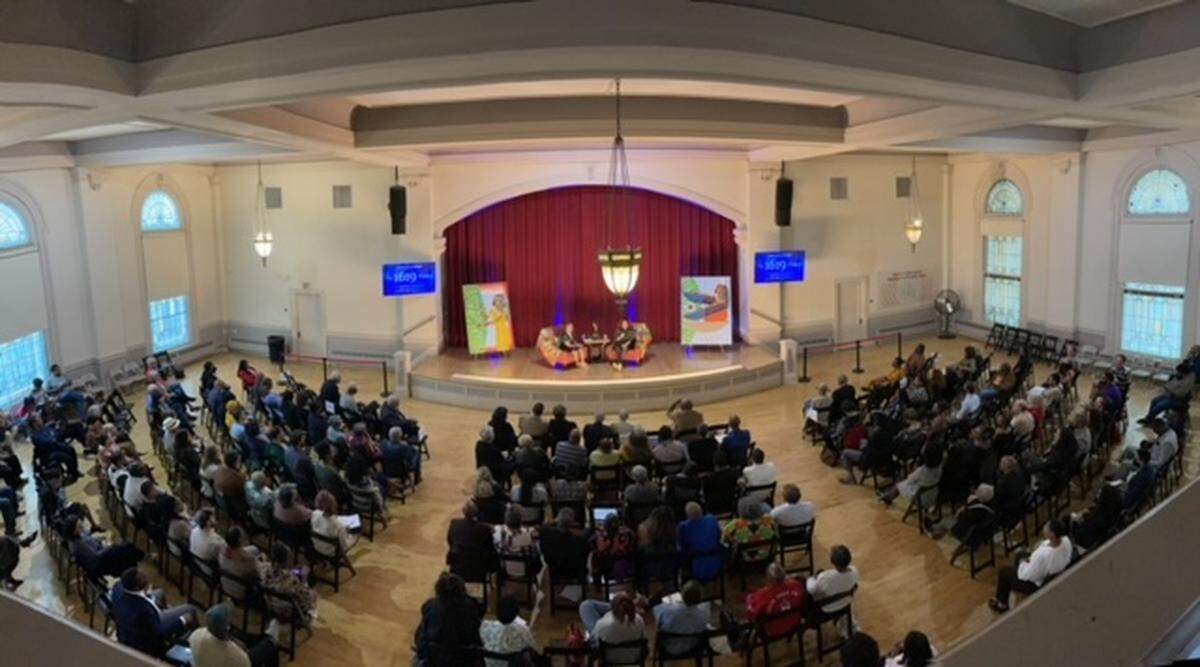
The auditorium of the Delta Athenaeum full for a speaker event featuring Nikole Hannah-Jones. Delta Sigma Theta, Inc. Kansas City
Becoming the Delta Athenaeum
In the late 1990s, the KCMO alumnae chapter decided it wanted to expand its work by purchasing a local building to serve as its headquarters.
About 10 years later, the owners of the historic Athenaeum reached out to women’s groups around Kansas City in search of a tenant to rent the building, including the local Delta chapter. Sorority members visited the building for a one time meeting and quickly realized that they did not want to just rent the space — they wanted to purchase the building.
“We looked at so [many properties] and never could really come to a decision,” said Kansas City Alumnae Chapter President Dionne Greenfield. “When we went and looked at this particular place, for the first time it seemed like we had more buy-in from the members.”
Greenfield said the aesthetic of the building is what caught members’ eyes.
The Athenaeum has been listed on the National Register of Historic Places since 1979. From the ballroom, stained glass windows, 30-foot-high ceilings and a balcony that overlooks the ballroom, the building is full of character.
“It’s just a magnificent gathering space,” Hardwick said.
Unfortunately, Hardwick said the original owners of the building weren’t ready to sell in 2010, but sorority members continued to show interest in acquiring the space, especially as they learned more about its shared history and values of service and sisterhood.
More than five years after that first meeting, the Kansas City Athenaeum Club decided it was ready to sell.
“When membership declined to the point that the Kansas City Athenaeum board was faced with selling the property, we were relieved that the DEED Foundation was interested. The Delta Athenaeum enables the building to continue its original purpose of offering a space for service and education,” Calvin said.
With the support of the local chapter of the sorority and a major fundraising effort, the sorority’s DEED foundation was able to purchase the building in 2015 for $315,000, and has put in nearly $150,000 in renovations since then.
The sorority made its final payment on the building in 2022 and celebrated by burning the mortgage.
“The remarkable thing about what the Deltas and the DEED foundation do is that we’re all volunteers. This building is completely run by volunteers,” Hardwick said.
In addition to the sorority chapter and its foundation, The Athenaeum is now also home to Midtown Church, which has services every sunday. Cool Guys Food, a concert caterer, also leases the building’s kitchen, and a summer camp called Entitled Learning rents the building during the summer months.
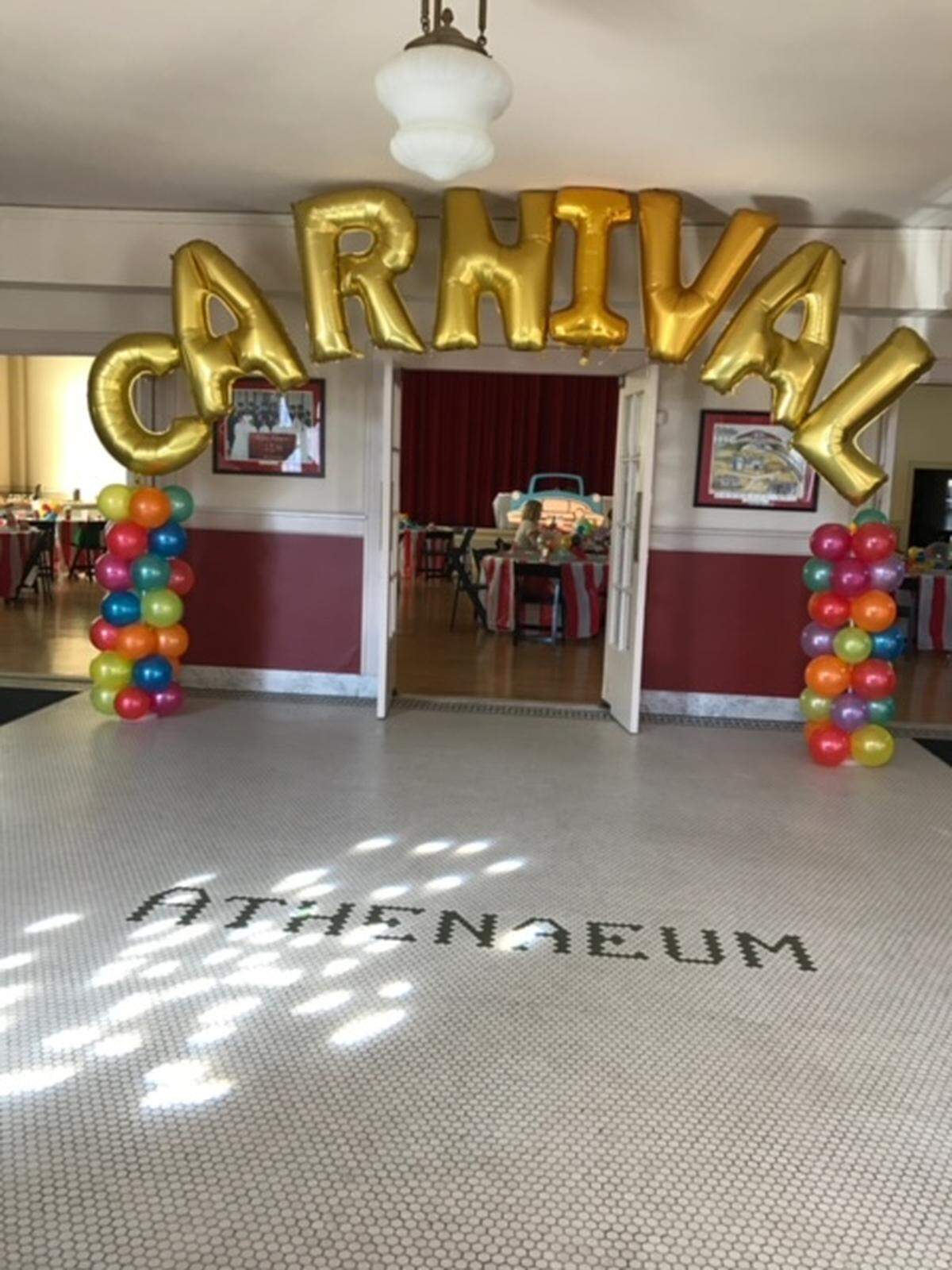
Decorations in the Delta house before an event. Delta Sigma Theta, Inc. Kansas City
Part of the legacy of Black Greek life in KC
Hardwick said that many people might not understand Black sororities and fraternities. Often people see them as organizations that people join for a few years during college and move on. She said it’s important to know that Black fraternities and sororities really are a lifetime commitment.
Delta Sigma Theta Sorority, Inc. is one of nine historically Black sororities and fraternities in the National Pan-Hellenic Council. All nine organizations are chartered and have local chapters in Kansas City.
The Kansas City Alumnae Chapter of Delta has upwards of 300 members in Kansas City alone.
The Kansas City Alumnae Chapter will celebrate Delta Sigma Theta’s founder’s day at the Delta Athenaeum on Friday, Jan. 13, from 6 p.m. to 9 p.m. The celebration is free and open to the public. Guests can register here.
“Founders Day celebrates the fact that this Black women’s organization has sustained from suffrage until now,” Greenfield said.
Editor’s note: Kynala Phillips is a member of Delta Sigma Theta Sorority, Inc. and had a personal interest in learning more about the Kansas City chapter’s history.
This story was originally published January 13, 2023 at 3:53 PM.
Kynala Phillips was a Service Journalism Reporter at The Kansas City Star, where she worked to answer readers questions about the resources and services in the community. She attended the Newmark Graduate School of Journalism and is originally from Madison, Wisconsin.

.png "download (4).png")