Storms possible Saturday. Then Kansas City will swelter under a heat dome
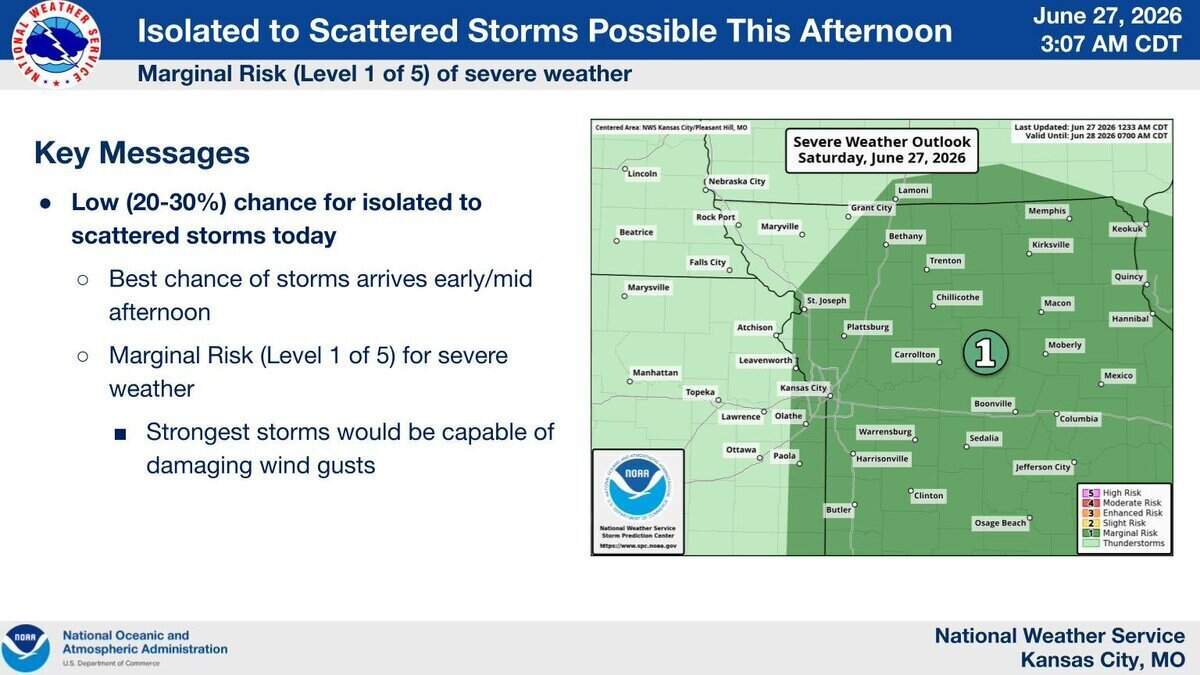
Hit-or-miss showers and storms could rumble through the Kansas City area Saturday. Then the metro turns dangerously hot with a heat dome that could kick off the first heat wave of summer, according to the National Weather Service.
There is a low chance, between 20% and 30%, that isolated to scattered storms will develop in the Kansas City area Saturday afternoon and evening. The best chance of storms arrives early to mid-afternoon, the weather service said.
The Storm Prediction Center, part of the National Weather Service, has placed a large part of Missouri under a marginal risk (Level 1 of 5) of severe weather.
The strongest of the storms could produce damaging wind gusts between 50 and 60 mph, the weather service said.
But the bigger story is the widespread heat dome and the dangerous heat that follows.
The heat will begin building in the Kansas City area on Saturday, with temperatures climbing into the mid-80s. Areas south of the metro could see warmer temperatures and heat index values of 100 to 104 degrees, the weather service said.
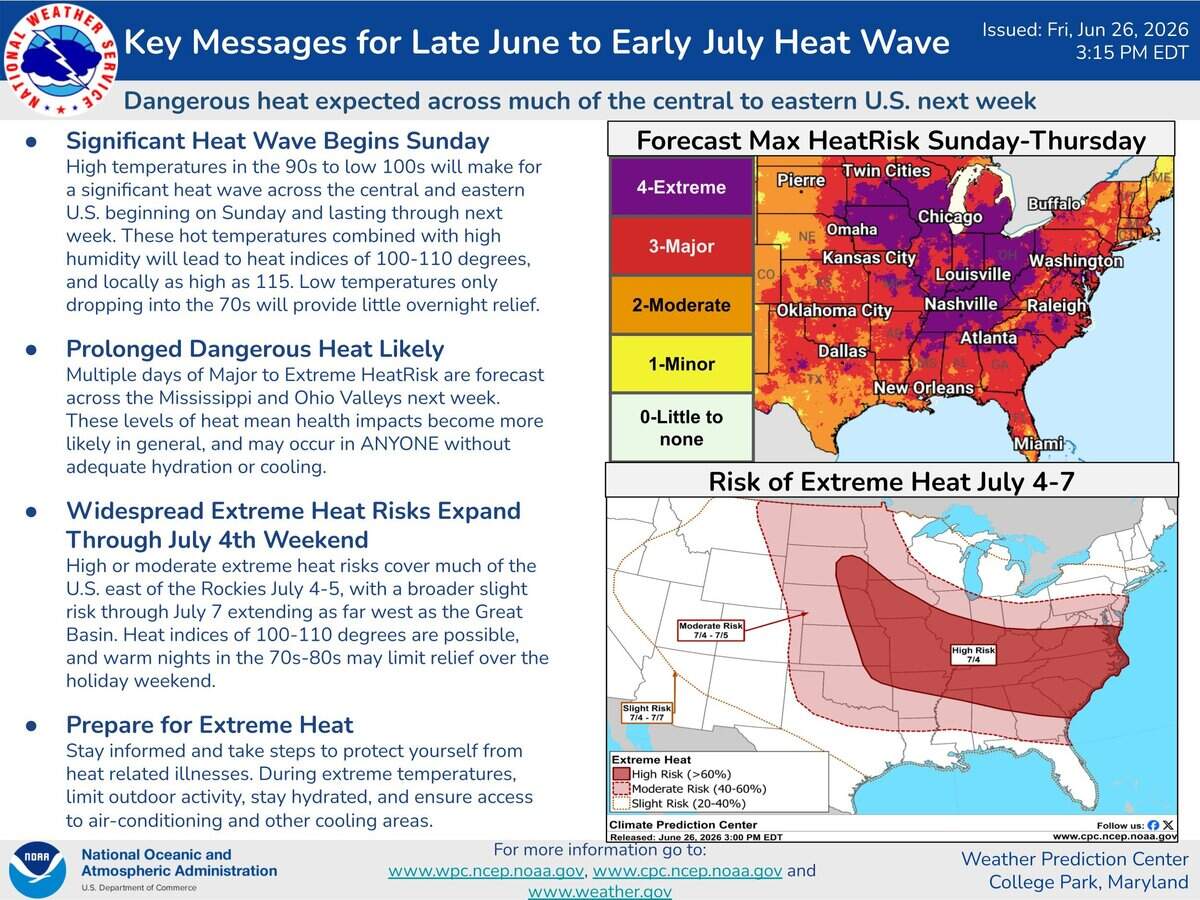
The Weather Prediction Center, part of the National Weather Service, said a “significant heat wave,” the first of summer, begins Sunday and will envelop much of the central to eastern U.S.
The weather service has issued an extreme heat watch for parts of Kansas and Missouri, including the Kansas City area, which takes effect Sunday afternoon and continues through Tuesday evening.
Dangerously hot weather with heat index values up to around 105 to 110 degrees will be possible. The weather service said the likelihood of an excessive heat warning being issued is high.
Daytime temperatures are expected to be in the low to mid-90s for most of next week.
“Additionally, we will not see much recovery overnight, as low temperatures are expected to be in the mid- to upper 70s,” the weather service said.
With multiple days of hot temperatures combined with high humidity, health impacts become more likely, and anyone without adequate hydration or cooling could be affected, the weather service said.
The weather service urges people to take steps to protect themselves from heat-related illnesses.
“During extreme temperatures, limit outdoor activities, stay hydrated, and ensure access to air-conditioning and other cooling areas,” the Weather Prediction Center said.
Extreme heat is the deadliest weather hazard in the U.S., consistently claiming more lives annually on average than all other extreme weather events, such as hurricanes, floods and tornadoes, according to the weather service.
This story was originally published June 27, 2026 at 11:35 AM.