Seasonal creep: How summer’s lingering heat delays fall’s arrival in Kansas City
If it feels like the arrival of fall’s cool temperatures is getting pushed back by lingering summer heat, you’re not alone. A new climate analysis shows that summers are getting longer across the U.S. — a trend reflected in this week’s unseasonably warm weather.
For several days now, the Kansas City metro has been locked in dry and above-normal temperatures, with little change in sight.
So much so, the National Weather Service, in its latest forecast discussion, wondered: “How many different ways can you describe a quiet, dry, and fairly stagnant weather pattern? Probably not too many more.”
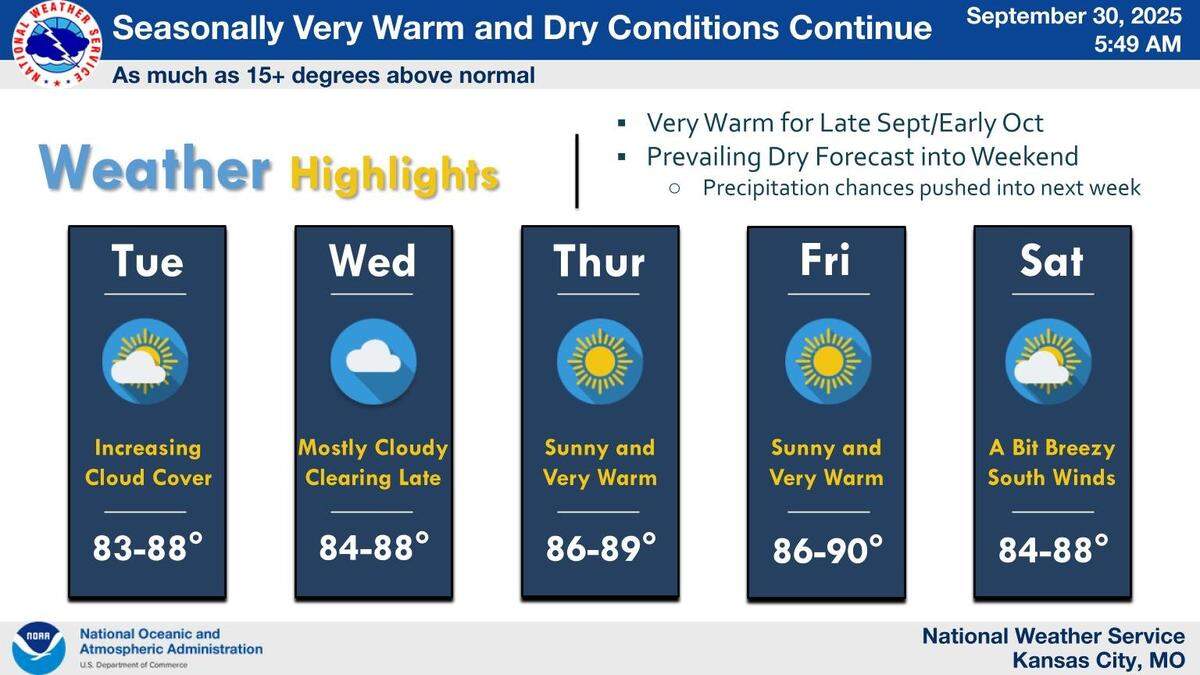
Aside from some clouds on Tuesday and Wednesday, more of the same warm, dry weather is expected, according to the weather service.
Temperatures will be in the mid- to upper 80s, possibly even 90, throughout the week and into the weekend, the weather service said. Kansas City typically sees temperatures in the low to mid-70s in early October.
There is a hint that cooler weather could arrive next week, but significant rainfall remains uncertain, the weather service said.
Summers getting longer
Summer heat, and the risks it brings, is lasting longer and stretching into fall in most major U.S. cities, according to an analysis of decades of data by Climate Central.
The research group analyzed data from 246 major cities and found that 227 of them, 92%, have experienced summer temperatures lingering an average of 10 days longer into the fall than in the early 1970s.
About two out of every three cities have seen summer heat creep at least one week later into fall, and roughly one in five now see summer temperatures stretch at least two weeks later into fall than during the early 1970s, according to Climate Central.
Miami and San Angelo, Texas, have experienced the biggest change, with summer temperatures now stretching 46 and 31 days later, respectively.
In Kansas City, summer heat now extends seven days later than it did in the early 1970s, according to the research group’s analysis.
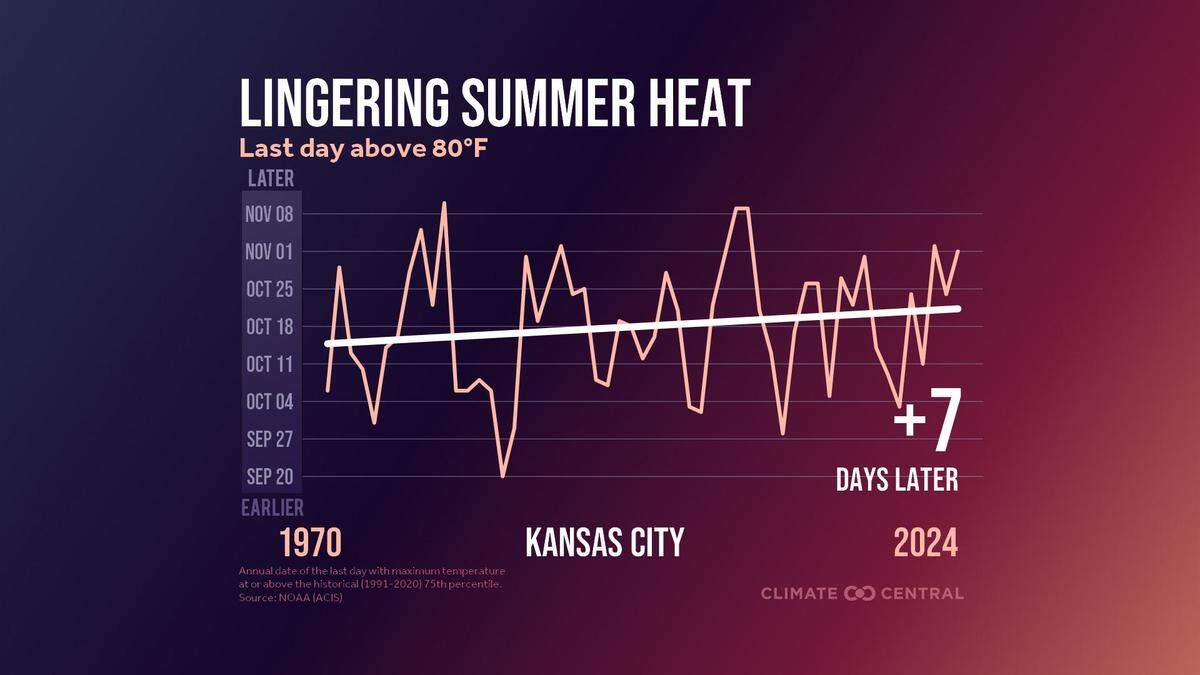
Here’s how other cities in the area compare: St. Joseph, 9 days later; Springfield, 8 days later; Joplin, 15 days later; Columbia, 9 days later; St. Louis, 11 days later; Topeka, 7 days later, and Wichita, 11 days later.
While some might welcome the extended warm spell, especially with the winter’s chill just around the corner, longer summers can mean higher energy bills as air conditioning runs later, an extended allergy season and more time during which disease-carrying mosquitoes are active, according to Climate Central.