Canadian wildfire smoke drifts over Kansas City, air quality unhealthy
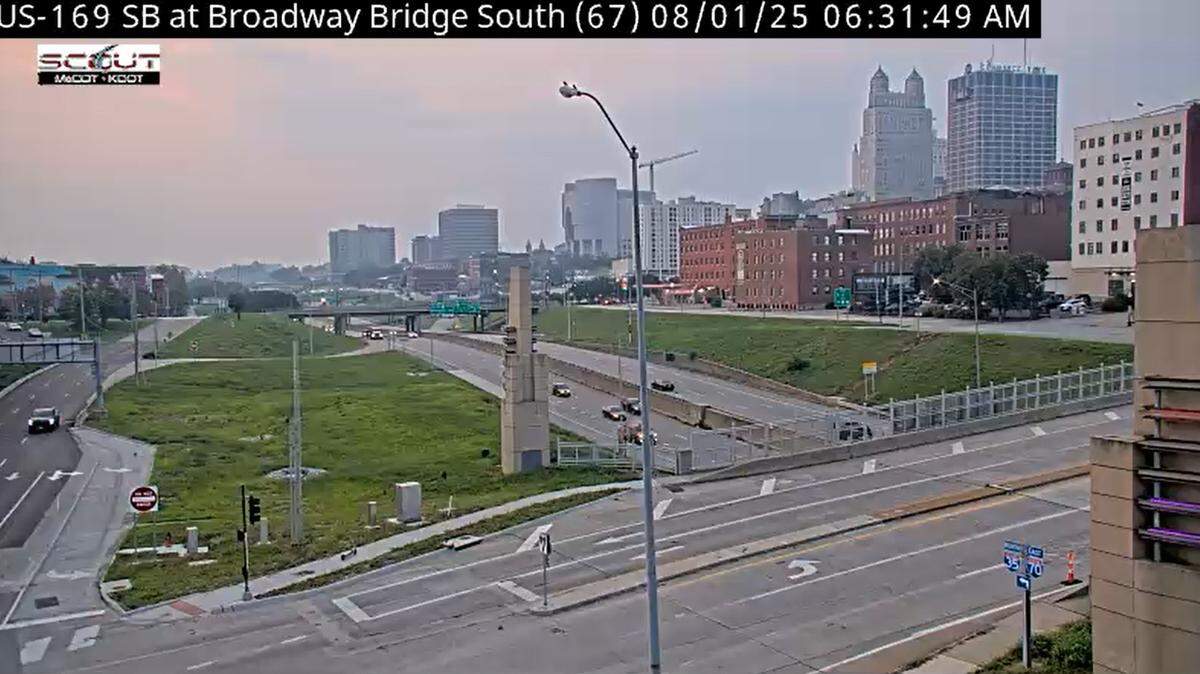
Smoke from Canadian wildfires drifted into Kansas City on Friday morning, raising health concerns about the area’s air quality.
Commuters heading out for their morning drives may have noticed the smell of burning wood and a faint smoky haze shrouding parts of the metro.
Kansas City’s Air Quality Index reached the red category, meaning the air is considered unhealthy and some people may experience health effects. Those who are especially sensitive to air pollution could face more serious symptoms.
The smoke isn’t extremely thick, the National Weather Service said.
“With some of this smoke trapped near the surface, there will be a notable haze at times and air quality may be such that sensitive populations are affected,” the weather service said. “Additional smoke aloft will result in a ‘milky’ look to the sky instead of the typical blue hue.”
The surface smoke may linger through much of the day, and possibly into the weekend, the weather service said.
The Mid-America Regional Council’s Air Quality Program issued an air quality alert for Friday and Saturday, saying the smoke is likely to make the area’s air quality to range from moderate to unhealthy.
“Wildfire smoke has quickly degraded our region’s air quality,” said Karen Clawson, MARC’s Air & Mobility programs manager. “Please protect your health by limiting time outside. “
Fine particulate matter, known as PM2.5, is the primary pollutant affecting the air quality, according to AirNow.gov. The AQI was measured at 159, which is at the lower end of the unhealthy range.
Public health officials recommend that people with heart or lung conditions, older adults, children and teens avoid strenuous outdoor activities, keep time outside short, or move activities indoors.
Others are also encouraged to take precautions, such as opting for less strenuous tasks, limiting time outdoors, and rescheduling activities when better air quality is expected.

This story was originally published August 1, 2025 at 7:03 AM.