Multi-hazard storms target Kansas City: When and how bad could the storms get?
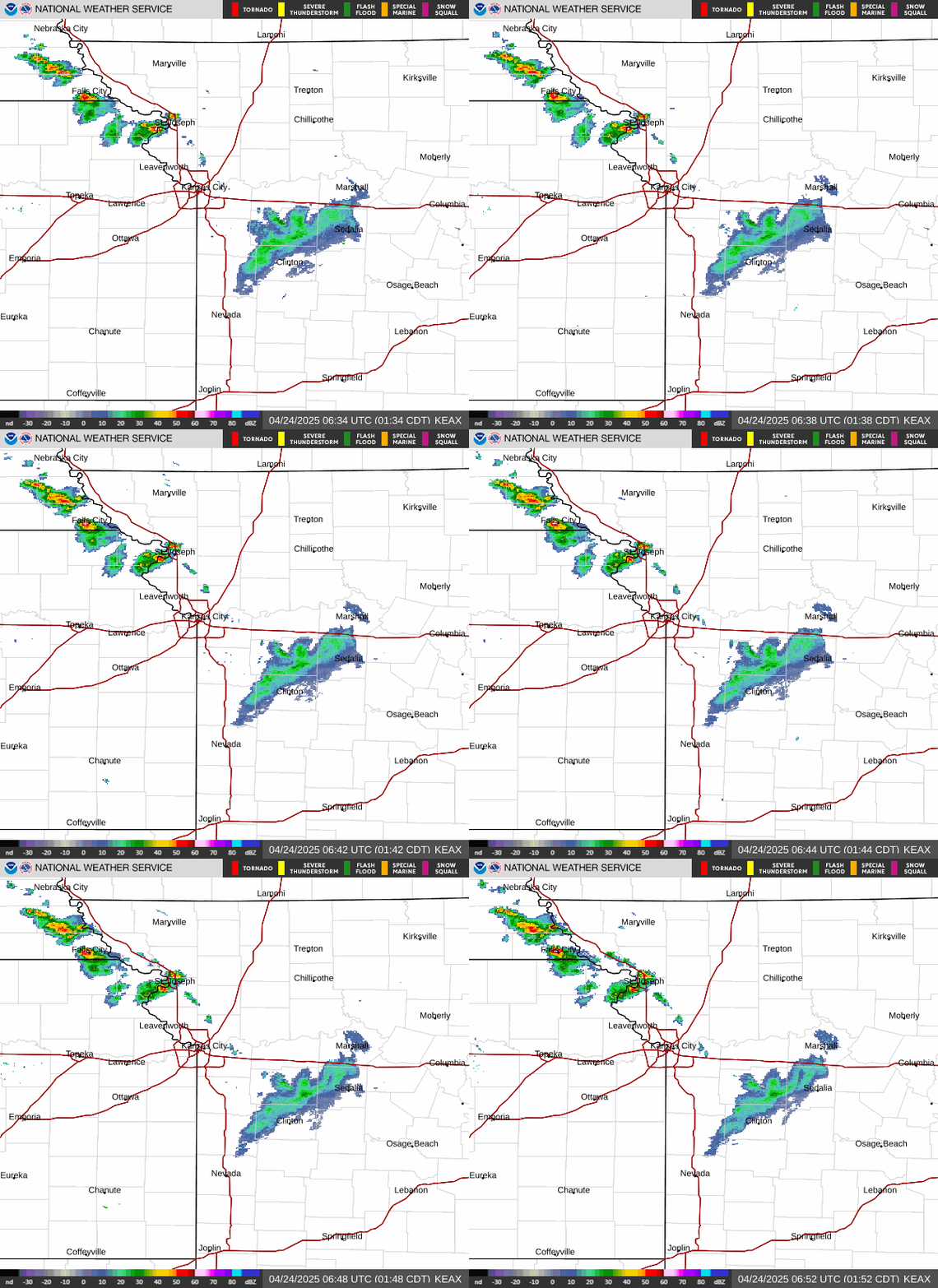
It’s shaping up to be a stormy Friday night in Kansas City, with multiple weather hazards possible, including heavy rains, strong winds and maybe even a tornado, according to the National Weather Service.
Storms are expected to begin developing between 4 and 7 p.m. in east/northeastern Kansas and slowly advance eastward toward the border with Missouri through 10 p.m., and continue overnight, the weather service said.
“A few initial storms could be severe,” the weather service said. The severe weather will most likely be associated with the initial thunderstorms that develop between 4 and 10 p.m. near the Kansas-Missouri border.
The National Weather Service’s Storm Prediction Center shortly before noon increased Kansas City’s risk of severe weather to a slight one, up from a marginal risk earlier in the day. The slight risk is the second lowest of its five severe thunderstorm risk categories.
Kansas City’s tornado risk also increased but remains low, according to the Storm Prediction Center.
Greatest risk is heavy rainfall
The larger overall risk from the storms will be torrential downpours that could lead to additional flooding, the weather service said.
Swaths of heavy rainfall, ranging from 1 to 4 inches, are expected. There’s a possibility that some areas could see rainfall totals exceeding 6 inches, the weather service said.
Areas most likely to receive the heaviest rainfall are in northeastern Kansas, including Topeka and Lawrence, extending east and northeast into the Kansas City metro, north to St. Joseph, and across northern Missouri.
The Weather Prediction Center has placed an area that stretches roughly from Wichita to St. Joseph, including the Kansas City metro, under a moderate risk of excessive rainfall, the second-highest category indicating the likelihood of heavy rain causing flash flooding.
A flood watch remains in effect for much of the Kansas City region, including Johnson, Leavenworth, Wyandotte, Clay, Jackson and Platte counties in the immediate metro area.
“Excessive runoff may result in flooding of rivers, creeks, streams, and other low-lying and flood-prone locations,” the weather service said. “Creeks and streams may rise out of their banks. Flooding may occur in poor drainage and urban areas. Low-water crossings may be flooded.”
Flood warnings remain in effect for the South Grand River at Urich, Missouri, affecting Case, Bates, and Henry counties; Big Creek at Blairstown, Missouri, affecting Johnson, Cass, and Henry counties; and Crooked River near Richmond, Missouri, affecting Ray County.
The weather service advises people to turn around if they see flooded roads and not drive around barricades or through water.
“Heavy rain can lead to sudden flash floods, whether you’re on the road or at a campground,” the weather service said. “Set up a way to get weather warnings on your phone. When alerted to a flash flood, get to higher ground immediately. Never enter flood waters in a vehicle or on foot.”