
Will Kansas, Missouri see the Northern Lights again? It’s possible in the coming weeks
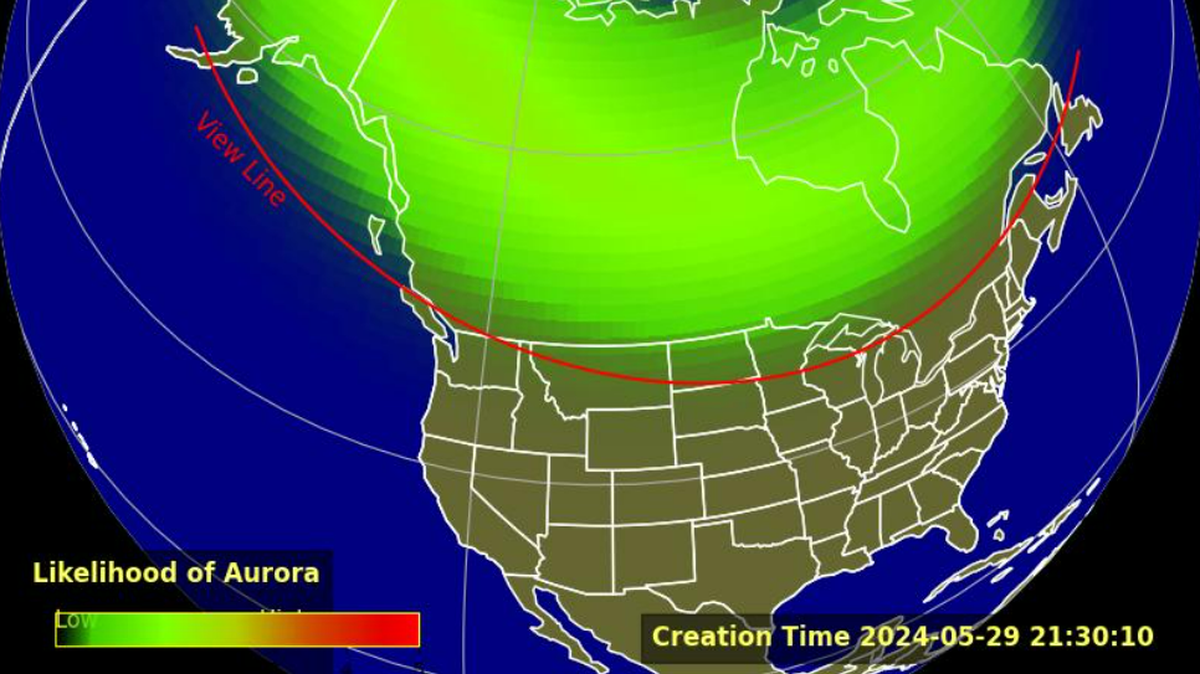
The rare sight of the aurora borealis, also called the Northern Lights, graced the skies over Kansas and Missouri in early May. Now, optimal conditions for another round of lights are expected over the next two weeks.
The phenomenon is caused by charged particles from solar storms interacting with the Earth’s magnetic field. The particularly strong storm that caused May’s aurora display is now coming around to face the Earth again.
“We’re going to be in this window of opportunity now for having some coronal mass ejections that could potentially impact the Earth,” said Shawn Dahl, a spokesperson for the National Weather Service’s Space Weather Prediction Center in Boulder, Colorado. “Over the next 10 to 14 days… this region (of the sun) will be in a more favorable location.”
A coronal mass ejection is a type of solar emission that releases the charged particles. It takes about two to four days for these particles to reach the Earth from the sun, giving Dahl’s office time to notify the public about potential auroras in the sky. The agency reports solar activity on its aurora forecast online.
Here’s what to know about the potential upcoming aurora and how to get the best view.
When are the Northern Lights expected to reappear in the Midwest?
Right now, we don’t know for sure whether any auroras in the coming weeks will be bright enough to be visible in Kansas or Missouri. It all depends on whether the solar storm facing the Earth releases coronal mass ejections powerful enough to cause one.
The Space Weather Prediction Center ranks the strength of these ejections, also called CMEs, using a score called the geomagnetic storm index. A high score of 4 or the maximum 5 is needed in order for the Northern Lights to be visible in Missouri and Kansas.
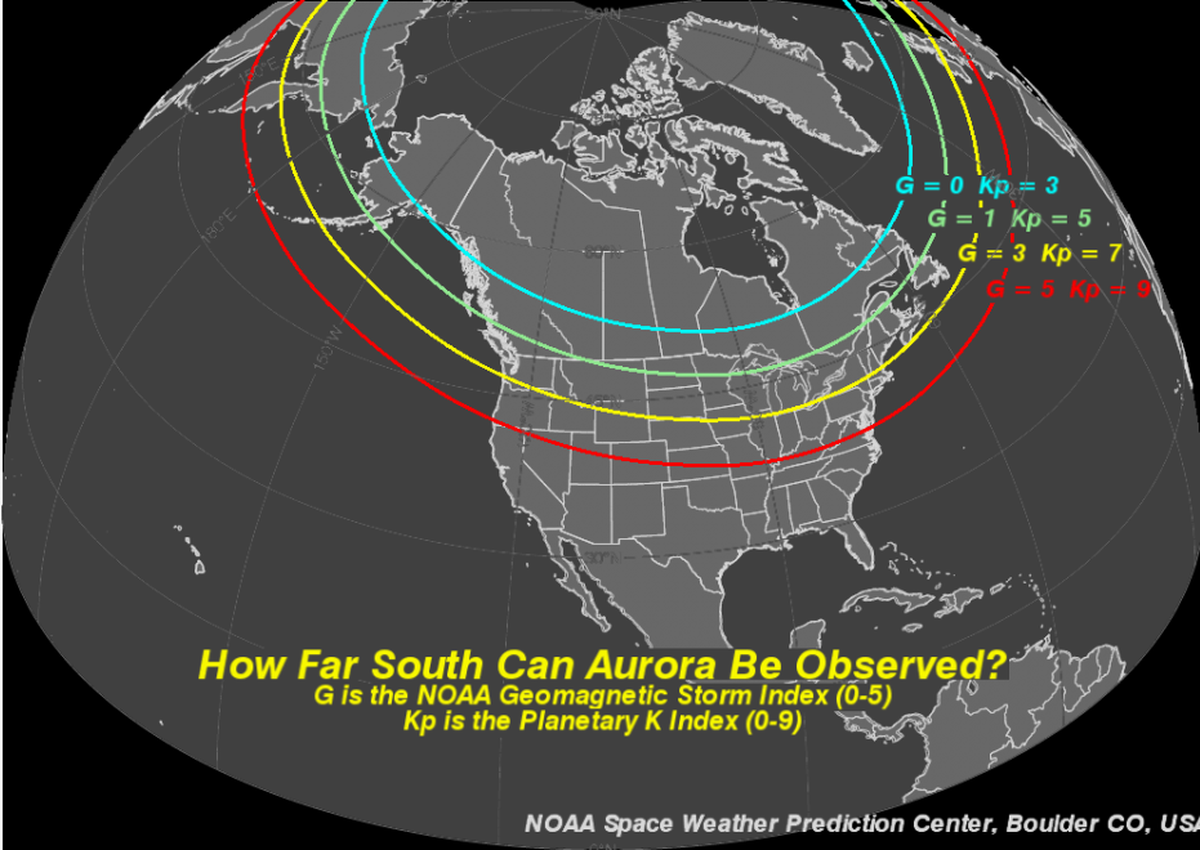
“It’s basically based off the intensity, the speed of the CME as it moves through space, and how Earth-direct it is,” Dahl said. “Is it a direct bullseye towards Earth, or is it kind of a glancing blow? These are all factors we take into effect when we’re trying to forecast the geomagnetic storm potential.”
Some reports have predicted aurora activity on or around Thursday, June 6. Dahl said that while this is around the time the strong solar storm in question will be pointing directly at the Earth, it’s impossible to know in advance whether the spot will produce any significant coronal mass ejections.
“We have no way of even forecasting whether a region (of the sun) will be producing CMEs or not,” he said. “Just because a region is facing the Earth, we’re not going to increase our geomagnetic storm probabilities just because it could produce a CME.”
But skygazers can rest assured that if an ejection does occur, they will have several days to prepare a viewing party before the aurora begins.
How can I get a good view of a potential aurora from Kansas and Missouri?
Last time the aurora came to town, it may have seemed like everyone got gorgeous photos — but almost no one saw the sky awash in watercolor splendor with their naked eyes.
That’s because modern cameras — even those on the newest smartphones — are better at picking up minor variations in color than the human eye. Using the long-exposure setting on your camera or phone might reveal more color than you think you’re seeing.
If a significant aurora is expected, the Space Weather Prediction Center will also release information about the best viewing times.
Another tip for optimal aurora-viewing is to avoid light pollution as much as possible. A dark, rural area with clear skies is best. Be sure to check both NASA’s light pollution map and your local weather forecast to ensure you’re picking the perfect spot.
Do you have more questions about natural phenomena in the Kansas City area? Ask the Service Journalism team at kcq@kcstar.com.
This story was originally published May 30, 2024 at 6:30 AM.
.jpg)