What time of day is KC air quality best? How to be active & stay safe during ozone alerts
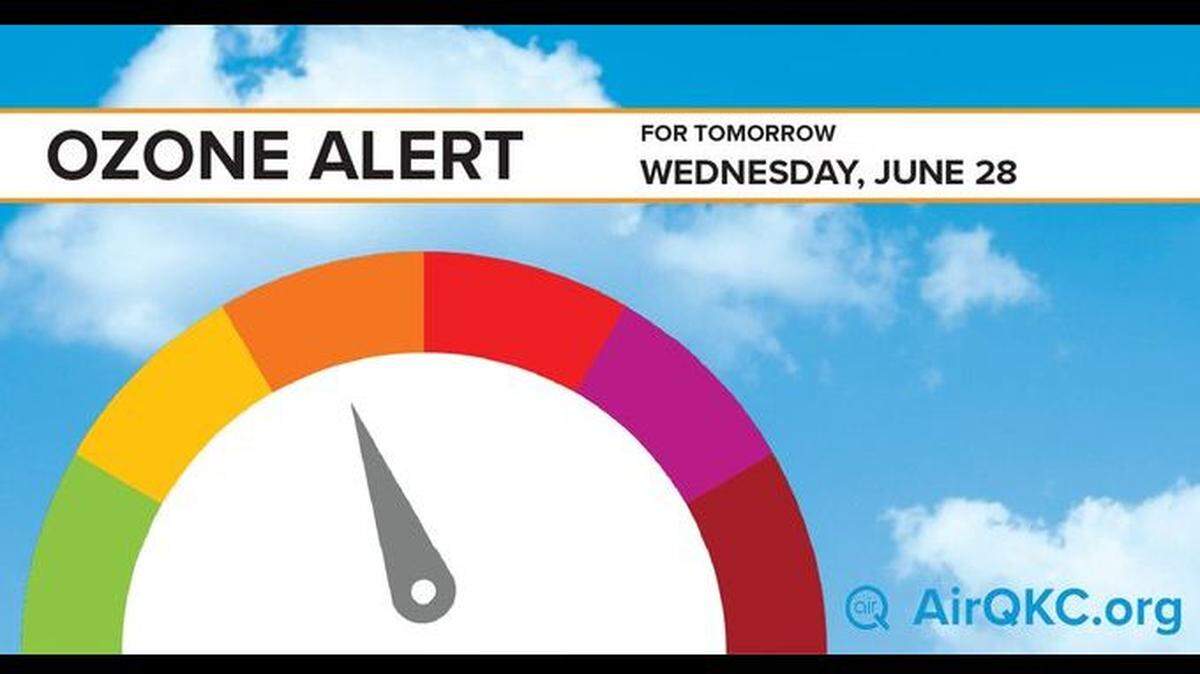
The Mid-America Regional Council issued 10 air quality alerts so far this summer in Kansas City. Wednesday’s alert set the record for the most in a year.
These alerts seem to come during the daytime when the sun is at its peak and last throughout the evening.
HOW DOES THE AIR QUALITY CHANGE DURING THE DAY?
Karen Clawson, the air quality program manager with MARC, said the heat can influence the air quality throughout the day since warmer temperatures help with the production of ozone.
Another factor that changes hour to hour is the level of pollution from car exhaust, which has been hanging around longer on days without wind.
Clawson said that’s why one morning you may start off with a higher ozone level and as people begin their daily commutes, the level rises and MARC puts out the air quality alert.
Clawson said the ozone levels peak between 3 p.m. and 7 p.m., which is why MARC warns people — especially children or those with respiratory conditions — to reduce or reschedule plans for any heavy activities outdoors, like going on a run or playing soccer with friends, during that time.
WHAT SHOULD I CHANGE DURING AN AIR QUALITY ALERT?
If you do have a lot of outdoor activities, Clawson said you should try to move them into the early morning or late evening hours and that you should try to avoid strenuous activities that expose you to the ozone for long periods of time.
If you have to be active outside, try to make it before 10 a.m. or after 7 p.m., when she said the air quality is safest, she said.
If you can’t, Clawson said you should shorten your activities to be 20–30 minutes long.
She also advised to not drive or use a lawn mower, especially from 3-7 p.m. Filling up either your car or mower with gasoline can lead to pollution. As fumes escape, gas vapors react to the heat to create bad air quality.
According to MARC, lawn and garden equipment is responsible for around 9% of the Kansas City area’s ozone-forming emissions.
During the alert, Clawson said that people in the metro should try to use other forms of transportation, such as biking or riding the bus rather than driving their own car.
If possible, it’s best to stay inside in a well-ventilated or air-conditioned building between the hours of 10 a.m. and 7 p.m.