
Kansas City has had unusually poor air quality this year. What’s causing so much smog?
The majority of Kansas City’s recent air pollution is produced right here in the metro from vehicle exhaust, power generation and volatile chemicals, according to a local air quality expert.
Since the Mid-America Regional Council (MARC) issued the year’s first ozone alert on May 28, the metro has seen smoggy skies and a total of nine high-smog days so far — unusual for this early in the summer.
MARC air quality expert Doug Norsby told The Star that faraway Canadian wildfires are partially to blame, but the majority of the “dirty air” we’ve seen recently is produced right here in Kansas City.
“We knew (from predictable summer weather patterns) that it was going to be either above normal or high-normal,” Norsby said. “But we didn’t anticipate this much.”
Current weather is creating ideal conditions for local smog
Earlier in June, some of the air pollution in Kansas City was blowing in from wildfires in Canada. But in recent weeks, a zone of high air pressure has centered on Kansas City — and it’s unlikely to move away anytime soon, Norsby said.
While this high-pressure “bubble” has kept pollution from faraway sources at bay, it has also led to bright, hot days with very little breeze. These conditions have a two-fold effect on ground-level ozone, also known as smog:
1. Sunlight converts gasses like nitrogen oxides (NOx) and volatile organic compounds (VOCs) into ground-level ozone. That means the recent bright, sunny weather in the metro is contributing to more ozone production.
2. Normally, wind plays an important role in dissipating air pollution, especially overnight. But under current conditions, almost no wind is moving through Kansas City. This causes ground-level ozone to build up, leading to more high-ozone days.
Local emissions create the ingredients for poor air quality
While ground-level ozone forms in Kansas City every summer, Norsby noted that this year’s levels are higher than usual. That’s due to the vehicle, industrial and chemical emissions produced around the metro.
“I think that there’s probably been some increase in the precursor pollutants that generate ozone, just because everybody’s ramping back up and the economy’s kicking off, and we’re coming out of COVID and people want to travel,” he said.
Individual sources of NOx and VOCs include any activities that burn fuel or release fumes into the air, including commuting in a gas car, mowing the lawn or doing home improvements with VOC paints or other chemicals.
But these gasses aren’t solely produced by individual consumers: Significant levels of emissions also come from power plants and industrial facilities.
Industrial sources of air pollutants in the metro
Facilities that produce more than 25,000 metric tons of CO2e every year are required to report their emissions to the EPA. CO2 equivalent or CO2e is a unit used to measure various greenhouse gasses on a standardized scale.
Among these reported emissions is nitrogen dioxide (NO2), a member of the NOx family of gasses and a major contributor to smog.
Here’s a map of the 21 facilities in the metro area that reported NO2 emissions to the EPA last year. Hover over each colored circle to see the name of the facility and how much NO2 it reported producing in 2021.
The Iatan Generating Station, a power plant in Weston, Missouri, reported the largest production of nitrogen dioxide in the area in 2021. Evergy owns around 80% of the plant, with three other local utility groups owning the remainder.
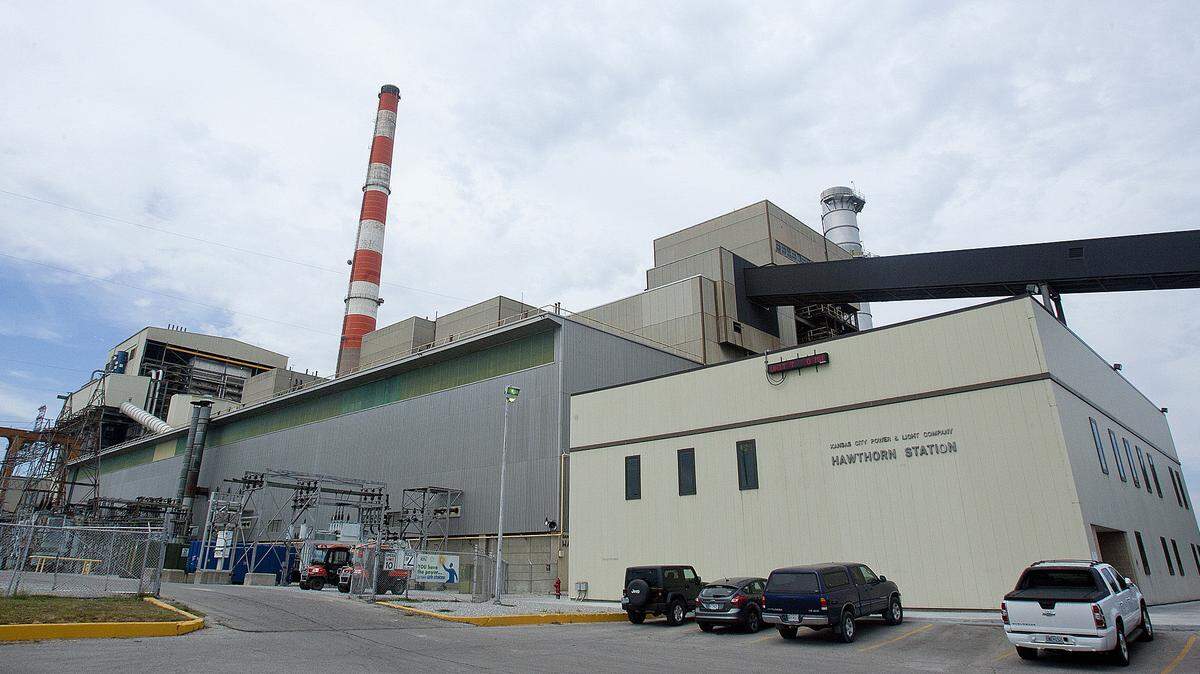
Evergy also owns the next two largest NO2 producers on the map: the La Cygne Generating Station and the Hawthorn Generating Station.
In an email to The Star, spokesperson Kaley Bohlen said that the company’s emissions of nitrogen oxide, a family of gasses that contribute to smog, have decreased by 88% since 2005.
“In 2022, our emission-free generation was equivalent to 56 percent of our retail customer demand, resulting in the creation of reliable energy with less impact on the environment,” Bohlen said.
High-smog conditions expected to continue through the summer
While Kansas City’s poor air quality has abated in recent days, Norsby expects current smog-friendly weather conditions to continue throughout the summer.
“It’s more of the same, really, where we have just a lot of a lot of high pressure in our area, lots of sun, above average temperatures, dry, low winds,” he said. “We’ll be in for a long summer.”
In the short term, he added that day-to-day pollution levels will depend on whether any wind moves through the city. But in the long term, he expects the conditions for poor air quality to become more common as a result of the climate crisis.
“There is a role that climate change is playing, both in terms of what kind of weather patterns we can expect to see, and (in) predisposition for forest fires to occur (elsewhere),” he said.
“You can go for a number of years where we have good (air quality), you don’t hear about ozone alerts. Or if you do, you might have a handful. But if we have a weather pattern set up just wrong, like we do right now, it can really come and get us.”
Note: A previous version of this piece named the wrong nitrogen oxide gas reported to the EPA. It is nitrogen dioxide, abbreviated NO2.
Do you have more questions about air pollution in Kansas City? Ask the Service Journalism team at kcq@kcstar.com.
This story was originally published June 26, 2023 at 6:30 AM.
.jpg)