
Is it raining more than usual this spring, Kansas City? Check out these interactive charts
You may have noticed heavy spring rains recently—no surprise in Kansas City, where the season always welcomes April (and May) showers.
But this year’s rainfall has been heavy enough to cause noticeable changes, from weeks where the clouds never clear to a funny taste in residents’ tap water. National weather data backs this up, showing significant rainfall this spring.
According to the National Weather Service, this March was the wettest one in at least 22 years in the Kansas City area, beating out the total precipitation of every other March since the year 2000 with 5.14 inches of rain and snow.
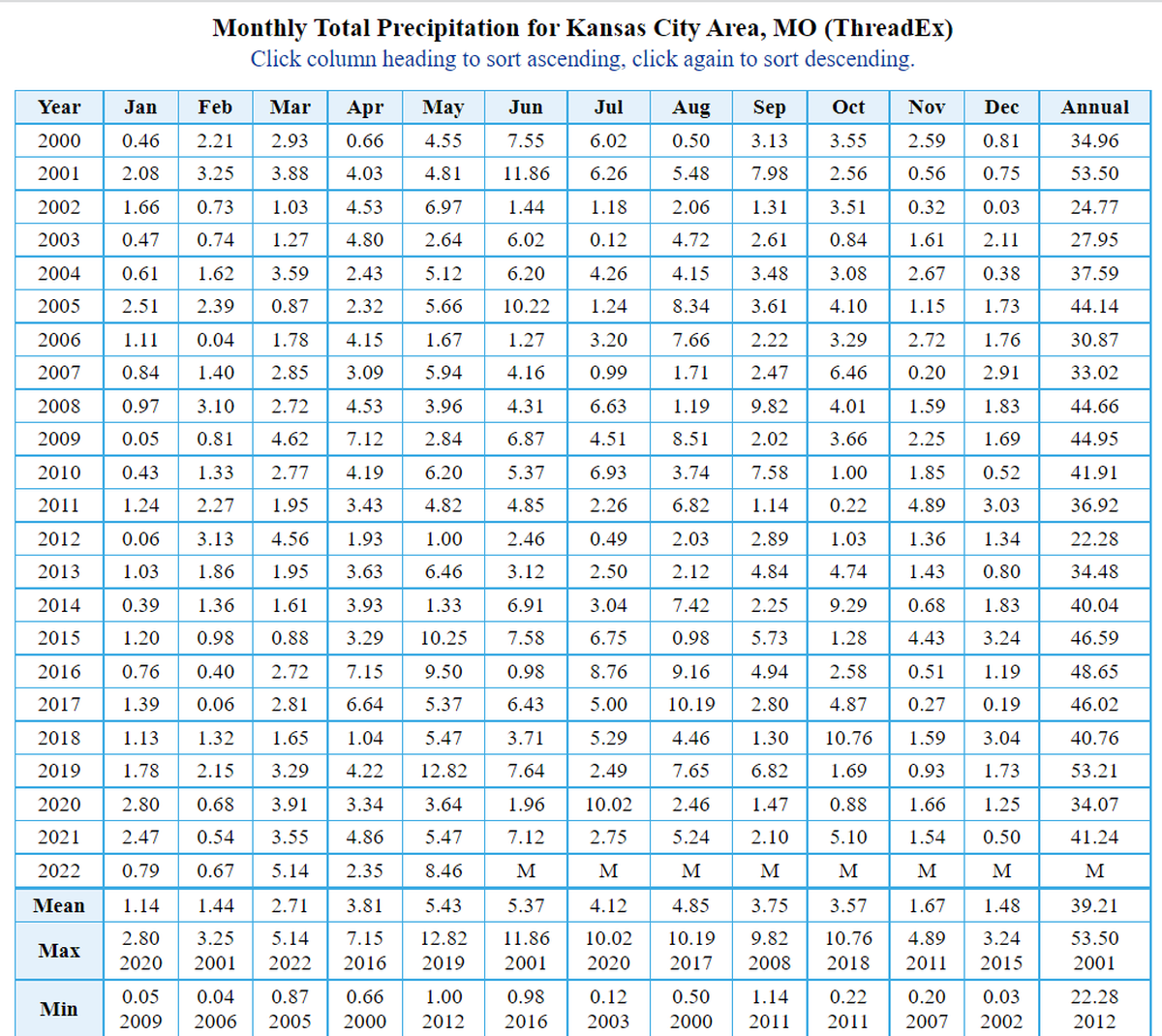
This year’s May total isn’t far behind: The month ranks fourth out of the past 22 years with 8.46 inches of precipitation. In fact, eight of the wettest months of each year since 2000 have occurred since 2015, showing that more record-breaking precipitation totals have happened in recent years than in the decades prior.
County-level data backs this up: While this year’s annual total can’t yet be included, a slight upward trend can be seen in the graphs below. County-level rainfall totals generally fluctuate in sync, but the dry years are still seeing an increase in rainfall totals over time.
Hover over the data points on the graphs below to see the annual precipitation in inches for the past two decades in the counties that make up Kansas City.
A program of Yale University’s School of the Environment reported last year that extreme precipitation is on the rise across the U.S. due to ongoing global warming. Warmer atmospheric air has less capacity to hold water vapor than cooler air, causing increased precipitation.
This increased rainfall, in turn, has the potential to cause flooding and increases runoff, which can cause contaminants to seep into the water supply. More precipitation also strains infrastructure like dams, sewers and wastewater treatment systems.
Do you have more questions about the impact of the climate crisis on Kansas City? Ask the Service Journalism team at kcq@kcstar.com.
.jpg)