
Ferguson police officer who shot Michael Brown resigns
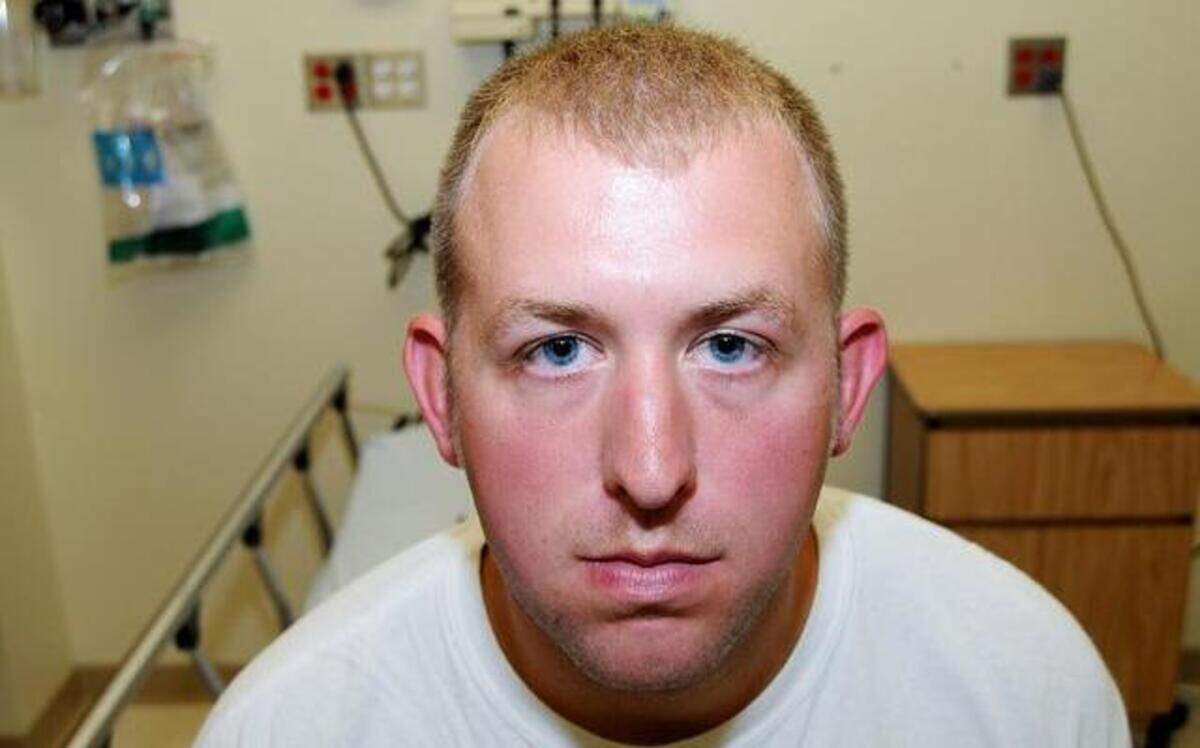
The Ferguson police officer who fatally shot Michael Brown has resigned, his attorney said Saturday, nearly four months after the confrontation between the white officer and the unarmed black 18-year-old that ignited protests in the St. Louis suburb and across the nation.
Darren Wilson, who has been on administrative leave since the Aug. 9 shooting, resigned effective immediately, said his attorney, Neil Bruntrager. He declined further comment.
The Brown family attorney, Benjamin Crump, didn’t return phone and email messages from The Associated Press.
The resignation capped a day of protests and an organized march over the slaying.
Wilson told the St. Louis Post-Dispatch he was stepping down out of his “own free will” after the Police Department told him it had received threats of violence if he remained an employee.
“I’m not willing to let someone else get hurt because of me,” said Wilson, who had been with the department for six years.
Wilson fatally shot Brown after a scuffle in the middle of a street, where Brown’s body lay for several hours as police investigated and a crowd of angry onlookers gathered. Several days of tense and at times violent protests followed, prompting Missouri Gov. Jay Nixon to call in the National Guard to help.
Some witnesses have said Brown had his hands up when Wilson shot him. Wilson told a grand jury that reviewed the case that he feared for his life when Brown hit him and reached for his gun.
The grand jury spent more than three months reviewing evidence before announcing Monday that it wouldn’t indict Wilson, igniting violence among protesters that resulted in at least a dozen commercial buildings in the area being destroyed by fire. Several other large but peaceful protests have since been held in Ferguson and across the country.
The U.S. Justice Department is conducting a civil rights investigation into the shooting and a separate investigation of Police Department practices.
Wilson’s resignation didn’t seem to affect protesters outside Ferguson police headquarters Saturday night.
Rick Campbell said he didn’t care about the resignation, saying: “I’ve been protesting out here since August.” Several other protesters merely shrugged their shoulders when asked about the resignation.
“We were not after Wilson’s job,” civil rights activist the Rev. Al Sharpton said in a written statement. “We were after Michael Brown’s justice.”
Ferguson Police Chief Tom Jackson didn’t return a message seeking comment.
Wilson spent months in hiding and made no public statements following the shooting. Wilson, who recently got married, broke his silence after the grand jury decision, telling ABC News that he couldn’t have done anything differently in the encounter with Brown.
Wilson said he had a clean conscience because “I know I did my job right.” Brown’s shooting was the first time he fired his gun on the job, he said. Asked whether the encounter would have unfolded the same way if Brown had been white, Wilson said yes.
Wilson began his career in nearby Jennings before moving to the Ferguson job a few years ago. He had no previous complaints against him and a good career record, according to Jackson, who called Wilson “an excellent police officer.”
A few months before the shooting, Wilson had received a commendation for detaining a suspect in a drug case.
Earlier Saturday, about 100 marchers led by the NAACP set off from the street where Brown was killed on a weeklong walk to Missouri’s Capitol, 120 miles away in Jefferson City. The group sang as it made its way up West Florissant Avenue past businesses destroyed by fire in the chaos after the grand jury issued its ruling.
“It’s going to communicate that black lives are important, that police officers are here to protect us,” said Mary Ratliff, the NAACP’s Missouri president. “We are here to say we’ll no longer stand for this.”
Police cruisers crept along with the crowd, and organizers exhorted the line to keep a tight formation.
The march was part of a day of demonstrations in the St. Louis area and across the nation touching on police tactics, race and poverty that are stretching toward a second week since the grand jury’s decision.
More than 100 protesters marched through a shopping plaza in the affluent St. Louis suburb of Brentwood, lying on the ground in a “die-in” to represent Brown’s shooting.
As they marched along the sidewalk, they were shadowed by dozens of police officers. One man was arrested when officers saw him in a crosswalk.
At the memorial to Brown near the Canfield Green apartments in Ferguson, dozens of motorcyclists swirled through the streets, gunning their engines in a show of solidarity. Outside the St. Louis County courthouse in Clayton, where the grand jury had met, more than a hundred protesters circled the building in silent vigil.
At Greater St. Mark Missionary Baptist Church in Ferguson, scores of people of diverse races, ages and hometowns met to sort out what comes next for the protest movement. Some were members of formal organizations focused on issues like poverty and criminal justice. Others said they had come on their own, some of them from places like Chicago and Los Angeles.
Among items on a draft list of goals: firing the Ferguson police chief, urging passage of legislation requiring a special prosecutor to be appointed in such cases involving police, consolidating small police departments and requiring that all Missouri police departments publish an annual report on incidents of deadly force.
The peaceful daytime demonstrations came as Missouri Gov. Jay Nixon sent state lawmakers a letter outlining what he called an urgent need to fund the ballooning costs to pay hundreds of National Guard troops and state police who are deployed here on the streets, day and night. The governor has called a special legislative session.
The New York Times contributed to this report.
Wilson’s resignation letter
I, Darren Wilson, hereby resign my commission as a police officer with the City of Ferguson effective immediately. I have been told that my continued employment may put the residents and police officers of the City of Ferguson at risk, which is a circumstance that I cannot allow. For obvious reasons, I wanted to wait until the grand jury made their decision before I officially made my decision to resign. It was my hope to continue in police work, but the safety of other police officers and the community are of paramount importance to me. It is my hope that my resignation will allow the community to heal. I would like to thank all of my supporters and fellow officers throughout this process.
This story was originally published November 29, 2014 at 7:58 PM with the headline "Ferguson police officer who shot Michael Brown resigns."