Missouri judge rewrites misleading direct democracy question. See new language
AI-generated summary reviewed by our newsroom.
- Judge removes misleading 'ballot candy' language from Amendment 4 summary
- Judge rewrites ballot language for Nov. 3, 2026 statewide vote
- Amendment would require district majorities, likely blocking many petitions
A Missouri judge on Wednesday rewrote the ballot question of a measure that would dramatically overhaul the state’s key form of direct democracy, a ruling that strikes misleading language from the question.
Cole County Circuit Court Judge Daniel Green, in a nine-page order, found that the ballot question claimed to introduce popular current laws as new ones, a controversial practice in politics known as “ballot candy.”
Green’s ruling was expected after he signaled the decision last month. But the written order solidifies a win for opponents of the measure, a top priority of Republican lawmakers and Gov. Mike Kehoe that will appear on the Nov. 3, 2026, statewide ballot.
At the center of the legal battle is a proposed constitutional amendment that, if approved, would make it virtually impossible for most citizen-led amendments to pass on the ballot and sharply curtail the state’s initiative petition process.
Missourians for Fair Governance, a campaign group formed by the Missouri Association of Realtors, the advocacy arm of the state’s real estate industry, sued top state officials in October to strike down the language.
The lawsuit argued the measure, called Amendment 4, misled voters by burying its true intent — the direct democracy overhaul — under other bullet points. Three of those bullet points were already laws, the lawsuit said.
The suit alleged that the question would deceive voters into overhauling the mechanism for direct democracy, calling it “a fraud on the voters.” Green, in his Wednesday ruling, agreed.
“Bullet Points 1, 2, and 3 are restatements of current law and do not reveal to voters what the measure would achieve if passed and must be removed from the summary statement,” Green wrote in the ruling.
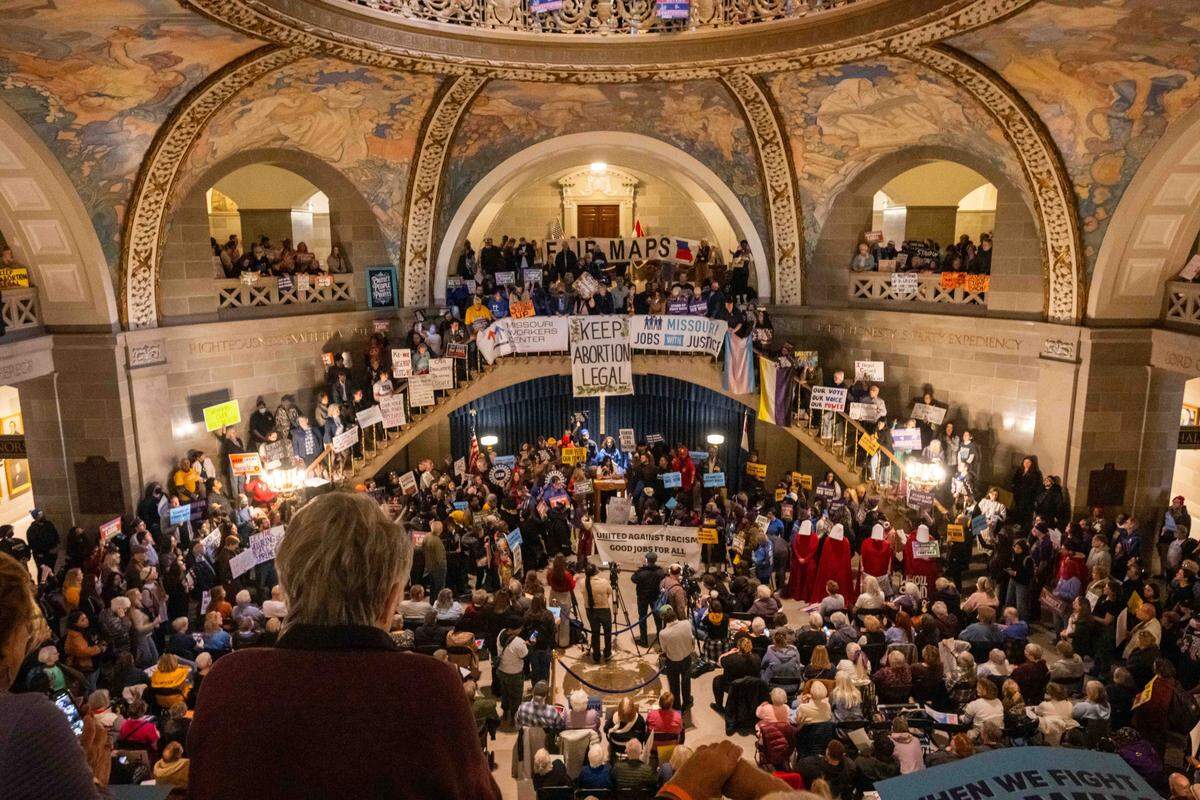
A spokesperson for Missourians for Fair Governance championed the ruling on Wednesday. But he also criticized the fact that the ballot measure would also slash financial penalties for accepting foreign contributions and committing petition fraud.
“It is a victory for voters that the judge recognized the legislative attempt to mislead our citizens and ordered the deceptive ballot candy to be deleted from Amendment 4’s ballot summary,” said spokesperson Scott Charton. “But the underlying misleading language is still in the body of this terrible proposal.”
The initiative petition process serves as Missouri’s most visible form of direct democracy, allowing citizens to collect signatures to place measures on a statewide vote. Voters, in recent years, have used petitions to pass policies such as abortion rights, legal marijuana, sports betting, Medicaid expansion and an increased minimum wage.
Currently, initiatives need a simple majority (50% plus one) in order to pass. Under the proposed legislation, they would require both majority support statewide and a majority in each of the state’s eight congressional districts to pass.
That threshold would make it nearly impossible for most citizen-led amendments to pass on the ballot, political experts previously told The Star. It would give voters in just one congressional district the power to veto an amendment, no matter how popular the measure is statewide.
In theory, a ballot measure could win 93% of the vote statewide and still fail if it received less than 50% of the vote in one district, according to The Star’s review of voting patterns in 2024.
Missouri would be the only state in the country with such a requirement, called a concurrent majority, according to a review of state ballot measure rules compiled by the National Conference of State Legislatures.
The higher threshold would also not apply to state lawmakers. Constitutional amendments placed on the ballot by the General Assembly would still only have to receive a simple majority statewide in order to pass.
Republican state lawmakers voted to place the measure on the ballot during a chaotic special session, called by Kehoe last fall, that aimed at representative and direct democracy. In addition to the direct democracy overhaul, lawmakers also gerrymandered the state’s congressional map in the hopes of pushing out of office U.S. Rep. Emanuel Cleaver, a Kansas City Democrat.
The now-void question crafted by state lawmakers would have asked voters:
“Shall the Missouri Constitution be amended to:
- Stop foreign nationals and foreign adversaries of the United States from providing funding to influence ballot measure elections, and allow criminal prosecution of violators;
- Punish initiative petition signature fraud as a crime;
- Require public hearings be held to get public comment before initiative petitions are placed on the ballot;
- Require a majority of voters in each congressional district to approve initiative petitions to amend the constitution; and
- Make available to each voter the full text of initiative petitions with their ballot?”
The question that will now appear on the ballot, as rewritten by Green, states:
“Shall the Missouri Constitution be amended to:
- Modify current requirements that a statewide majority of voters may approve initiative petitions to amend the constitution;
- Require a majority of voters in each congressional district to approve initiative petitions to amend the constitution; and
- Make available to each voter the full text of initiative petitions with their ballot?”
The lawsuit named as defendants two Republican statewide officials, Secretary of State Denny Hoskins and Auditor Scott Fitzpatrick, as well as House Speaker Jonathan Patterson and Senate President Pro Tem Cindy O’Laughlin.
A spokesperson for the Missouri Attorney General’s Office, which defended the officials in court, did not immediately respond to a request for comment on Wednesday.
This story was originally published March 4, 2026 at 3:16 PM.