
Missouri almost got crucial info on utility shutoffs. Then a regulator secretly halted it
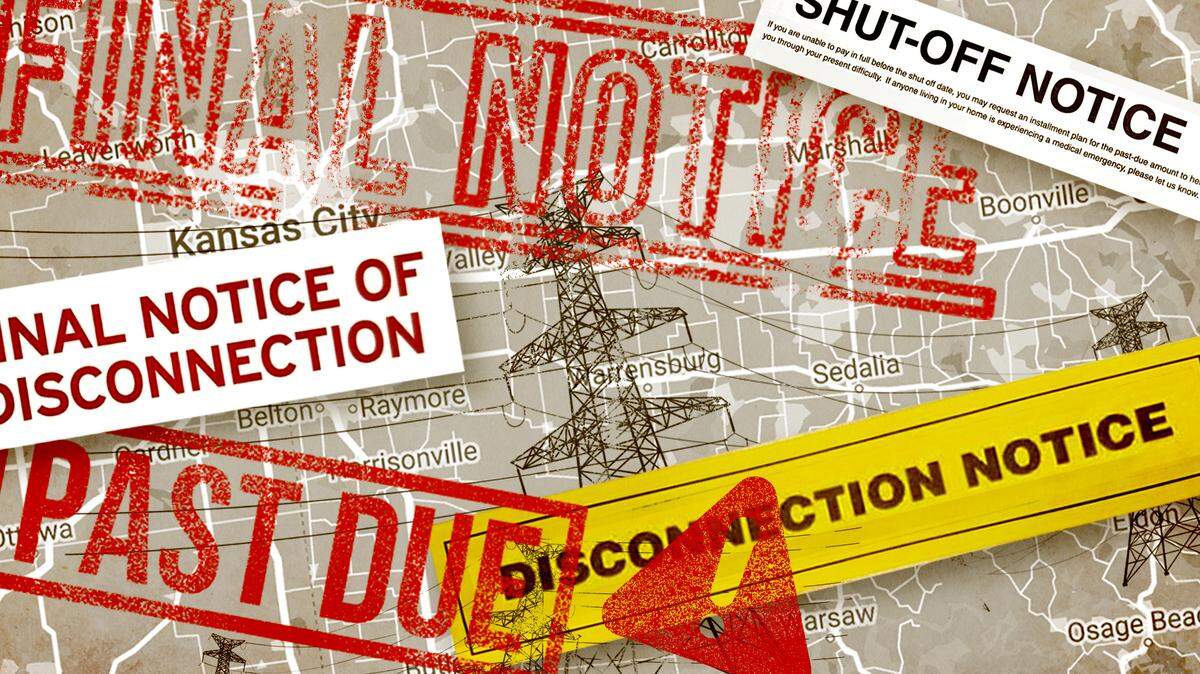
A Missouri official tasked with regulating the state’s private utility companies quietly tipped the scales against making utility shutoffs more transparent in 2023.
The official, Kayla Hahn, is now the chair of the commission — and consumer advocates say the move is just one example of a broader shift toward pro-utility policies under her leadership.
If you’ve heard of the Missouri Public Service Commission, you probably know it as the group that sets many of the rates that appear on your utility bills. But the commission also creates broader rules that regulate all the private utility companies in the state.
One of these rules, which was approved in late 2023 after nearly four years of deliberation, was intended to standardize how these companies report their shutoffs. Part of the proposed rule would have required them to report disconnections by ZIP code, allowing the public to see where the most shutoffs occur.
This requirement had broad support from consumer advocate groups, and commissioners spoke positively in meetings about the value of ZIP code-level data. But in the final days of deliberation last year, commissioners abruptly removed this requirement.
A nonprofit utility watchdog group called the Energy and Policy Institute thinks it knows why. Through a public records request, it obtained emails sent during the final months of the rulemaking process between Hahn, then a new appointee to the commission, and her former colleagues in Missouri Gov. Mike Parson’s office, where she worked as a senior adviser and policy director.
She asked them to help kill the ZIP code reporting requirement — and they agreed.
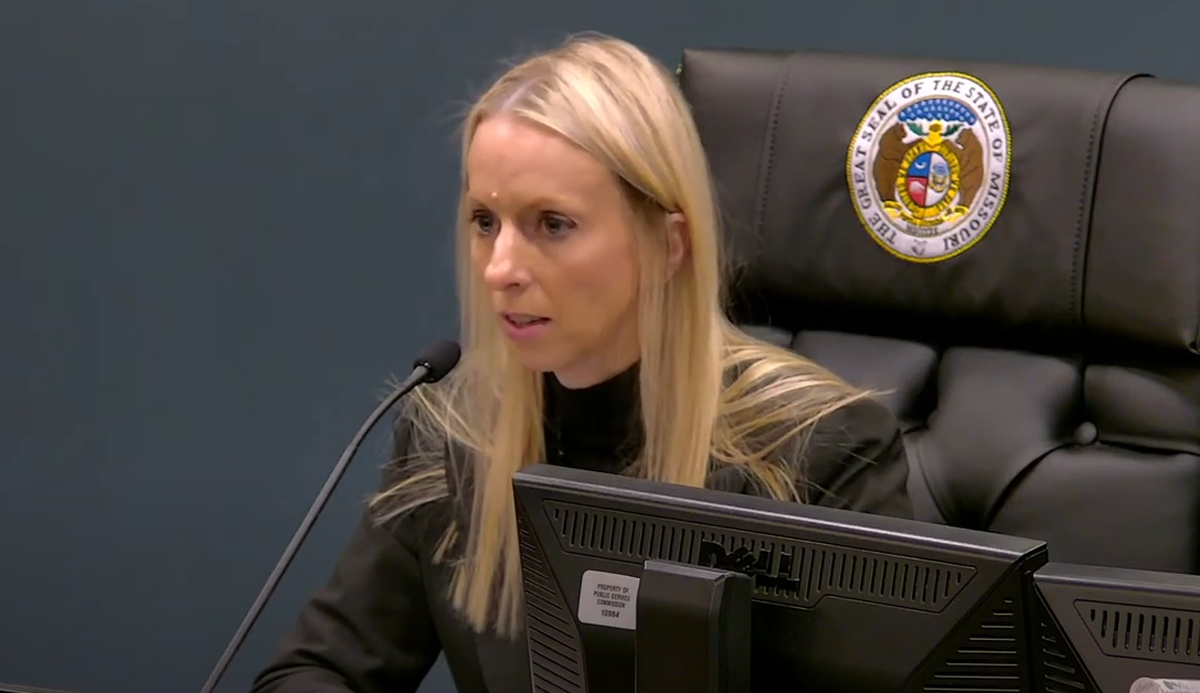
Hahn’s back-channel request kept her intentions secret from her PSC colleagues and consumer advocates. And by blocking shutoff reporting by ZIP code, she keeps the public in the dark about where the most shutoffs are occurring in Missouri.
Data shows that utility disconnections disproportionately impact people of color. Obscuring the location of shutoffs masks this demographic trend and makes it harder for utility assistance groups to target aid to neighborhoods with the most need.
The Public Service Commission declined two requests to make Hahn available for comment or answer questions about her correspondence with the governor’s office.
How did Hahn kill the proposed ZIP code shutoff reporting rule?
Hahn’s efforts to kill shutoff reporting at the ZIP code level began with an email to her former colleagues in the governor’s office on Aug. 18, 2023.
“I’m writing today to request that you deny final rulemaking approval to the PSC Residential Disconnection Rule,” she wrote.
In an attached document, she argued that requiring ZIP code-level shutoff reporting would create a “burdensome” regulatory environment in the state and impose costs on utility companies that would then be passed on to customers.
“Our policy team does not approve this rule,” governor’s office legal assistant Taylee Soukup wrote to the commission on Sept. 5.
In a meeting shortly afterward, the commissioners quickly decided to remove this requirement based on the governor’s wishes.
“The only major change that occurred between when the governor’s office gave preapproval of this rule and when they indicated they would not approve this rule was the addition of reporting by ZIP code,” regulatory law judge John Clark told commissioners in a public meeting Sept. 7, 2023.
The governor’s office must approve all new rules passed by the commission due to a 2017 executive order meant to curb excessive regulation in the state. Its abrupt change in stance sent a strong message to the commission, effectively vetoing the ZIP code reporting requirement.
“Even though I would like to have that data, and I think it would be very, very good data to have, there’s no sense letting that torpedo the whole entire rule,” then-commission chair Scott T. Rupp said.
Hahn did not disclose during this meeting that the governor’s rejection of the rule was the result of her personal request.
Are commissioners allowed to influence rulemaking feedback?
Utility regulators occupy a unique position that blends judicial and legislative forms of power.
Appointed by the governor and confirmed by the state Senate, they play a quasi-judicial role when deciding on individual utility rates, but shift into a quasi-legislative role when making rules that apply to all utilities. In the latter case, commissioners can generally consult with whomever they want.
“This was a rule-making proceeding and Chair Hahn provided advice to the governor. Chair Hahn outlined her concerns to the governor,” commission spokesperson Forrest Gossett wrote in an email.
But several experts noted that just because Hahn’s communication with the governor’s office was technically allowed doesn’t mean it was in line with typical commission behavior.
“I haven’t seen a situation like this before,” said John Coffman, a utility attorney with the nonprofit customer advocacy group Consumers Council of Missouri. “I’m not aware that there were any rules violated in this situation, but I do wish there had been more of a public discussion.”
“My whole team was pretty shocked when we heard about it,” added Jenn DeRose, a representative of the nonprofit Sierra Club’s Beyond Coal campaign who filed a letter with the commission supporting the ZIP code measure. “It seems highly unusual that these sort(s) of communications would be going back and forth.”
The consumer advocates clarified that it wasn’t Hahn’s opposition to ZIP code reporting that was unusual, but rather the way she went about getting it removed from the proposal. A draft of the proposed disconnection rule written in the weeks before Hahn secured the governor’s rejection shows that commissioners largely supported ZIP code level reporting.
“The commission agrees that having disconnection data by zip code would provide better information concerning where within a utilities [sic] service area more disconnections are occurring,” the group wrote, adding that they would include this requirement in the rule.
This draft, obtained by the Energy and Policy Institute through a public records request, was later updated to remove this and other references to ZIP code reporting in line with the wishes of the governor’s office.
James Owen of ReNew Missouri, a renewable energy nonprofit in Columbia that often weighs in on utility rate cases, noted that Hahn’s actions challenged the commission’s traditional role as a neutral entity.
“It bypasses the due process that is usually afforded with these rules,” he said.
Why did Hahn oppose detailed shutoff reporting?
Utility companies like Evergy have said that reporting how many disconnections they make per ZIP code would be difficult and expensive — and Hahn agreed.
“By requiring zip code level data we increase both public and private costs,” she wrote in her message to the governor’s office, adding that the commission would need to hire a full-time employee in order to implement the requirement.
However, the rule’s fiscal note projected that an employee would need to be hired regardless of whether the commission required shutoff reporting by ZIP code.
The rule as a whole will cost each utility company between $8,000 and $15,000 per year, the note states. These numbers match an estimate by Ameren, the electric utility serving much of the eastern half of Missouri, for its first year of compliance — which it predicted would be higher than subsequent years.
“These estimated costs could be higher due to reported disconnection information being provided by five-digit zip code,” the note added. But it did not provide an estimate for how much higher they could be.
Hahn also acknowledged that utilities did not yet have estimates of how much the requirement would cost them.
“Utilities do not know how much it will cost them to implement this rule,” she wrote. “I am concerned that several small utilities will simply not be able to comply, or the costs to comply will be disproportionately higher for them based on their customer count.”
Spire spokesperson Jason Merrill told The Star that the company “(does) not currently gather and review disconnection data by zip code.”
“Spire favors the simplification of the reporting requirements,” the company’s lawyers wrote in its official comment on the case.
Only utilities with more than 2,000 customers are subject to the rule — 17 companies in total.
Missouri’s Office of the Public Counsel, a small group of lawyers tasked with representing utility customers’ interests before the commission, said that any additional cost from the ZIP code reporting measure would be well worth the money.
“I am confident that there would be a significant return on investment for ratepayers as a result of that (requirement),” OPC chief economist Geoff Marke said in a July 2023 hearing. He added that granular shutoff data could also allow the state to qualify for federal funds to help customers avoid utility shutoffs.
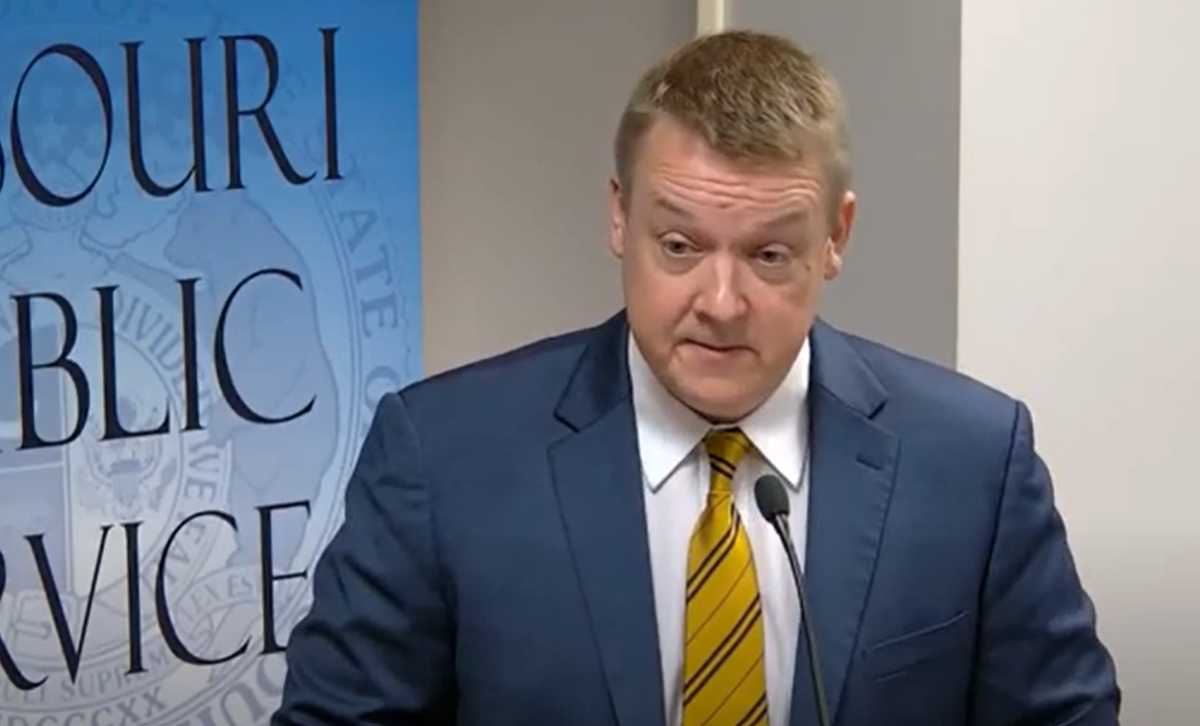
The OPC declined to comment on the record for this story.
The other main objection by utilities to ZIP code level reporting was its anticipated complexity.
But consumer groups say utility companies either already have access to this information or could easily obtain it if they tried. Coffman noted that ZIP code-level shutoff data is a natural extension of the data utility companies already collect on customers.
“They have to have that information to bill people. They know what the ZIP code is for all their customers,” he said. “(ZIP code data) is something that is being required increasingly by more and more states.”
Keeping shutoff data confidential may also help companies avoid public scrutiny.
“I’m almost certain that the utilities have a very granular, very deep understanding of how all their operations work,” Owen said. “I don’t think they want the public to know how problematic and widespread the disconnections are.”
Why does utility disconnection reporting matter?
Missouri has among the highest rates of utility shutoffs in the nation — but detailed information about disconnections is scarce. Figuring out where these shutoffs are happening can help identify which demographic groups are most affected and where bill assistance programs can be targeted.
In 2022, the state’s utility companies disconnected the sixth-highest number of utility customers in the nation, despite having the 18th largest state population, according to a study from the Center for Biological Diversity and other groups.
Batween March and November of 2024, Spire and Evergy reported 47,546 total shutoffs in their service territories that include the Kansas City metro area. Each shutoff is counted only once, although the same household may have experienced multiple shutoffs in this period.
Spire’s western Missouri division operated around 500,000 residential meters as of Sept. 30, 2024, while Evergy’s western Missouri territories operate around 570,000 meters combined. Many households have both a Spire and an Evergy meter.
Where it is available, data consistently reveals that utility disconnections disproportionately impact people of color.
A 2020 study by the Pacific Institute found that among U.S. households that receive water shutoff warning notices, Black customers are more than twice as likely as white customers to actually have their water disconnected.
A 2022 survey by the Energy Justice Lab at Indiana University found that Hispanic residents nationwide are over 80% more likely than their white counterparts to get their energy utilities like natural gas and electricity disconnected.
And a February 2024 study examining shutoffs by Xcel Energy, the largest electric utility in Minnesota, found that customers of color were three times as likely to experience disconnections and power outages as white customers — even when accounting for income and homeownership.
Granular shutoff reporting is also becoming more common. Coffman pointed out that neighboring Illinois already requires utilities to report their disconnections by ZIP code and to focus their bill assistance efforts in the areas with the most shutoffs. California, Minnesota and New Jersey also require utility companies to report their shutoffs by ZIP code.
New chair, new approach
Several consumer advocate groups told The Star that Hahn’s involvement in the ZIP code reporting policy is part of a larger shift in the Public Service Commission’s culture since her appointment last year. They described her agenda as pro-business, particularly pro-utility.
“There seems to be an unprecedented shift towards the Public Service Commission getting involved in legislation,” Coffman said. “In the past, the Public Service Commission has tended to remain neutral and stay out of legislative decisions.”
Owen of ReNew Missouri recalled Hahn’s participation in an Aug. 13 meeting in Jefferson City where state legislators discussed pro-utility policies.
“Most (commission) chairs have some sort of direction that they want the PSC to go in,” he said. “My understanding is that she’s putting forward a legislative agenda.”
Hahn’s close ties to utilities aren’t just ideological. Her husband, Jefferson City lobbyist Jay Hahn, worked as a lobbyist for Missouri American Water until May 31, 2023 — one day before she was appointed to the commission. The privately owned water utility operates in the areas around St. Louis, St. Joseph, Joplin and Jefferson City, among other Missouri cities.
Hahn also played a key role in orchestrating a last-minute switch to the time-based electricity rates that Evergy’s Missouri customers are assigned by default.
The Star reported in fall 2023 that Hahn, then a newly appointed commissioner, proposed that Evergy change customers’ default rate plan from the Summer Peak Time-Based Plan, which an Evergy-funded study of 20,000 users’ behavior projected would save customers the most money out of the four options, to the plan that was closest to the company’s previous “flat” rates.
“Evergy can make a revised tariff filing with the commission that revises the automatic, or default, TOU rate … to automatically place customers on the more traditional rates that customers are more familiar with,” she said in a commission meeting Aug. 30, 2023.
The change was adopted just weeks before the plans rolled out for customers in December 2023.
Moving forward, stakeholders like Owen, Coffman and DeRose are concerned that the PSC will continue showing deference to utility companies’ business interests. But without detailed information about these companies’ disconnections and other actions, nonprofits may struggle to serve the customers most affected.
“Community action agencies deserve to have information that can help them do their jobs better,” DeRose said. “This is Missouri. This is the Show Me State. And what Governor Parson and Chairwoman Hahn seem to support is secrecy over transparency.”
Do you have more questions about utilities or their regulation in Missouri or Kansas? Ask the Service Journalism team at kcq@kcstar.com.
This story was originally published January 29, 2025 at 5:00 AM.
.jpg)