
Missouri makes it harder for transgender people to change gender marker on IDs
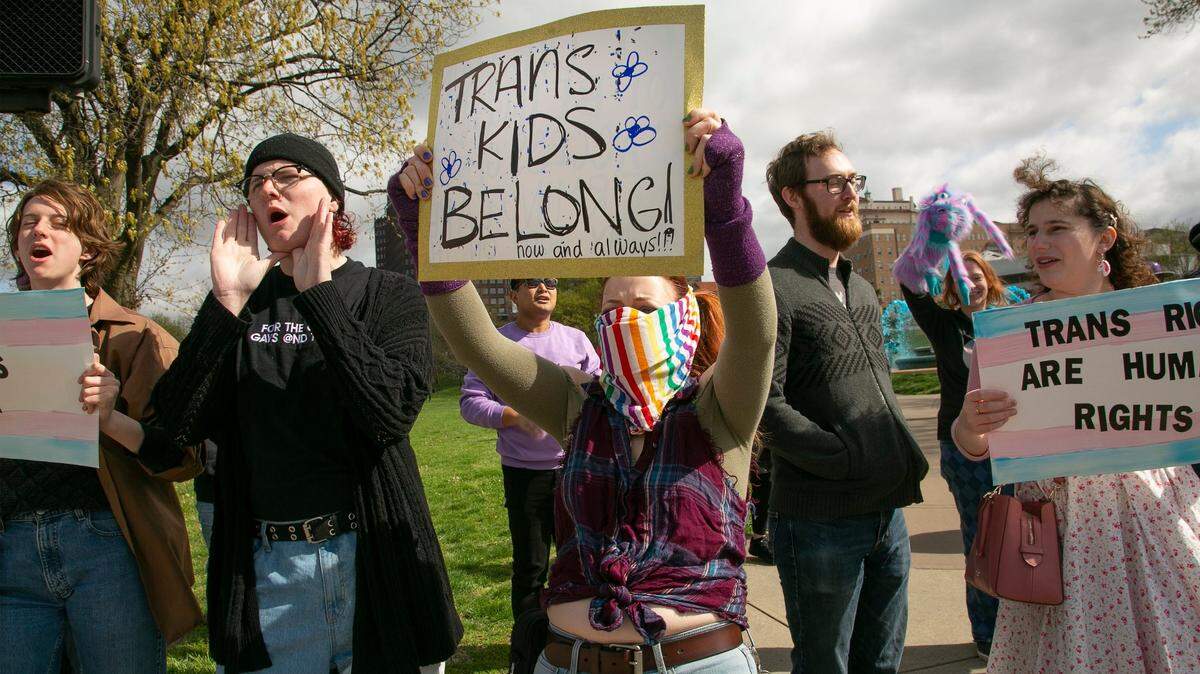
Missourians hoping to change the gender marker on their state-issued IDs now face major barriers to doing so, following a quiet change to state policy earlier this month.
A form used in DMVs across the state to change the gender marker (M or F) on IDs like driver’s licenses is no longer available, state Department of Revenue spokesperson Anne Marie Moy confirmed to The Star.
“Form 5532 is no longer needed,” she wrote in an email Monday, referring to the previous gender marker change form.
“Customers are required to provide either medical documentation that they have undergone gender reassignment surgery, or a court order declaring gender designation to obtain a driver license or nondriver ID card denoting gender other than their biological gender assigned at birth.”
That’s a shift from what advocates at PROMO, a Missouri LGBTQ+ rights nonprofit that raised concern about the change Monday, say has been the status quo since at least 2016.
“We find it very concerning that there was no public input or notification process whatsoever,” said Katy Erker-Lynch, the group’s executive director. “They just made this decision unilaterally without talking to anyone.”
Here’s what we know about the sudden change, and what may be next for the state’s ID rules.
What has changed about Missouri’s ID gender marker policy?
Internet archives show that the gender marker change form was available on the Missouri Department of Revenue’s website as of Tuesday, Aug. 6. The following day, the page was gone.
Form 5532 required some identifying information and a signed “gender designation statement” by the applicant, as well as a signature from a medical or social service provider like a doctor, therapist or social worker.
The form did not require a court order or proof of gender-affirming surgery. Now, the state requires one or the other in order to update IDs. Erker-Lynch noted that most court orders come from judges who are not experts on LGBTQ+ issues, and who may also require a proof of surgery before they issue the order.
“To add a surgery requirement is outrageous,” Erker-Lynch said. “Missouri just made it very, very difficult, if not impossible, for transgender minors, for low-income trans folks and for folks who are incarcerated to receive any gender-affirming care. But now they’re saying, to change your gender marker, you have to receive gender-affirming care.”
After putting out a call for anecdotes related to the change, PROMO has heard from at least 10 LGBTQ+ Missourians so far, spokesperson Robert Fischer said. Erker-Lynch added that resource groups around the state have helped hundreds of LGBTQ+ Missourians update their IDs each year.
Why did Missouri change its driver’s license policy?
The abrupt decision by the Department of Revenue to tighten its gender marker change policy came days after reports of a transgender woman using a gym in the St. Louis area sparked outrage among some conservative politicians.
The controversy, first reported by the St. Louis Post-Dispatch, drew protesters and counter-protesters to the gym earlier this month. State Rep. Justin Sparks of Wildwood held a press conference stating he had been contacted by constituents who were “uncomfortable and scared” by the woman using the gym’s shower facilities. The gym had stated that its policies allowed the woman to use its women’s facilities because her driver’s license identified her as female.
Missouri Attorney General Andrew Bailey also weighed in, sending a notice of investigation to the gym’s CEO on Aug. 2. The Department of Revenue changed its policy just four days later.
While the department did not comment on whether the decision was as a direct result of the gym controversy, Erker-Lynch believes the two are connected.
“I think the DOR’s decision reflects what we’ve seen in Missouri, which is a state and state departments run by fear and intimidation,” she said. “The timeline (of the change) certainly suggests that.”
What’s next for Missouri’s gender marker policy?
For now, many LGBTQ+ Missourians are effectively unable to change the gender markers on their state-issued IDs. However, surgery requirements for gender marker changes in other states have faced legal challenges.
A surgery requirement enacted in Alabama in 2018 resulted in a lawsuit by the American Civil Liberties Union in which a federal judge ruled it unconstitutional.
“By making the content of people’s driver licenses depend on the nature of their genitalia, the policy classifies by sex,” thereby violating the Equal Protection Clause in the 14th Amendment of the U.S. Constitution, judge Myron H. Thompson ruled in 2021.
Alabama has appealed the decision, and its surgery requirement is still in effect.
While no legal challenge to Missouri’s decision has been announced yet, Erker-Lynch believes the precedent is there.
“I think that their actions have opened them up to litigation,” she said. “They’re making this paradigm that it is almost impossible to be trans, to be nonbinary, to be gender-expansive and to be a Missourian who can participate in public and everyday life.”
Do you have more questions about state agencies in Missouri or Kansas? Ask the Service Journalism team at kcq@kcstar.com.
.jpg)