
Who’s paying for Missouri’s I-70 expansion? Will it have tolls? Your questions, answered
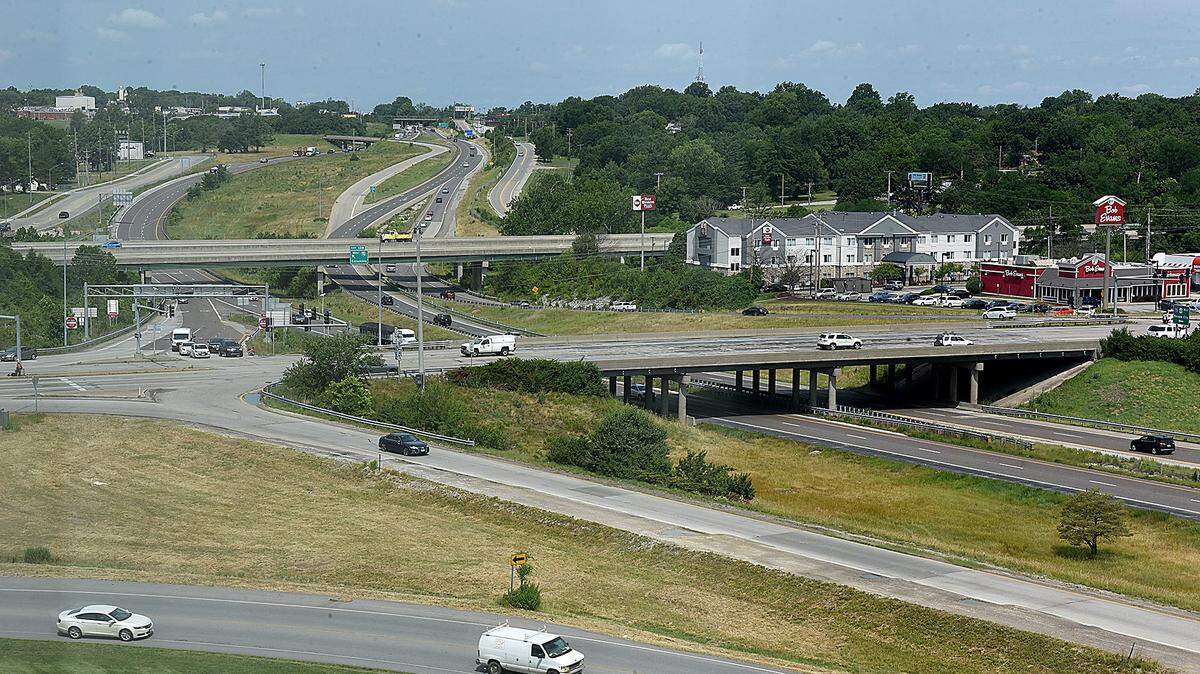
Missouri embarks this summer on a yearslong initiative to modernize and expand I-70 into a major highway with three lanes going each direction.
The project is broken up into six segments between Blue Springs and the St. Louis suburb of Wentzville. The first segment, a 22-mile stretch from Columbia in central Missouri to Kingdom City, begins construction this month and is expected to wrap up in 2027. Altogether, the statewide project is expected to take around seven years to complete.
But who’s paying for all of this? Some Star readers reached out with questions about funding for the ambitious undertaking.
Reader William wanted to know more about the breakdown between state and federal funding for the project, including which legislators supported and opposed the funding packages.
“Let’s give credit where credit is due, and tell people about how their tax dollars are being used, particularly when they will clearly benefit from the expenditures,” he wrote.
Reader Georganne also asked about the possibility of tolls going up along I-70 between St. Louis and Kansas City. Here’s what we found out.
How is Missouri’s I-70 expansion project being funded?
The I-70 improvement project is being funded through a combination of state and federal tax dollars — but the majority come from the state of Missouri through a combination of general revenue and bonds that get paid back over time.
“State General Revenue funds are providing $2.8 billion to fund adding a third lane for nearly 200 miles, and that is state funding only,” MODOT spokesperson Linda Horn told The Star.
But money is also coming in from previously approved Statewide Transportation Improvement Project funds, which are designated for improvements to interchanges and other highway features.
“Additional projects that were planned to make improvements to I-70 interchanges are being added into the contracts for the I-70 widening. These additional pieces do have both federal and state funding,” Horn said. She added that these STIP funds are 80% federal money and 20% state money.
The Star’s analysis of funding sources for the initiative’s sub-projects — including the six segments of road expansion, interchange improvements, bridge modernization and other projects — indicates that around 84% of the total funding for I-70 improvements comes from the state, while just 16% comes from the federal government.
Will I-70 become a toll road?
There are currently no plans to charge tolls on I-70 — and doing so in the future would be difficult unless state and federal laws change.
“No tolling is being considered on state highways,” Horn said. “Federal law prohibits tolls on existing interstates, and Missouri law states that no state highway funds may be used on toll facilities.”
In the early days of planning the I-70 expansion project, the Federal Highway Authority offered some states the option to impose one toll on interstate highways as part of a pilot program. However, Horn added that state law would have prevented the initiative from being funded through regular channels.
“MODOT does not currently have the legal authority to construct or operate a toll road or bridge,” Lairyn McGregor, another department spokesperson, wrote in an email to The Star.
Which elected officials have supported and opposed funding the I-70 expansion?
Missouri Gov. Mike Parson proposed a state budget in January 2023 that would have allocated $859 million to expanding I-70 just in the areas surrounding Kansas City, Columbia and St. Louis.
The state House of Representatives supported this proposal, but the Missouri Senate went bigger. In April 2023, the Senate Appropriations Committee proposed allocating $2.8 billion to expanding I-70 across the entire state — not just the areas near major cities. Committee chair Lincoln Hough, a Springfield Republican, spearheaded the plan.
This hefty sum stayed in the version that Parson signed last June amid a budget surplus.
Some, including members of Parson’s own Republican party, previously noted that Missouri could have done more to apply for federal funds rather than relying so heavily on state money.
Missouri’s U.S. Senators Josh Hawley and Eric Schmitt, both Republicans, refused to take part in federal “earmark” negotiations this spring — a process by which federal funding gets allocated to state and local projects.
Missouri ended up with just $95.1 million for infrastructure and other projects in a federal spending package passed in April. That’s only around half of what Kansas got in the same package, despite Missouri having twice as many residents.
These factors have combined to make the I-70 expansion a heavily state-funded project, rather than one that takes more advantage of federal dollars for infrastructure improvement.
Do you have more questions about infrastructure in Missouri or Kansas? Ask the Service Journalism team at kcq@kcstar.com.
This story was originally published July 13, 2024 at 6:00 AM.
.jpg)