School emails show Afghan teen struggled before he was discovered dead in Missouri
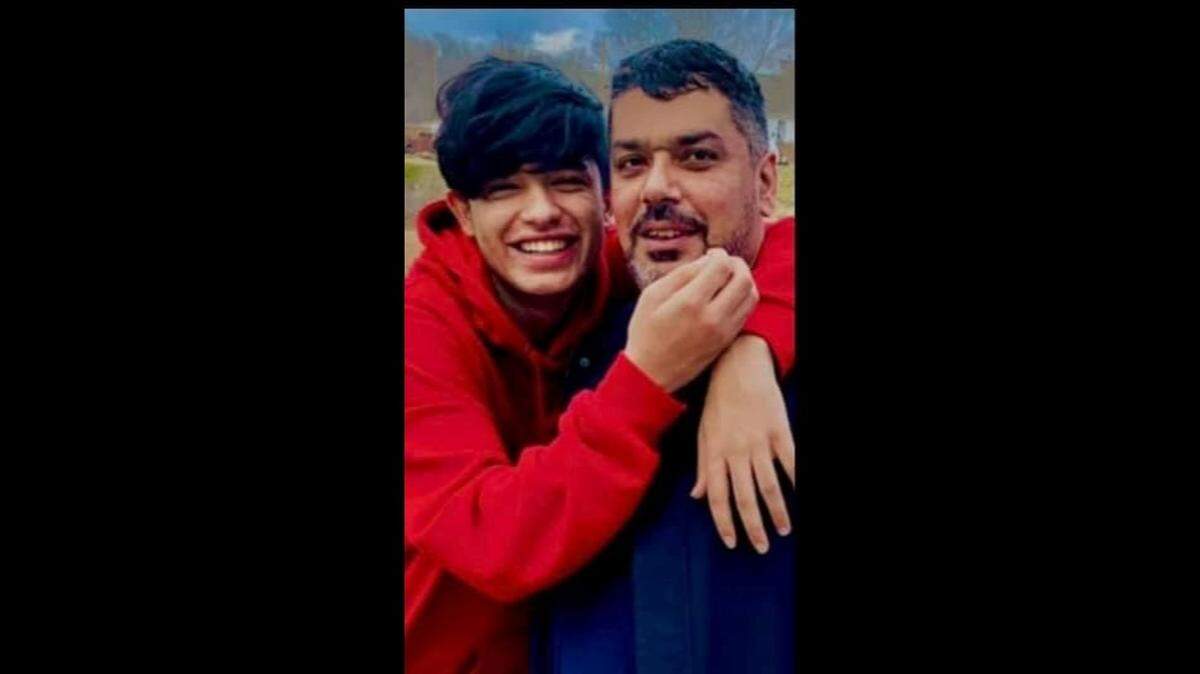
When Rezwan Kohistani arrived at school in January, teachers assessed him as an intelligent and eager student.
The 14-year-old was the first Afghan refugee to be placed at Webb City High School and arrived as part of a group of about 16 families destined for southwest Missouri after fleeing persecution from the Taliban’s takeover of Afghanistan.
At first, school staff thought the family was settling into their new life.
“The Kohistani family seems to be adjusting well,” a teacher wrote in a March 18 email. “Teachers, staff and other students seem to love them!”
But less than two months later, the 14-year-old refugee was found dead under the bleachers of a baseball stadium a mile from the high school. Authorities believe he died of suicide but his death has left his family and the community with more questions than answers.
Internal school emails obtained by The Star give more insight into Rezwan’s short time in Webb City. They mention normal teenage distractions of a boy who spent too much time on his cellphone and was beginning to attract attention from girls.
But they also show that Rezwan had been struggling since arriving at the school of about 1,300 students. He was failing classes, missing assignments and chronically absent. And his family was planning on moving far away from southwest Missouri.
“The only issues I have had so far is with attendance,” his teacher wrote in that March email to a local nonprofit that works to resettle refugees. “Rezwan has missed quite a bit of school.”
In late January, when he arrived in the town of 12,000 people near Joplin, the school’s English Language Learner teacher wrote to colleagues that he was “very intelligent and eager to learn English.”
That teacher was impressed that he already possessed some English literacy skills, leading her to believe he had studied the language before leaving Afghanistan.
“He is in survival mode, but he seems to be very grateful to be here,” she wrote.
Challenges, confusion at school
Upon their arrival, the Kohistanis were among the only Afghan refugees placed in Webb City schools. Rezwan was the only high school student who spoke Dari, the most widely spoken language in Afghanistan.
Even with Rezwan’s own English skills, the language barrier proved to be a persistent challenge.
Teachers allowed the teen to use his phone to translate between English and Dari. But teachers were also bothered by him constantly receiving text messages. He even had his phone taken away in one teacher’s classroom.
Administrators were concerned over him missing school days and failing classes. After some research, one teacher learned that school days in Afghanistan are about half the length of those in the U.S., which might have explained his tendency to be tired and unmotivated in the afternoon.
Rezwan had said he planned on transferring schools to Joplin and moving in with an uncle. In late April, the refugee nonprofit working with his family notified the school that his family planned to move to Dallas.
In emails, school officials said they wouldn’t be able to transfer any credits to another school because he had fallen so far behind.
“I am sure that it is from missing assignments from absences,” the ELL teacher wrote after speaking with a school counselor.
The family told The Star they did not understand the extent of their son’s issues at school.
School officials said they provided notice to the family on multiple occasions. They believed the family understood the problem as the teen himself complained that he was getting in trouble at home for missing school.
Webb City Superintendent Tony Rossetti acknowledges that the language barrier could explain some of the confusion: the school uses an auto dialing phone system and mails notices to parents of absences. But those systems all operate solely in English so it’s unclear how much the Kohistanis comprehended.
“It’s sent out in English,” Rossetti said. “So if they got that message, they would have to be able to translate that.”
RAISE Community, a nonprofit based about 50 miles south in Noel, was working to support the family’s transition. But emails show that the organization faced many challenges as well.
It took three weeks for Madeline Bridgford, a school enrollment specialist for the group, to respond to a Webb City teacher’s initial inquiry looking for cultural training that might help teachers.
Bridgford told the teacher she wasn’t hired when the family was first placed in the school system — in one email she had to ask which grades the four Kohistani children were enrolled in.
“I’m only part time and it’s actually insane how just an incredible amount of things need attention every day!!” she wrote to the teacher.
Contacted by The Star, Bridgford declined to comment.
Rezwan was first placed at Webb City Junior High School because his immigration paperwork showed his age to be 14.
But after a few days, the boy said he was actually 17 and complained of going to school with “babies,” one teacher wrote in a March email. So he was moved to the high school, where teachers classified him as a freshman because he had no academic record from Afghanistan.
Both the school and RAISE struggled with the situation as all the official paperwork was from Afghanistan.
“I’m just not sure how to proceed,” Bridgford wrote on April 12.
The Kohistani family told The Star that Rezwan’s age was 14 as was documented on his paperwork. They also said they had never communicated with Bridgford.
School questions its role
The superintendent said school leaders and police have interviewed many students and staff to learn more about Rezwan’s experience in Webb City.
“He was a well liked student. I think that’s one of the things that makes this all harder to deal with,” Rossetti said. “When you lose any student you carry a level of, what could we have done differently, how could we have intervened? Did we miss signs? There’s a level of grief you go through.”
The superintendent said the school system is reexamining support systems for refugee students and students learning English as a second language.
The schools are looking at how they translate information for families and are considering adding a special counselor for English learners, especially at the high school. Currently, guidance counselors focus on grades, aptitude and college prospects, not necessarily mental well being.
“That kind of emerged as one of the things that, looking back, I think there’s some merit to us having to address…,” Rossetti said. “We need to make that connection on the clinical side, not just how we can get you graduated and into the workforce.”
For now, the superintendent said the school system is waiting on the police to wrap up their investigation of Rezwan’s death. He hopes that inquiry provides some explanation to the family and to the school.
“This still happened on our watch, on our time,” Rossetti said. “To the extent of what role Webb City High School played in his life or didn’t is unknown to us at this point.”
This story was originally published June 13, 2022 at 5:00 AM.