Advocates say intellectually disabled Missouri murderer should not be executed next week
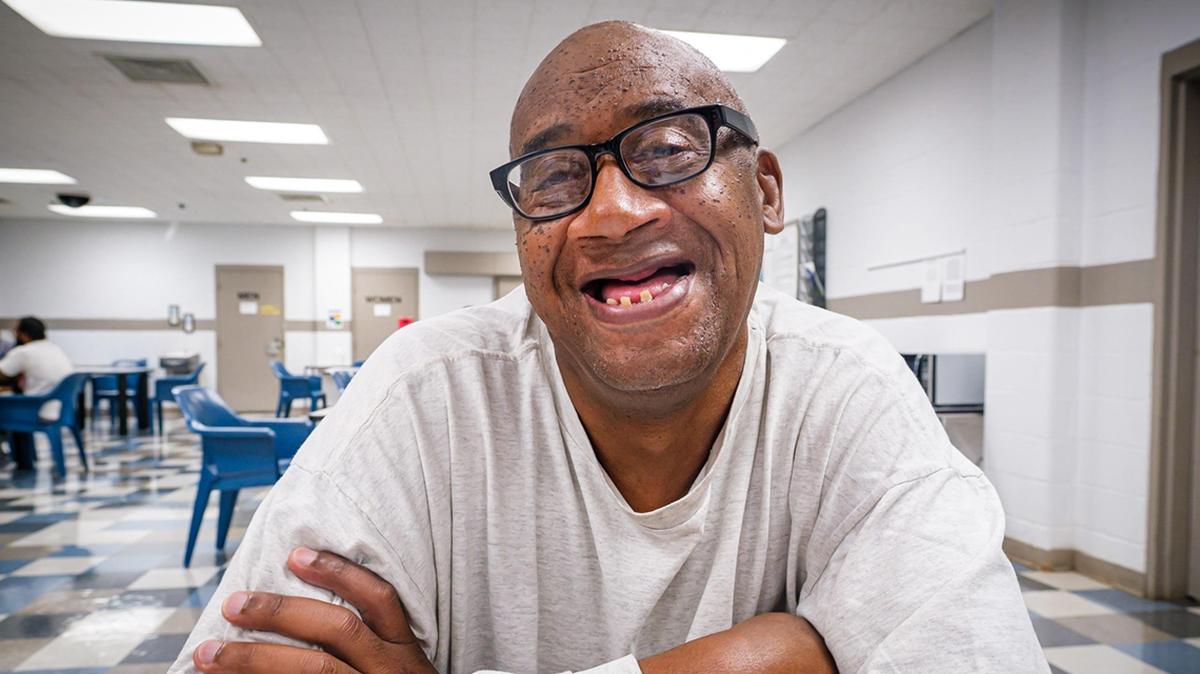
Legal professionals, disability rights advocates and faith leaders are calling on Missouri Gov. Mike Parson to halt the execution of Ernest Lee Johnson, who they say is intellectually disabled.
Johnson, 61, is set to die by lethal injection Tuesday at the state prison in Bonne Terre.
But anti-death penalty advocates say his execution would be illegal because of his intellectual disability and because the drug Missouri uses to kill prisoners could cause him painful and violent seizures, given that he still has part of a benign tumor in his brain.
In 1995, Johnson was convicted of first-degree murder for killing three people the year before during a closing-time robbery at a Casey’s General Store in Columbia: store manager Mary Bratcher, 46; Mable Scruggs, 57; and trainee Fred Jones, 58.
During a rally Wednesday in the Missouri Capitol’s rotunda in Jefferson City, several dozen people and the leaders of groups including the ACLU of Missouri and the state chapter of the NAACP called for Parson — a Christian, some noted — to spare Johnson’s life. They want his sentence to be reduced to life in prison without the possibility of parole.
“What Ernest did was wrong, but to kill Ernest would also be wrong,” the Rev. Darryl Gray said, later adding: “Murder is murder.”
Kelli Jones, Parson’s spokeswoman, acknowledged but did not respond to a request for comment.
The execution would mark the second carried out in Missouri during the COVID-19 pandemic, a time when most other states have paused them. Last May, Missouri was the first in the U.S. to put a prisoner to death during the pandemic; it was followed only by Texas and a slew of executions by the federal government.
Johnson has exhausted most of his options to stop the execution. Last month, the Missouri Supreme Court refused to halt it, ruling the prisoner is not intellectually disabled because he planned the murders in advance. His attorneys have asked the court to reconsider the case and said its decision was filled with “legal and factual errors.”
His public defender, Jeremy Weis, has said Johnson “meets all statutory and clinical definitions” of intellectual disability and has an IQ that in various tests has ranged from 67 to 77. The Eighth Amendment — forbidding cruel and unusual punishment — prohibits executing intellectually disabled people.
Disability concerns
In August, the state Supreme Court ruled that Johnson was eligible for the death penalty, denying a petition from his lawyers that argued his execution would be cruel and unusual based on his intellectual disability.
The ruling countered claims that Johnson is in fact intellectually disabled or that he would suffer more greatly from lethal injection because of an underlying medical condition.
The justices unanimously found that Johnson “failed to prove he is intellectually disabled.” If he were, they acknowledged, he would be shielded from such punishment by state and federal law.
Evidence offered by the high court to support its conclusions included intelligence test scores taken before and after the killings.
It also noted the capacity he demonstrated in carrying out the murders nearly 30 years ago. The justices pointed to his statements before the killings, his attempt to conceal evidence and other “strategic decisions.”
Some women who cared for Johnson testified he could not cook, drive or do laundry “the right way” and had significant trouble maintaining even menial employment. But the court cited Johnson’s probation officer’s contention that Johnson “did not hold a job very long because he was not motivated to work.”
Legal experts have raised concerns about the way Johnson’s claim of intellectual disability was heard.
Last month, the American Bar Association wrote to Parson in support of commuting Johnson’s sentence. It argued Missouri used “a flawed process” to hear the claim by having the disability be determined by a jury after Johnson was found guilty, rather than by a judge before trial as is the practice in other states.
John Blume, a Cornell Law expert who has represented death penalty defendants and studied jurors’ attitudes in intellectual disability claims, called the use of a jury to hear the claim “prejudicial” for defendants.
“They’re not really deciding the intellectual disability question,” he said of juries after a defendant has been convicted. “What they really do is they decide whether they think this person should get the death penalty or not, and they retrofit the intellectual disability decision to sort of fit that.”
Will drug cause seizures?
Beyond his intellectual disability claim, Johnson and his supporters say that because of his medical condition he will face a worsened experience when executed by lethal injection of Pentobarbital, the drug used in the state’s executions.
It’s been used by Missouri to execute 22 prisoners since October 2013.
In 2008, Johnson underwent a surgical procedure to remove a benign brain tumor. Much of his brain tissue was removed during the procedure and some of the tumor remained, according to court records.
In an affidavit in 2015, Dr. Joel Zivot, a medical professor in Atlanta who has researched lethal injections, said Johnson suffers from a seizure disorder as a result of an estimated 15% to 20% of his brain tissue being removed during the surgery. The scars on his brain and missing pieces create abnormal patterns of electrical activity that manifest in seizures, Zivot said.
“As a result of Mr. Johnson’s brain tumor, a brain defect, and brain scar, a substantial risk of serious harm will occur during his execution as a result of a violent seizure that may be induced by” the drug, Zivot said. “Generalized seizures, such as the one that would occur in Mr. Johnson, are severely painful.”
In its review, the Missouri Supreme Court found Zivot’s arguments “not sufficient proof that Johnson is sure or very likely to suffer a painful seizure” during his execution.
Johnson asked federal courts to intervene on the method by suggesting other means, including the use of nitrogen gas. A request brought by his lawyers for an alternative method of firing squad was declined by an appeals court largely on technical grounds.
In May, the U.S. Supreme Court declined to hear his case. The court’s three liberal justices dissented.
“Missouri is now free to execute Johnson in a manner that, at this stage of the litigation, we must assume will be akin to torture given his unique medical condition,” the dissenting justices wrote in a joint opinion, adding that the appeals court had “sacrificed the Eighth Amendment’s chief concern for preventing cruel and unusual punishment.”
The murders
On the night of the killings, a Boone County deputy was sent to a Casey’s off Interstate 70 when one of the victims’ mothers phoned to say he had not returned home from work.
The workers were beaten to death with a claw hammer, deputies learned. Bratcher also was stabbed with a screwdriver and Jones was shot in the face.
Johnson, 33, was a frequent customer of the store. He later said he asked his girlfriend’s son for a gun and went there wearing a mask to get money for cocaine. His lawyers say it was a “botched robbery” to fuel his drug habit.
“I told them give me the money, and I wouldn’t hurt them,” Johnson once said.
He recalled becoming angry when Bratcher acted as if she did not have a key to a safe. “She lied to me,” Johnson said, according to a 2006 Associated Press report. “I just lost it.”
Over the years, prosecutors have described Johnson as a “vile animal” and a “cold-blooded killer.”
Boone County Prosecutor Kevin Crane, who is now a judge, once told a jury that imposing the death penalty is “the least you can do.” Johnson planned the murders and tried to cover up the crime, he argued.
In 1995, a judge followed the initial jury’s recommendation to sentence Johnson to die, which was overturned because his lawyers did not offer testimony about his upbringing and his drug addiction.
His second death sentence was overturned, again by the Missouri Supreme Court, after the U.S. Supreme Court determined it is unconstitutional to execute a person with a mental disability.
In 2006, another jury, which was seated in Pettis County and was all white, recommended for a third time that Johnson, who is Black, die for his crimes.
At the time, Johnson’s siblings testified about their abusive childhood with alcoholic parents. They were raised in a shack built on stilts near the Mississippi River in southeast Missouri. His sister, Beverly, recalled their grandmother calling her brother “special.”
Anti-death penalty advocates have recently noted there is a correlation between Missouri counties with historically high numbers of “racial terror” acts and death sentences. Johnson, whose father was a sharecropper and who attended a segregated school, grew up in Pemiscot and Mississippi counties — where there have been documented lynchings.
“This is important to bring forward to Ernest and for everyone who’s concerned about the death penalty,” Elyse Max, executive director of Missourians for Alternatives to the Death Penalty, said at an August information session about the case.
The group has held other rallies to call for clemency, including one this month near the Country Club Plaza in Kansas City.
Among those in the crowd was Reggie Griffin, who is one of four people to have been proven innocent and exonerated from Missouri’s death row. Griffin looked into the camera of a cellphone livestreaming the Sept. 15 rally and described it as wrong for prisoners to be “murdered in the name of justice.”
In 2015, ahead of Johnson’s previous execution date, one of Bratcher’s daughters told the Columbia Missourian she and her siblings planned to attend the execution to honor her mother.
“The only peace I’m going to get is to stop having to wait for the next step in the legal process,” Carley Schaffer told the newspaper. “It’s not bringing my mom back. ... It doesn’t change that I’m going to grieve for her for the rest of my life.”
The Associated Press contributed to this report.
This story was originally published September 29, 2021 at 3:02 PM.