
When will Saharan dust reach Missouri and Kansas? Here’s what forecasters say
Missouri and Kansas are about to get a visitor from across the globe — a giant cloud of dust from the Sahara desert.
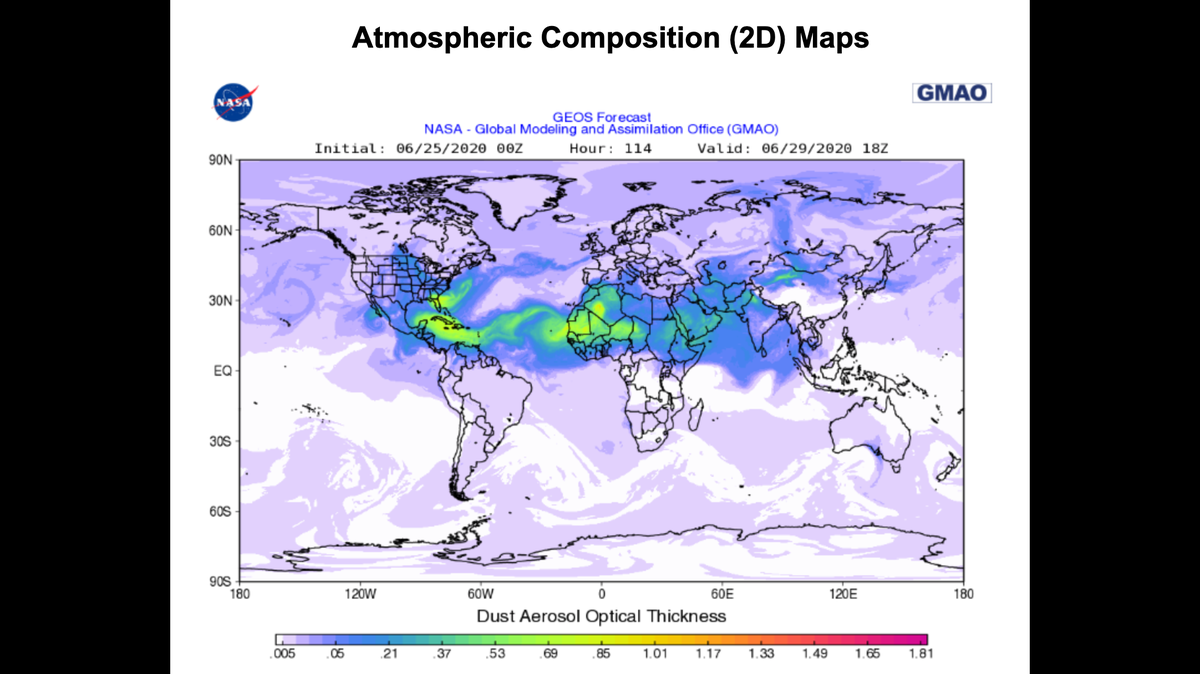
Earlier this month, a National Oceanic and Atmospheric Administration satellite captured images of the dust plume blowing off the coast of Africa and over the Atlantic ocean.
The cloud, also known as the Saharan Air Layer, blew across the Atlantic and up through the southeastern U.S. billowing over states including Georgia, the Carolinas and Texas.
It’s expected to make its way to the Midwest soon, with parts of Missouri and Kansas potentially getting dust as early as Thursday, KCTV reported.
The cloud should hold together and move north, reaching the Kansas City area by Friday and sticking around through the weekend, according to KSHB.
The dust plume is also expected to reach the St. Louis area this weekend, KMOV reported.
NASA forecasts that the cloud will not be as dense over the Midwest compared to portions of the southern U.S.. You can view an animation of the cloud’s forecasted movement here.
What to expect
While you likely won’t be able to see the dust when the cloud arrives, you can anticipate a hazy afternoon sky and vivid sunsets of vibrant reds and oranges, according to KSHB.
You can also expect a slight drop in air quality, which could affect people with respiratory conditions, KCTV reported.
It can also irritate sinuses, McClatchy News reported.
“Sinus sufferers hate this dust and I don’t blame them,” KPRC meteorologist Frank Billingsley said. “You can’t really ‘see’ it as the dust is usually pretty fine by the time it gets here, but itchy eyes, noses and throats are all possible if you are sensitive to it.”
If you have respiratory conditions, you may want to take extra precautions, Dr. Sadaf Sohrab told KY3
“The dust particles can go pretty deep into the lungs,” he said, according to the outlet, adding that it can cause shortness of breath, coughing and wheezing.
If you have asthma or COPD, Sohrab suggests keeping windows and doors closed and keeping your air conditioning circulating, according to the outlet. Be sure to wear a mask if you go outside to watch a sunset, he told KY3.
As far as sunsets go, they’re pretty breathtaking. Several people in the southeastern U.S. took to social media to share images of the stunning views.
What is the Saharan Air Layer?
Dust clouds from the Sahara aren’t rare.
The Saharan Air Layer is a dry, dusty mass of air that forms every year, typically from late spring to early fall, its base hovering about a mile above the surface of the earth occupying a roughly 2 mile-thick layer of atmosphere, according to the NOAA.
Its journey from west Africa to the U.S. is about 5,000 miles, The Weather Channel reported.
This year’s outbreak is considered especially unique due to its thickness.
“It had the highest concentrations of dust particles observed over Puerto Rico in at least the last 15 years,” Dr. Olga Mayol told The Weather Channel.
This story was originally published June 25, 2020 at 2:05 PM.