
Shootings of Ferguson officers seems to reverse recent progress
In her 17 years as a city councilwoman, Kim Tihen has not been afraid to speak against the powers in her own city.
She was mentioned, she said, in the blistering Justice Department report about abusive law enforcement in Ferguson for sharply criticizing the city’s municipal judge. She has suggested that community service, instead of fines, be offered to Municipal Court defendants. And although she was once a Ferguson police officer, she said she had consistently supported peaceful protests in the aftermath of the fatal police shooting of an unarmed black teenager, Michael Brown.
But Tihen’s good will toward the protesters ran thin after four gunshots early Thursday seriously wounded two police officers guarding the police station. “I am beyond outraged by the behavior and lawlessness of the protesters who want nothing more than to destroy our city,” she wrote in an email Thursday. “Enough is enough. The city has done, and continues to do, everything within its power to facilitate the change needed. I implore the residents of this city to stand together and demand an end to this violence.”
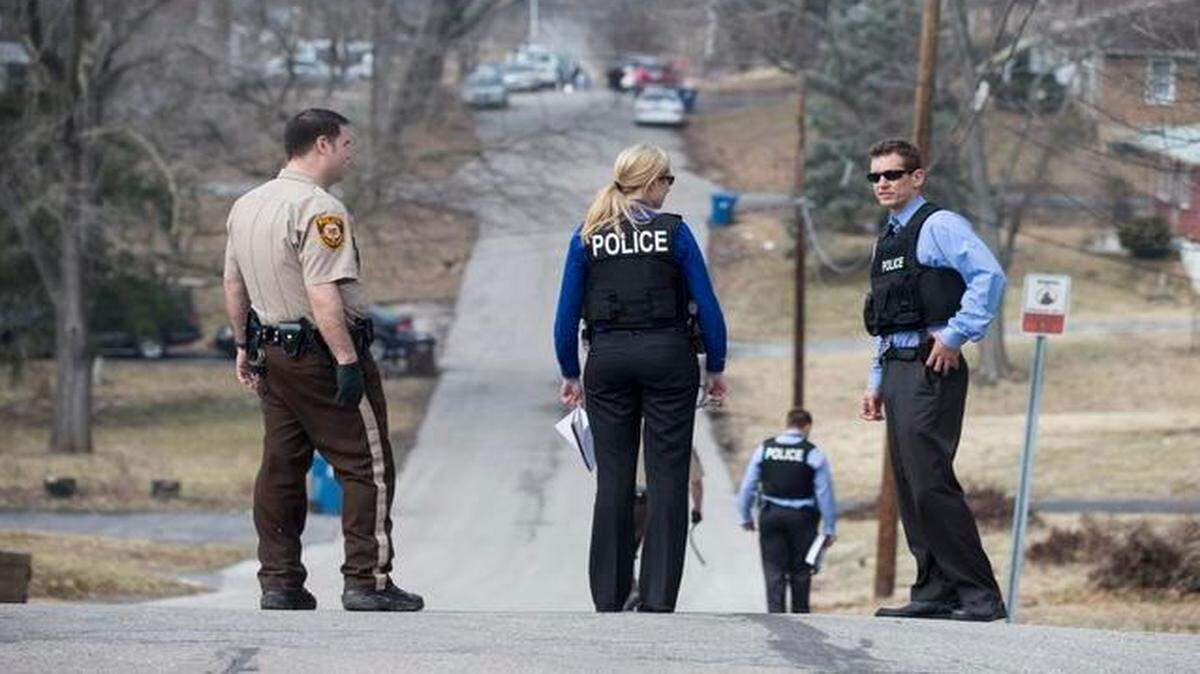
Just as Ferguson seemed to be moving past the stunning abuses detailed by the federal authorities, having shed its city manager, police chief, municipal judge and other officials accused of running a racially biased legal system, those four gunshots threatened to reopen the well of anger, unrest and racial tension that has stifled life here since Brown’s death last summer from shots fired by a white police officer. The St. Louis County Police Department embarked on a huge manhunt for the gunman, sweeping the residential neighborhood from which they believe the shots were fired.
“To actually have the police injured by gunshots — that is not even a small setback, it is a real setback,” said Courtney Curtis, a Democratic state representative whose district includes Ferguson. “It takes away the forward momentum the protesters did have.”
As people reacted with confusion and frustration to the shooting of the two officers, the authorities raided a home and took three people to police headquarters for questioning, but later released them. They also vowed to increase security, with the county and state police again assuming the task of maintaining order in Ferguson.
Civil rights activists and Ferguson residents gathered for a candlelight vigil near the Police Department to show that they would not let the shootings undermine their movement.
The attack on the two officers, who were treated at a hospital and released, drew widespread condemnation from Jefferson City to Washington.
Attorney General Eric H. Holder Jr. said the attack “turned my stomach, because in the week since the Justice Department released its pattern-and-practice report on Ferguson, we have begun to see really important signs of progress.”
“This was not someone trying to bring healing to Ferguson,” Holder said at a news conference in Washington. “This was a damn punk, a punk who was trying to sow discord.”
There is concern about an increase in hostility. It was only months ago that nightly protest vigils escalated to police officers’ firing tear gas and rubber bullets, and demonstrators hurling rocks and bottles.
The shootings also renewed debate over how the nightly street vigils should play out, or if they should continue. While activists argued that the gunman was not one of them and denounced the attack, others wondered whether the protesters, even the peaceful ones, bore some responsibility for what had happened.
Late Wednesday night and early Thursday morning, dozens of protesters had flooded into the street in front of the Police Department, blocking cars as they tried to pass. Things occasionally became tense between the protesters and motorists, some of whom refused to back away when demonstrators lined up in front of their vehicles. On several occasions, drivers inched forward, tapping the knees of protesters who dared them to hit them.
Some of the tensest moments before the shooting came when the protesters fought among themselves. They argued over tactics for resistance and their credibility as demonstrators, with longtime protesters sometimes criticizing those new to the movement. Some took offense to the supposedly new protesters’ trying to tell them what to do. At one point Wednesday evening, the tussles within the group devolved into fistfights in the street.
Emotions also quickly ran high after the shooting. One Ferguson police officer, standing among the protesters as things calmed down, said, “This is what they wanted to happen.” A protester told him that no one wanted violence.
Mark Byrne, a Ferguson city councilman, said it was unfair to assume that the shooter was a protester. Yet demonstrations could unintentionally foster violence, he said.
“When you have a group and that group activity is such that you get people angry and more upset, then some people handle that anger better than others, and you create an environment where something like that can happen,” Byrne said.
Chief Jon Belmar of the St. Louis County Police Department stoked tensions among the demonstrators when he said during a news conference Thursday morning that “protesters were among the shooters.”
He went on to explain the difficulty that officers have in weeding out peaceful protesters from those with bad intentions in such large crowds.
“It’s very difficult for the officers to really understand what they’re looking at at the time and really to be able to evaluate any types of threats,” Belmar said, noting that no officers had fired their weapons after their two colleagues were wounded. “I think it’s a miracle that we haven’t had any instances similar to this over the summer and fall, with the amount of gunfire that we would hear.”
DeRay McKesson, an activist who has been part of the demonstrations since they started in August, said people like him seeking changes to police tactics should not be conflated with violent actors.
“I think people have been looking to discredit the protesters since the first protests,” he said.
On Thursday, Ferguson again began to resemble the city under siege that it was for parts of last summer and fall, with long stretches of streets cordoned off by yellow police tape and large police SUVs lining the roads. Numerous live news trucks returned. And some locals seemed to be growing weary of all the commotion and attention, just when they had thought it was a thing of the past.
On South Florissant Road, a few blocks from the Ferguson Police Department, several shops remained boarded up, a relic of last year’s unrest. Others were open but had few patrons and shut down early. At the ones that were open, the owners were tense, nervous and frustrated.
“We are just afraid we will become targets,” said one bakery owner who did not want to be named for fear of backlash by one side or the other. “I don’t know what to think about this. I’m still processing it all.”
In a statement Thursday, Mayor James Knowles III, whom activists have also asked to step down, warned that violence could jeopardize progress toward correcting the ills cited by the Justice Department.
“City leadership is diligently working to make systematic changes necessary to instill confidence in the city, our police and our courts,” he said. “While we respect the right to peacefully protest, we cannot continue to move forward under threats of violence and destruction to our community.”
Even those who encourage people to take to the streets in demonstration are lamenting what the situation might become as a result of the shootings.
“I think we really are at a tipping point, at least to a certain degree, even though we’re still very early in this movement,” said Montague Simmons of the Organization for Black Struggle, an activist group. “The idea that this would take place last night is just horrific, because the conversation is really just beginning about what the transformation that we’re looking for looks like.”
This story was originally published March 12, 2015 at 8:54 PM.