
Can huge data center coexist with Grinter Farms’ popular Kansas sunflower field?
AI-generated summary reviewed by our newsroom.
- Grinter Farms’ sunflower field is a popular regional attraction.
- Project Bluestem proposes a 1,000-acre data center with at least 600 MW capacity.
- Project Bluestem expects to create over 1,200 jobs and $350 million in tax revenue.
7
At this time of year, Grinter Farms is quiet, save for the insects buzzing around the property. However, in a few months, thousands of people will visit the farm to see its sunflower field — one of the largest in northeast Kansas.
Owners Ted and Kris Grinter plan to plant the seeds next week, and the flowers will bloom in August and September.
However, they are worried about a more long-term change coming to their area.
A 1,000-acre data center has been proposed south of Tonganoxie. Named Project Bluestem, the proposal would have at least 600 megawatts of capacity and be located off 24 Highway and Kansas Avenue.
The proposed site is also within five miles of Grinter Farms, southwest of Tonganoxie off Stillwell Road and 238th Street.
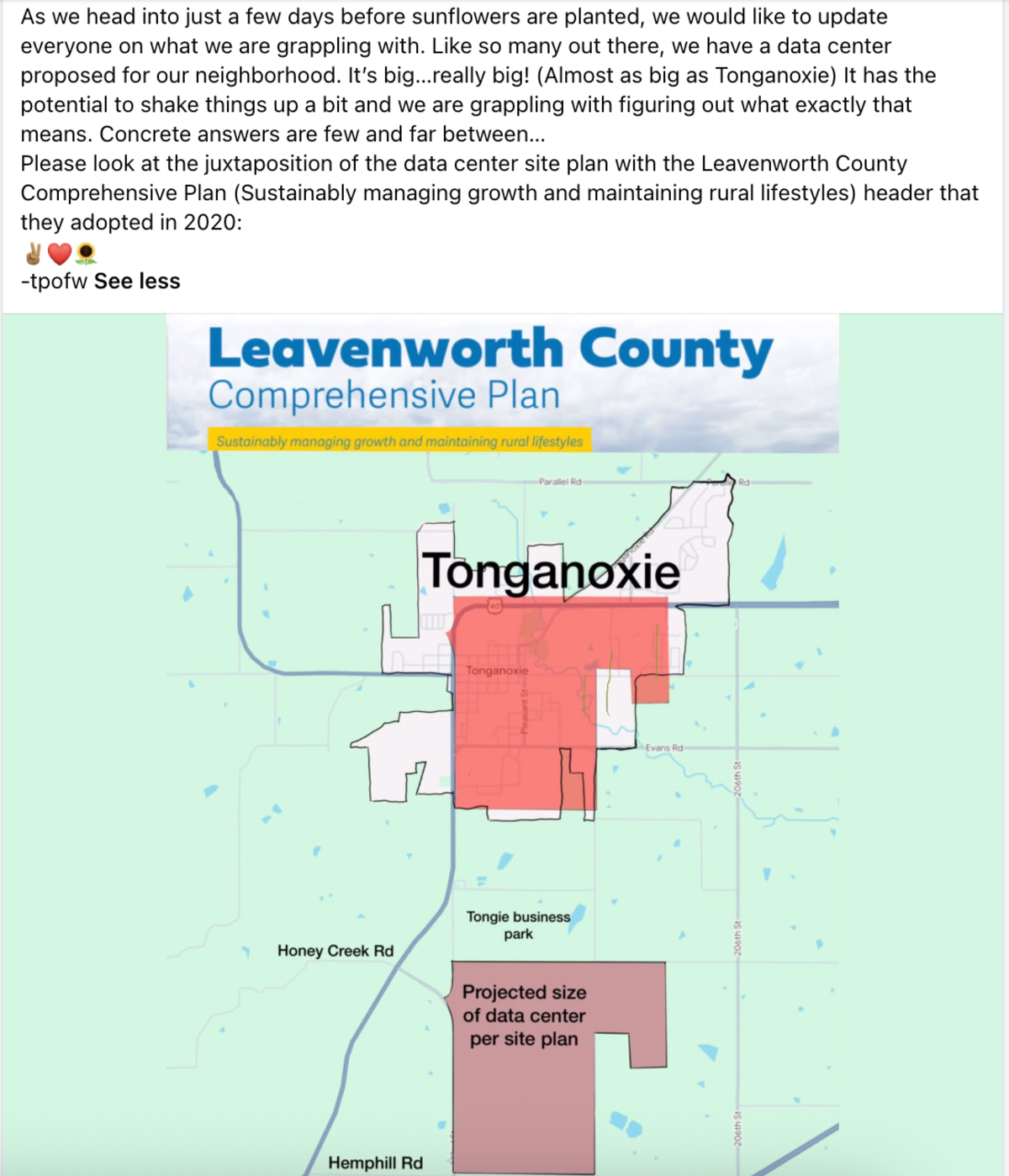
How would the data center affect the farm and its sunflowers? The short answer, Ted and Kris said, is that they don’t know. But they have a few theories.
“Project Bluestem is partnering with local leaders and residents to create a significant economic opportunity that will support the community’s priorities. Leavenworth County and the Kansas City region’s infrastructure, strategic location, and skilled workforce make it well positioned to attract critical digital infrastructure while delivering meaningful local benefits,” said a statement provided by Project Bluestem.
“The project is expected to create more than 1,200 construction and permanent jobs over the next three years and contribute more than $350 million in tax revenue over the next 30 years to support essential public services like first responders, and includes more than $150 million for Tonganoxie School District 464,” according to the statement.
Project Bluestem
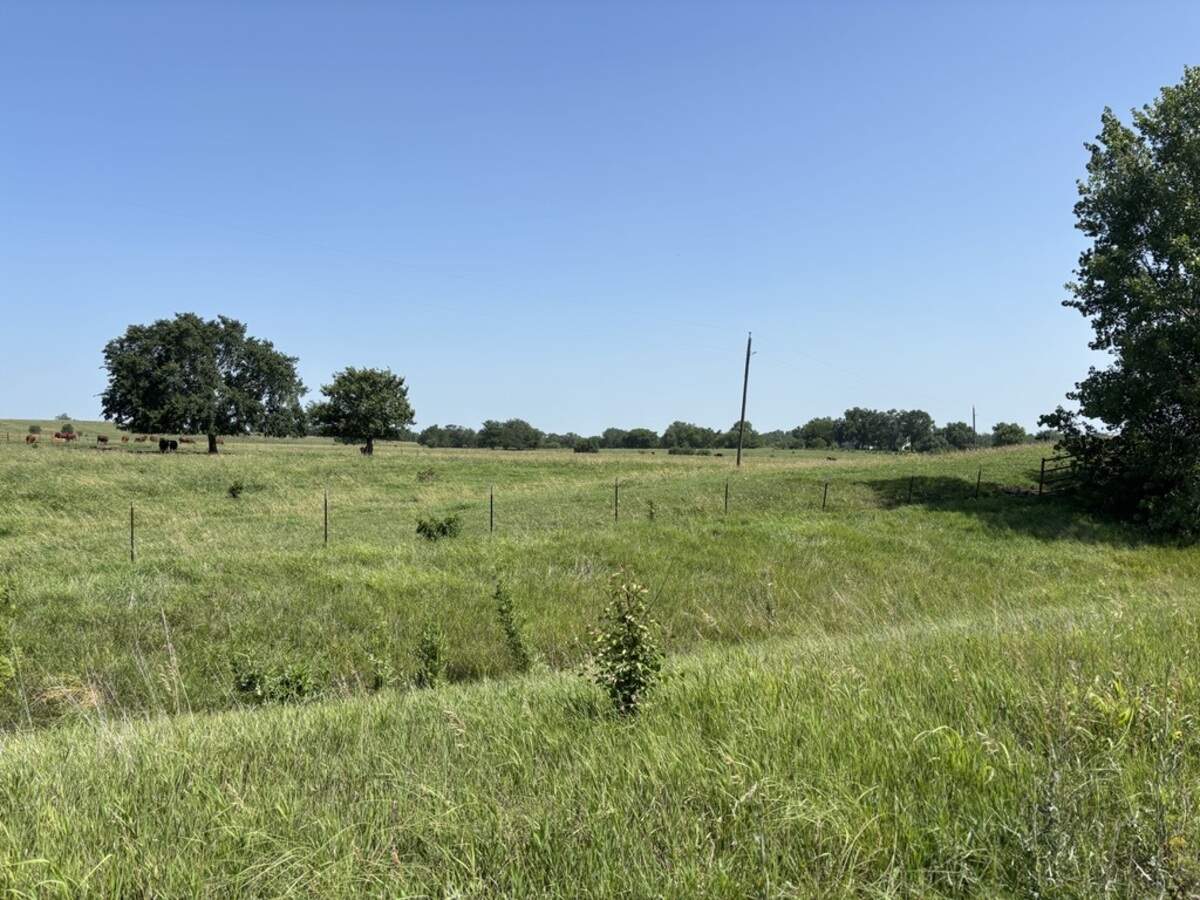
Data centers emit humming sounds from generators, fans and other equipment. Ted said he worries this hum will drive pollinators away from the area around the data center, which is mostly farmland.
On its website, Project Bluestem says the center will be designed to minimize the effects of noise on the surrounding area and will use vegetation, berms or sound walls if necessary. These measures were mentioned on handouts at a public meeting the project held June 9.
However, the farm owners are skeptical that these measures would be enough.
“Last night we were sitting out here. I could hear a tractor running, and I could almost pinpoint exactly where it was. And it was just down a mile and a quarter from here,” Ted said. “So, sound travels real well out here.”
Kris added that noise from the road is not completely reduced by existing hills and vegetation.
“I can hear one engine on the other side of that hill, and it’s way bigger than a berm is going to be, and it’s covered with trees — full-grown trees,” she said, pointing to a hill near her house.
How a data center might affect agriculture
Pollination, as well as plant growth, could also be affected by additional heat from the data center, Ted said.
Data centers create “heat islands,” according to a study published in March. The study, which has not yet been peer-reviewed, found that data centers raise the temperature of the surrounding area by an average of 3.6 degrees, and in extreme cases, up to about 16 degrees.
The additional heat poses threats to how well crops will be able to grow — affecting not just sunflowers, but other crops on the farm, such as corn.
“(Corn plants are) already shutting down, because once it gets above 90 degrees, corn doesn’t like to — it’s just trying to hold the water it has. By tomorrow, I think, we’ll start seeing some wilting,” Ted said. “But you’d add another 10 degrees to that?”
Data center planned for Tonganoxie
Ted and Kris also expressed concerns that dust may drift to their farm if construction of the center breaks ground.
They likened the dust to the ash that drifted to their property a few years ago from wildfires, which affected the growth of their soybeans. Dust, like the ash, might cover the leaves of the plant and affect how much sunlight it receives, Kris said.
“It’s just like throwing a light blanket over a plant, and then expecting it to just grow as well as if it had the access to the full light,” Kris said.
It’s not just the farm
In addition to the farm, Ted and Kris worry about the impact on their rural lifestyle — from the noise disrupting the quiet area, to the potential for drinking water contamination.
Project Bluestem says its closed-loop cooling system will prevent contamination and leaks on its website. Its website also says the data center aligns with local development priorities.
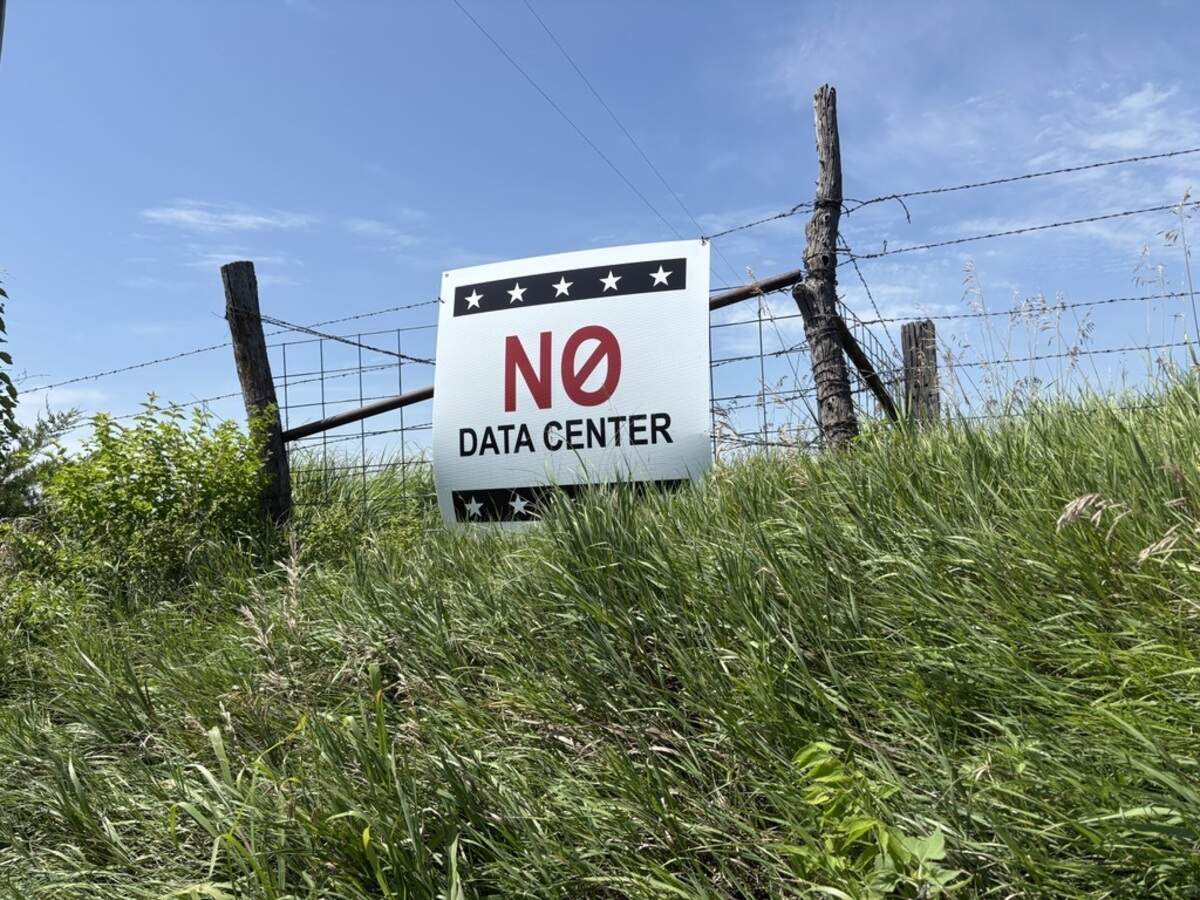
While some support the proposed development, the couple said, they believe many in the area do not. Several properties south of Tonganoxie have signs that say “no data center.”
Ted and Kris said they are not against development, as long as it is “smart development” and preserves the small-town atmosphere.
“If Tonganoxie was allowed a vote, I think the majority, the vast majority, would want reasonable growth. Like, ‘Hey, let’s add another restaurant.’ Not like, ‘Let’s add one of the largest data centers in the United States,’” Kris said.
The Star’s Chris Higgins contributed.