
In Republican states, lawmakers weigh abortion restrictions in newly approved amendments
Arizona voters approved a measure, enshrining the right to abortion in the state’s constitution, with 61% support.
But state Rep. Stephanie Stahl Hamilton, a Tucson Democrat, knew her party would try to do more to expand abortion access.
She has introduced a few bills, including one that would expand telehealth to abortion prescriptions and another that would repeal a section of Arizona law banning advertising abortion services. The state’s legislative session ends June 30.
“We still have miles to go, but I think we’ve been able to, for now, accomplish as much as our colleagues across the aisle have the political will to stomach,” Stahl Hamilton said.
Voters in 10 states decided on abortion and reproductive care in November. But lawmakers in those states have introduced at least 168 bills that would make additional changes to abortion access.
‘This doesn’t continue to happen’
Since January, Missouri’s top Republicans have pushed for additional restrictions on abortion, even after voters approved expanding access.
“Amendment 3 is opening the door to dangerous, unregulated abortion facilities with zero accountability,” Missouri Senate President Pro Tem Cindy O’Laughlin, a Shelbina Republican, told reporters in March. “Missouri must fight back against this attack on life and on women’s health.”
Since then, Missouri Republicans passed a bill that would remove Amendment 3 from the state constitution if approved by voters. Doing so would clear the way for a statutory ban to go back into effect, making Missouri the first to undo a voter-approved abortion amendment.
In Arizona, lawmakers are focusing on statutory changes, rather than targeting the amendment itself. Rep. Lupe Diaz, a Benson Republican, said a ballot initiative like Proposition 139 is difficult to change and “ties legislative hands.”
Instead, he’s sponsoring a bill that would prohibit state and local governments from funding clinics that provide abortions. Though it doesn’t directly target abortion access, it may impact how services are provided, depending on clinics’ budgets.
“We’re not prohibiting anybody from getting anything, any services, nothing,” Diaz said. “All we’re saying is that we’re not going to fund it with state dollars. You have to go to the free market to be able to do that.”
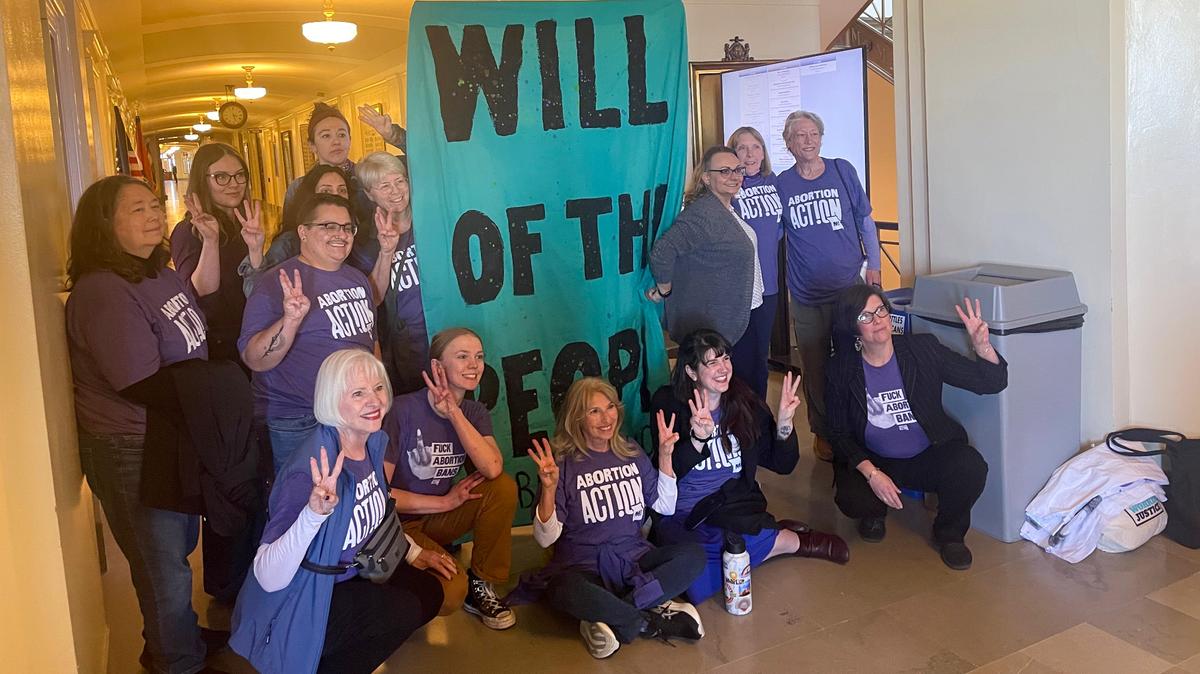
Will of the people?
In both states, Republicans said the ballot initiatives were unpopular.
Missouri’s Rep. Justin Sparks, a Wildwood Republican, has filed one bill and another resolution, which would need voter approval, to undo or restrict abortion rights.
He expressed doubts that Amendment 3’s passage indicated a desire for abortion access in Missouri. Sparks said he’s heard from constituents who voted “yes” on the amendment, only to realize it went further than promised.
“One was from a lady that said, ‘I had to vote for Amendment 3, because if I didn’t, then my ectopic pregnancy could have caused me to have sepsis, and I could have died. …,” he said.
Without Amendment 3, there was a chance that my health could have been in jeopardy,” said Sparks. “That is patently false.”
He also said the margin by which Amendment 3 passed – just 1.7% – is a sign the electorate was unsure.
“A clear mandate has not been sent by the voters of the state,” Sparks said.
In Arizona, where the proposition passed with 61% support, Republican lawmakers still expressed doubt about the results.
Diaz, the Arizona representative, said he will continue to push back on the proposition in any way he can. He said he thinks Arizonians were content with the previous 15-week ban.
“We (the Republican caucus) went ahead and we polled the people with four different polls that said, ‘What do you think about this?’” Diaz said. “And they did not want the 139.”
However, polling in both states tells a different story.
A September 2024 New York Times/Siena College poll of Arizona voters showed 54% to 62% supported the proposition. A Saint Louis University/YouGov poll of Missouri voters from August 2024 showed 48% to 56% supported Amendment 3.
Advocates fight back
In Arizona and Missouri, some lawmakers who supported abortion rights are targeting other statutory restrictions on the procedure. In Arizona, Democratic leaders have introduced bills to remove barriers to abortion care.
In addition to the bills to expand telehealth abortions and repeal a law barring the advertisement of abortion care, Senate Minority Leader Priya Sundareshan, a Tucson Democrat, introduced a bill that would undo a law requiring facilities to report details of all abortions to the Department of Health Services.
Sen. Patty Lewis, a Kansas City Democrat, introduced a measure that would repeal some of the restrictions on abortion that she believes became unconstitutional after Amendment 3 passed.
“As a nurse, I think these personal, private healthcare decisions are up to the individual and their healthcare provider,” Lewis said. “Politicians need to stay out of our doctor’s office, full stop.”
Felix, the KFF policy analyst, said she wasn’t sure if the back-and-forth on abortion bans would have any tangible impact, but noted that legislative restrictions like being excluded from Medicaid and onerous licensing restrictions have an impact on providers.
“I would say the larger challenge for a lot of my independent clinics is the attempts that there have been for years to exclude them from Medicaid programs,” she said.
“Something that we do know to be the case across the board is that once an abortion clinic closes, it’s actually really hard for another one to open, because they do require so much investment.”
A look ahead
In other states that voted on abortion, like Kansas, which in 2022 resoundingly rejected a proposed amendment to the state constitution that would have banned abortion in the state, those votes haven’t put the abortion debate to bed.
Since that vote, anti-abortion legislators in Kansas have continued to present bills that propose obstacles to getting abortions.
Lawmakers recently passed a bill requiring child support payments from the day of conception. Critics say the bill establishes “fetal personhood,” a legal doctrine that says a fetus is a person.
“The real thing is about leading to fetal personhood, if you can’t go directly to the people and have them vote on an amendment, then you’ve got to go through the back door,” said Rep. Susan Ruiz, a Shawnee Democrat.
She said she believes that bills like this ultimately aim to ban abortion.
It’s just adding more and more layers of confusion and restrictions,” Ruiz said. “They hope that women get frustrated and don’t try to seek abortions and then go ahead and have the baby, but after the baby is born, the legislature, they’re like, OK, they’re born. That’s it. You’re on your own.”
However, Felix said the possibility that some efforts to undo abortion rights amendments, even after passage, could be intended to bolster a politician’s record on an issue.
For example, Rep. Brett Fairchild, a St. John Republican, helped propose a measure that would completely ban abortion.
“My intent in introducing those bills is sort of just to let people know where I stand on the issue of abortion, that I’m strongly pro-life, and that ideally I’d like to basically end abortion,” Fairchild said. “But realistically, I know those bills aren’t going to pass.”
Contributing to this story were Emily Harter from the University of Kansas and Anna Sago, Natanya Friedheim and Aidan Pittman from the University of Missouri-Columbia. Bill analysis was conducted using BillTrack50.