
Agriculture hall of fame has big ideas but small cash flow
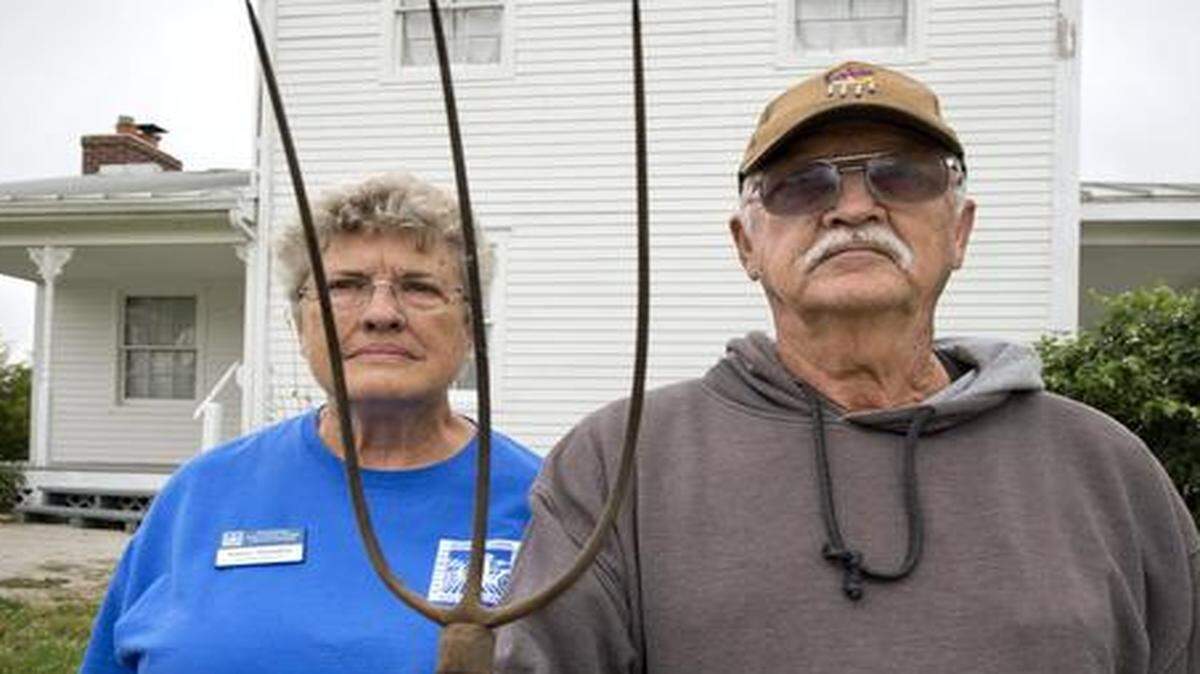
It’s a September morning, cool and overcast in Bonner Springs, and Karen Meredith is standing near the entrance of the National Agricultural Center and Hall of Fame.
A member of the hall’s board of directors, she had arrived that morning expecting to make final preparations for a meeting with a reporter, but was met instead with some unpleasant news.
The night before, someone had entered the building from a side window and stolen a pair of laptop computers containing the center’s financial records. It didn’t appear that much else had been taken, Meredith said, but the incident represented just the latest setback for a center that, in recent years, has been inundated with them.
Over the past five years, the hall has struggled with significant debt. Layoffs. And after it announced in May that it would be shutting its doors for the season in the wake of financial struggles — the second time in five years it had been forced to do so — the hall’s immediate future now rests in a state of flux as its leaders attempt to figure out how best to ensure the facility’s long-term future.
“We’re looking at ... reimagining our facility,” said Jody Albers, a past president and current member of the hall of fame’s board. “We’d like to make it a facility that’s much more hands-on for the general public.”
Doing so, however, will require the group to overcome a number of hurdles, not least of which is figuring out how — in an era of iPads, elaborate amusement parks and dwindling attention spans — to make a center based on the history of agriculture interesting enough to attract a mainstream audience.
Stationed on roughly 160 acres of land not far from the Renaissance Festival and the Legends shopping area, the center came about as a result of a 1960 federal charter. Unlike state agricultural halls of fame, Bonner Springs features the national hall, whose inductees include Bob Dole, Abraham Lincoln and Willie Nelson.
Without question, the center provides an extensive look into the history of farming and agriculture, broken into separate museums.
The Museum of Farming boasts an impressive collection of old plows, manure wagons, combines and tractors dating back to the 1800s. Just a short walk away is the National Poultry Museum — a large, statuesque chicken welcoming visitors out front.
When it’s open, visitors at the 1901 Smith House can get a peek into early 20th-century living — washing clothes with lye soap and beating rugs outside. And at Island Creek School, the authentic one-room schoolhouse on site, an “actor” takes field-trip children through an hourlong class complete with old-fashioned ink-pen writing lessons and recess sack races.
Maintaining such a facility, however, has proved to be no small task.
For one thing, the nall receives no government funding, counting solely on donations, grants and revenue from admission and facility rentals. Around 2010, cutbacks resulted in the laying off of the executive director — who in 2008 and 2009 received a total $230,000 in salary, according to public records — and the paid staff.
Currently, the hall is down to two part-time employees and a small collection of volunteers (“Just enough to keep things together here,” Meredith said). And while things seem to have grown less dire in recent years — the center reported losses of just $32,000 in 2012, compared to $334,000 in 2009 — it wasn’t enough to prevent the facility’s closing this season.
The good news for the center is that it boasts a collection of individuals deeply invested in the Hall of Fame and its future.
Among the hall’s board members is Meredith, who started at the center after retiring in 2001 from the BNSF Railway, first serving as the schoolhouse’s stern-faced “schoolmarm” during field trips before serving as treasurer, vice president and secretary of the board.
Then there’s Fred Stitt, the 72-year-old board member who has been involved with the hall for roughly 20 years. He’s happy to talk about the hall anytime, and if he can’t find someone available to provide a tour, why, he’ll go right on down there himself and take you through the facility.
Talk to them long enough, and you’ll get an idea of the long-term vision for the facility.
The buildings, some of which are old and in need of repair, must be fixed up. Some board members want newer, more updated exhibits. Others, more hands-on, technology-based activities for younger visitors.
“In a perfect world, we would have a wonderful staff of a dozen people or so, would be open everyday, would have school tours going on, would be building new exhibits, bringing new things in,” Albers said. “In a perfect world, that’s an easy list to make.”
The challenge, of course, is seeing these improvements through without an influx of cash.
Still, hall leaders don’t have to look far to find a similar attraction that has had success.
Just a couple hundred miles north of Kansas City, in Urbandale, Iowa, the Living History Farms has been operating a 500-acre, farm-based facility since 1970.
While the Iowa farm differs in one significant way from Kansas’ center — a spokeswoman indicated that only about 37 percent of its budget comes from fundraising — it has proved fully capable of drawing customers thanks largely to an innovative and hands-on approach.
Last year’s attendance neared 100,000, according to Jennie Deerr, vice president of marketing for the farms. The logo purposely includes vibrant colors and a tagline — “Touch. See. Hear. 300 Years of History” — that hints at the facility’s interactive approach.
“It’s almost bringing textbooks to life,” Deerr said of the Living History Farms, which features a 1700 Ioway Indian farm, 1850 pioneer farm and the fictional 1875 town of Walnut Hill. “We try to emphasize: You’re going to come out here, and it’s not going to be a dry experience. We’re going to get you involved, and you’re going to have fun. It’s very interactive.”
It’s an approach that also seems to appeal to the folks in Bonner Springs.
“One of my deals all along has been to get more young people involved in the management part of it, on the board and that type of thing,” said Stitt. “Because most of the people that we have on the board right now are older, like myself.
“That place is all about education, that’s the whole deal. And a lot of young people’s thinking is different than mine. We need some fresh ideas.”
Later this month, the hall’s board will gather for a meeting aimed at determining strategies to ensure the facility’s long-term health.
“Short-term, obviously there’s a financial issue in terms of operating expenses and salary expenses,” Albers said. “Longer term from that is probably looking at our exhibits and looking at our facilities, and making this ... the destination museum in Kansas City.
“Ideally, that’s what we want to be.”
And despite the financial woes, there also have been some reasons for optimism.
Recently, the hall sold roughly 4 acres of land, enabling it to pay off some of its debt. Despite the closing of the site’s day-to-day operations, meanwhile, the facility’s event space has been rented out just about every weekend this summer with weddings, receptions or company picnics.
“That doesn’t mean we’re out of the woods yet,” said Stitt, taking a tone of cautious optimism. “We gotta keep charging forward.”
To reach Dugan Arnett, call 816-234-4039 or send email to darnett@kcstar.com.
This story was originally published September 12, 2014 at 11:20 PM.