
GOP gains grow as new election results come in
The full magnitude of the Republican Party’s success in reshaping the national political landscape at President Barack Obama’s expense became clearer Wednesday as the party seemed headed toward an even longer list of electoral victories in Senate and governor races that had been too close to call before dawn.
White House officials, waking to far deeper losses than they had expected in races across the country, announced that Obama would hold a news conference later Wednesday to address the Republicans’ campaign victories and preview his response to the electorate’s punishing message.
In Alaska, the winner of the Senate race remained uncertain Wednesday morning, though the Republican candidate, Dan Sullivan, moved into a small lead in the vote count and appeared poised to oust Sen. Mark Begich, a Democrat. A victory by Sullivan would further whittle away Obama’s support in a Senate that has for years served as the president’s bulwark in Congress against the Republican-controlled House.
If Sullivan wins and Republicans succeed in ousting Sen. Mary L. Landrieu in Louisiana in a runoff election next month, Republicans would command a 54-vote majority in the Senate, a gain of nine seats and an almost complete turnaround from the current chamber, where Democrats control 55 seats.
In Virginia, Sen. Mark Warner, a Democrat, was slightly ahead in the vote count in his bid for re-election, but his Republican challenger, Ed Gillespie, a former lobbyist and Republican political adviser, was within less than a percentage point and could request a recount in that state.
Republican candidates for governor in Maryland, Maine and Massachusetts also claimed overnight victories over Democratic opponents in states that by all accounts should have been bright spots for the president and his allies in an otherwise dismal election season.
In Colorado, Gov. John W. Hickenlooper, a Democrat, narrowly clinched a second term Wednesday, fending off an unexpectedly tough challenge from a Republican congressman who accused the governor of yanking Colorado too far left on gun control, energy and taxes.
In Connecticut, the race for governor remained too close to call.
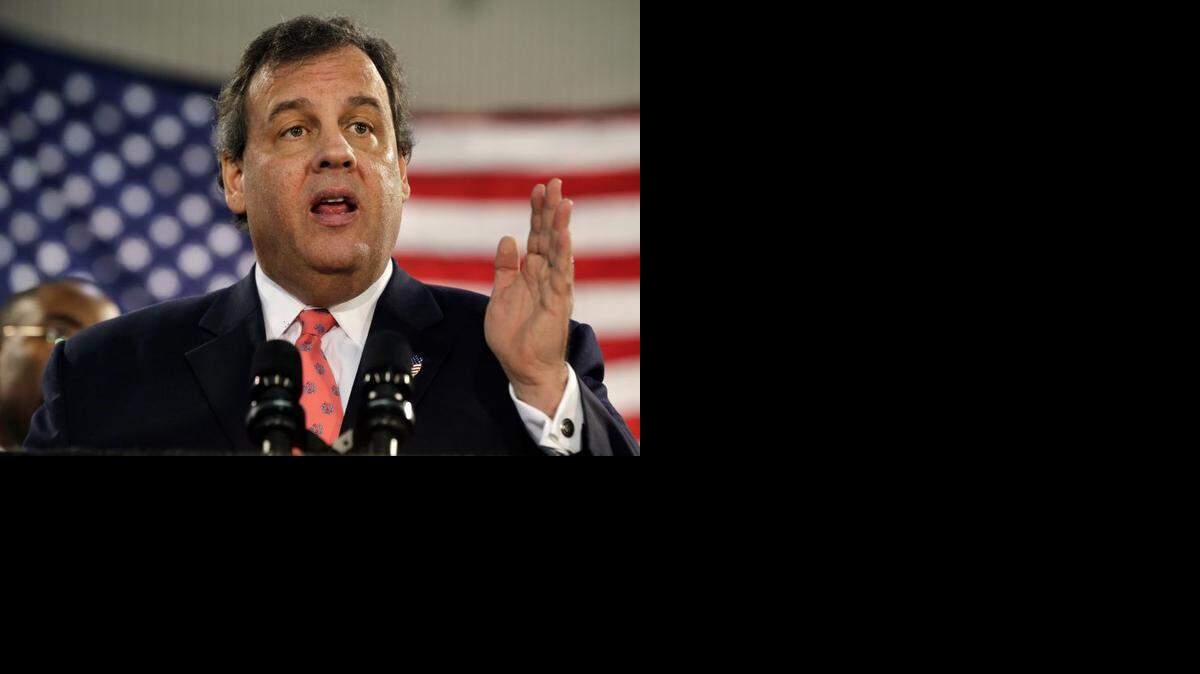
“Governors get things done. That’s what the country wants,” Gov. Chris Christie of New Jersey, chairman of the Republican Governors Association, said on the “Today” show on NBC on Wednesday. Christie dodged questions about his own presidential ambitions, saying that “today is a day to celebrate what my fellow governors have done.”
By Wednesday morning, it appeared that Republicans were on the verge of picking up 15 additional seats and possibly a few more - gains that would give them their largest majority since the World War II era.
Rep. Greg Walden, R-Ore. and the chairman of the National Republican Congressional Committee, said the results were a referendum on the president’s policies, but sounded a note of caution to Republicans who might be tempted to follow the same no-compromise path the party took after 2010.
“There’s a broad understanding that we have to perform,” Walden said in an interview Wednesday. “We caught the bus; we need to drive the bus responsibly. And if we do, we can build on our gains in 2016.”
White House officials said Obama talked to dozens of the winners Tuesday night by telephone, calling several Democratic allies and many of the newly elected Republican governors and senators to congratulate them.
Among the candidates the president reached were Tom Cotton, the Republican who defeated Mark Pryor in Arkansas; Shelley Moore Capito, the new Republican senator in West Virginia; Asa Hutchinson, who won his race to be the governor of Arkansas; and Sen. Lindsey Graham, the Republican who won re-election in South Carolina.
In the call with Graham, Obama talked about areas in which the two parties might work together, including on finding ways to improve infrastructure around the country, according to Graham. The two talked for about 20 minutes, he said.
Graham said Obama had suggested that “our standing in the world would be enhanced if we showed people outside the country we could get stuff done.”
The president’s theory, Graham said, is that working on small- and medium-size goals could give them momentum. “Momentum in one area creates opportunities in other areas,” Graham recalled him saying.
Graham also said the president had told him he knew his sixth year would be tough because “people get tired of ya.”
Vice President Joe Biden also called Graham. They two, who have been friends for years, talked for about an hour - a short call for “Joe,” Graham said. As for the election: “Joe saw it coming more than Obama,” Graham said.
Rep. Nancy Pelosi of California, the former House speaker who lost her gavel to Rep. John A. Boehner of Ohio in 2010, issued a terse and grim statement slightly before 2 a.m. conceding the obvious but vowing to keep pushing a Democratic agenda.
Pelosi said that it was “a difficult night for Democrats” but that her members would “continue to fight for middle-class families, who are the backbone of our democracy.”
A few moments later, a top aide to Sen. Harry Reid of Nevada, the Democrat who will soon lose his position as majority leader, said on Twitter that he took some solace from the fact that Scott Brown, the Republican former senator from Massachusetts, lost his bid to make an unlikely comeback in neighboring New Hampshire.
“The fact that we got our butts kicked up and down the block only makes it *more* hilarious that Scott Brown lost,” Adam Jentleson, Reid’s spokesman, said in a post.
The Democratic losses were even larger than top White House aides had feared they might be, and appeared likely to require a rethinking by the president of how he governs during the final two years of a second term that has already been marked by discord and gridlock with the Republican Party.
The results are an immediate blow to the administration’s hopes to further broaden the president’s health care law by expanding Medicaid in additional states. Some of those states will now be controlled by Republican governors who are unlikely to agree to an expansion of the health care law.
White House aides are bracing for calls from both parties for Obama to cancel or postpone plans to announce executive actions that would reshape the nation’s immigration laws and provide the legal authority for millions of undocumented immigrants to stay in the country. Obama promised to unveil his plans soon after the congressional elections, and aides signaled that he was unlikely to back down from that promise.
White House officials said the president placed a call Tuesday night to Sen. Mitch McConnell of Kentucky, who is poised to take over as majority leader in the Senate, but the two men did not connect. Aides to Obama said he had left a message and would try again Wednesday.
At his news conference, the president is likely to argue that the electoral map favored his rivals, with many of the most hotly contested races taking place in deeply conservative states that Obama lost in 2012. The president made that argument before the votes were counted Tuesday, saying in a radio interview that his party faced “probably the worst possible group of states for Democrats since Dwight Eisenhower.”
But the scope of his party’s losses may force Obama to offer a new vision for governing in an environment where he now has fewer legislative allies. Less certain is whether he will consider an overhaul of his White House staff, replacing longtime aides with a fresh set of political and policy advisers.
This story was originally published November 5, 2014 at 1:52 PM.