Mulvany Henry brings utilities experience to KCK mayor run. What’s her BPU record?
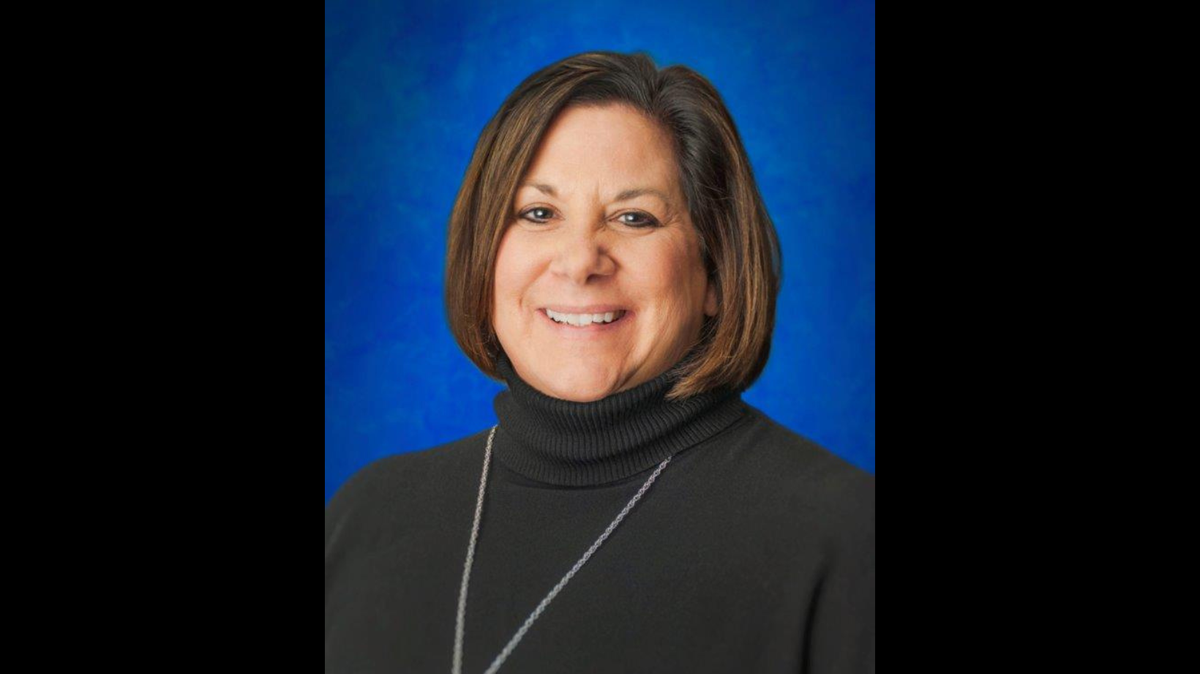
Leaders in Wyandotte County in recent years have had to weigh whether to improve local services or to reduce bills for residents at a time when living expenses, like utility bills and property taxes, are high and burdensome.
It’s a financial and moral quandary that Rose Mulvany Henry has gotten to know well.
“Anyone who thinks that’s lost on me is mistaken,” Mulvany Henry said.
Mulvany Henry, who is on her second term on the local public utilities board, is bringing institutional knowledge from that position, 30 years of experience in telecommunications law and time working out billion-dollar deals for major firms to the mayor race in Kansas City, Kansas.
And if elected, she wants to help the government offer quality services while keeping the county’s most vulnerable residents in mind.
Mulvany Henry is among the final two candidates who want to lead the Unified Government of Wyandotte County and KCK as mayor. Voters will choose between her and Christal Watson on Nov. 4 to replace outgoing Mayor Tyrone Garner. Garner, a former police officer whom voters elected as the Unified Government’s first Black mayor in 2021, said last year that he didn’t plan to run again.
Both candidates’ platforms have included addressing budget constraints, making the cost of living more affordable and housing more accessible, rebuilding infrastructure and local business and building trust among residents, the local government and the county commission.
And although their platforms have similarities, each candidate’s previous experiences and connections give them a distinct flair.
Mulvany Henry, who has held an at-large position on the Board of Public Utilities since 2020, said her experience in managing private and public funds in a way that prioritizes and best serves customers has equipped her to serve as mayor.
At the end of the day, residents have to pay their bills to keep the lights on, and the BPU is tasked with deciding how much to charge people and when to shut off their power.
So, what has her track record been on the BPU, really?
‘People are hurting’
Mulvany Henry’s efforts, including voting against recent budgets and rate increases, haven’t always been successful. At times, her votes dissented from actions that ultimately moved forward with a majority of votes.
She voted against rate increases in 2023 that eventually passed anyway. She voted against the 2022, 2023 and 2024 budgets due to lacking board input in those budgets and the way the BPU conducted budget reviews, although they also passed.
Mulvany Henry said she voted against the budgets because she wanted them to more clearly show board members how funds were being used and where they were going, and to make an informed decision based on that.
In 2024, Mulvany Henry publicly spoke in favor of separating the PILOT, or payment in lieu of taxes, fee from resident’s utility bills when it appeared that the Unified Government was attempting to do so, although that has not yet happened.
However, she’s also voted for or otherwise supported items that ended up relieving some expenses to residents.
Mulvany Henry is on the PILOT reduction subcommittee that’s tasked with recommending the Unified Government lower that fee on people’s utility bills. The Unified Government Board of Commissioners this year passed a second consecutive 1% reduction to the fee for residents.
She suggested, and the board approved, reallocating $250,000 in excess BPU economic development funds to the organization’s utility assistance programs for the 2023 budget year. The utility assistance programs help residents who are financially strapped pay their utility bills.
The board has consistently reallocated some remaining funds, at times upwards of $400,000, to the assistance funds during recent budget years, according to meeting minutes.
Mulvany Henry said she supported extending a pause on shut-offs for people who were struggling to pay their utility bills during the Covid-19 pandemic and after. In other words, she said, she’s asked whether the BPU could give residents who were behind on their utility bills extra time to pay those before shutting off their power or water.
“People are hurting, and the stark truth is that wages have not kept up with the costs around us right now,” she told The Star.
Everything is more expensive these days, she said, and people across the county and elsewhere are struggling to make their utility, mortgage and property tax payments. And it doesn’t seem like the federal government plans to intervene or offset those costs anytime soon.
Whenever Mulvany Henry has been called to weigh whether to increase the BPU’s revenues or offer some sort of bill relief to residents, she said keeps the county’s elderly and disabled residents who are living on fixed incomes in consideration.
“Folks working two jobs just to get by,” Mulvany Henry added.
Voting against BPU leadership
Mulvany Henry has at times voted against fellow BPU leadership.
She’s vice president of the board that, earlier this fall, unanimously voted to remove David Haley as president after an ethics investigation found evidence that he used his office to get health insurance benefits, since 2021, for his long-term partner without filing proper documentation.
Ethics officials said Haley did not provide documentation that he and his partner had a common law marriage as required. He allegedly wrote his partner’s name down as his spouse’s on his benefits application through the BPU.
Haley told the board he was up front about his relationship status and that he had BPU staff approval to include his partner’s names on those forms without the added documentation, although board members, including Mulvany Henry, said they had a hard time believing that and ultimately removed him as president.
She also voted against a contract extension for former BPU general manager Bill Johnson that included raising his salary to $349,226 in 2023 and $366,687 in 2024. Johnson became general manager in 2019 with a salary of $270,000, reflecting a roughly $100,000 increase over five years.
That extension passed 4-2 with Mulvany Henry and Haley dissenting. Johnson retired in 2024 and was replaced by Jeremy Ash as general manager.
Mulvany Henry said she voted against the item because she didn’t entirely understand why the contract extensions were up for consideration and that she thought the BPU was ready for new leadership.
BPU board members make a stipend of about $950 per month, which equates to roughly $11,400 in a year. Board members were previously listed as 1099 contract employees of the BPU but recently changed to a W-2 employee status. Mulvany Henry collects the $11,400 in annual pay and is also enrolled in health benefits with the BPU.
Customer service
From her past experience working with private business groups, Mulvany Henry said she understands that people need to receive high quality service if they’re paying high bills.
That’s not so different from the local government, where many services are financed by public funds, like property and sales tax revenues, she said.
“You’re always operating with someone else’s money,” Mulvany Henry said.
So, if elected, she wants to evaluate whether the Unified Government is providing good, quality services and “world class” customer service to residents.
She also acknowledged that while she can advocate for that and for more efficient services, the county’s administrator and its team need to be the ones staying on top of that.
“We all recognize that costs have gone up, but we have to go back to operational efficiency,” Mulvany Henry said.