Kansas City area school elections: Candidates pushing diversity win, but not everywhere

Anthony Mondaine will become the Independence school district’s first Black school board member, according to unofficial Missouri election results announced Tuesday night.
It was a historic election for the district, which officials believe had not even seen a Black candidate until Mondaine’s campaign. He ran during a year filled with debates over critical race theory and diversity and equity initiatives across the metro.
“Children need to see representation in their leaders, on all levels. There needs to be fair representation,” he told The Star.
In both Park Hill and North Kansas City, school board candidates who supported diversity initiatives defeated those who called them unnecessary. But in Lee’s Summit, two candidates prevailed who were more critical of their district’s equity efforts, saying the money spent on the programs have yet to yield results.
One incumbent each in the North Kansas City, Independence and Lee’s Summit districts appeared to lose their seats Tuesday.
A turbulent year, filled with debates over COVID-19 protocols, the teaching of race and book banning, inspired a crowded field of candidates to run in several school board races. In some of the larger school districts — Independence, Park Hill, North Kansas City and Lee’s Summit — candidates were starkly divided on those issues.
Several conservative newcomers campaigned against their districts’ diversity and equity initiatives, arguing that such programs were a gateway into teaching students critical race theory, a college-level academic framework not taught in K-12 schools. Some also argued for ridding school libraries of certain books that have become targets for bans across the country, many of which with LGBTQ or racial themes, that they deem too graphic for students.
On the other side, progressive candidates campaigned for expanding equity programs, saying that more work is needed to close achievement gaps and ensure that district leadership is diverse and reflects student populations. They also said that it’s time to have more diverse representation in school boards and district staff, to better reflect their student bodies.
Across districts, candidates also debated how their schools should recover following COVID-19 disruptions, including student learning loss and teacher shortages, as well as how to repair aging facilities and improve transparency.
Here are the results in four of the larger school districts:
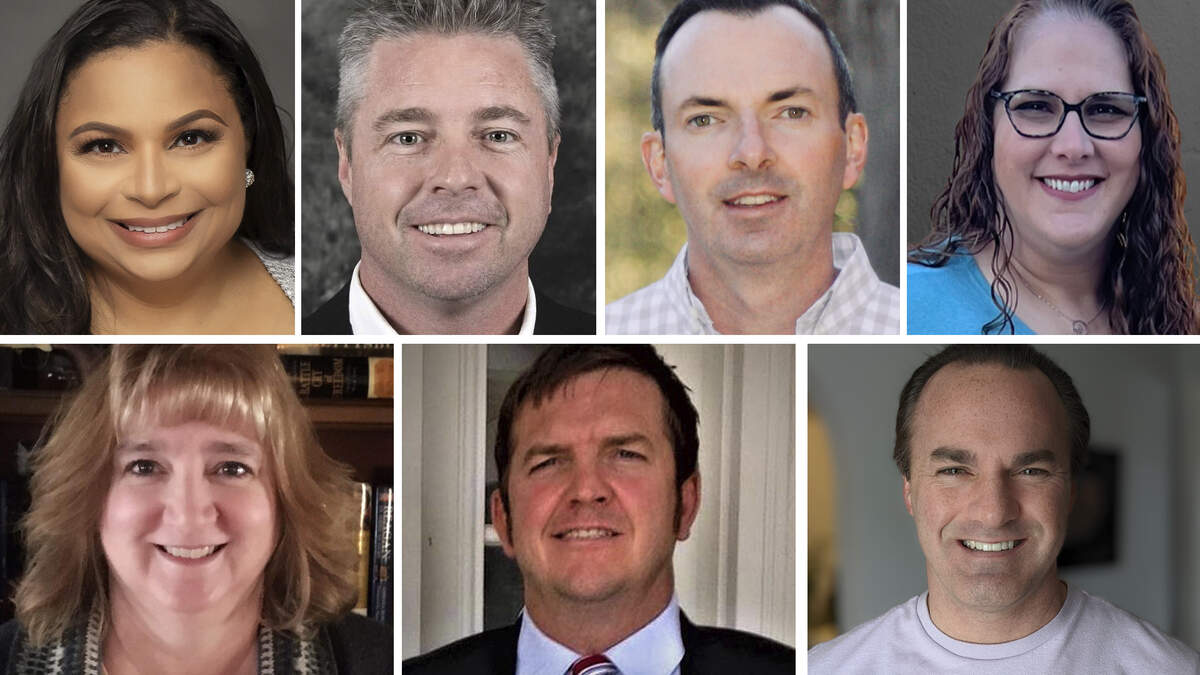
Park Hill school board
Two candidates who pushed for the Park Hill school district to progress its diversity and equity work won seats on the school board, filling open seats as incumbents step down.
According to unofficial Platte County election results, Daryl Terwilleger took the lead with 23.5% of the votes, followed by Shereka Barnes with 22%. They appeared to defeat Tammy Thompson, 16.9%, Cory Terrell, 16.4%, Jason Keck, 9.7%, Jeff Runyan, 5.7%, Kelli Johnson, 5.1%, and Christopher LaCour, 0.7%.
Results show that voters also approved two propositions to help fund facility improvements and other operational costs.
Proposition I asked voters to approve a $137 million bond issue to help the district bring facilities up to date, plus build a 12th elementary school to move students out of classroom trailers and maintain class sizes. Tuesday’s results show 74% voted in favor.
Proposition N allows the district raise the property tax levy ceiling to fund operating expenses, such as staff salaries. Officials, though, said it would not raise the overall taxes because it would reduce the debt service levy by the same amount. Results show 65.8% voted yes.
Most candidates agreed that Park Hill needs to invest in repairing aging facilities and investing in new schools. But many were divided on whether the district is on the right track with its diversity and equity work, especially after a school year filled with incidents of racism across area districts.
The most well-known was at Park Hill South High School, where some students circulated a petition to bring back slavery.
Terwilleger and Barnes defeated several candidates who were critical of diversity and equity policies and felt that they have gone too far.
Terwilleger, a stay-at-home dad, said he ran to ensure Park Hill creates an environment for all students to feel a sense of belonging. He said his priorities are addressing teacher burnout, improving community outreach and investing in infrastructure to address the district’s growth.
Barnes said that she decided to run for school board because she “saw dysfunction in how racially sensitive issues were managed and decreased transparency.” Barnes, who works in the health care industry, supports the district’s equity work so far, but pushed for it to hire a more representative staff and implement more diversity in curriculum.
Independence school board
In Independence, incumbent Jill Esry was the top vote-getter on Tuesday, ahead of Mondaine. They both won seats on the board, defeating the other incumbent in the race.
According to unofficial final results in both Kansas City and Jackson County, Esry was in the lead with 30.7% of the votes, followed by Mondaine with 23.4%. They defeated Greg Gilliam, 18.2%, Jason Vollmecke, 14.3%, and incumbent Matt Mallinson, 13%.
Esry, who was first elected in 2010, said she will continue to support efforts to make schools more inclusive. Esry said her other goals are teacher recruitment and retention, hiring a more diverse staff and increasing mental health supports for students and families.
Mondaine, a pastor, is believed to be the first Black candidate to run for the school board, officials said, in a district where only about 52% of students are white. Mondaine said that Independence has long been “known as a place that isn’t so welcoming to people of color,” and he wants to change that in the district and ensure there is more diverse representation across all staff.

North Kansas City school board
One newcomer and one incumbent won seats on the North Kansas City school board on Tuesday, defeating another incumbent.
According to unofficial results, Daniel Wartick led with 22.2%, followed by incumbent Terry Ward, with 22%. They defeated Laura Wagner, 13.4%, Duane Bartsch, 11.9%, Josiah Bechthold, 11%, incumbent Frances Yang, 10.9%, Susan Hines, 6.7%, Andrew Corrao, 1.7%.
Wartick and Ward, who both supported district equity initiatives, earned more votes than candidates who criticized diversity efforts.
Results also show voters approved two ballot propositions to help the district build new schools and make improvements.
The district asked voters to consider a zero-tax increase, $140 million bond issue, to replace two aging elementary schools, add more classrooms and renovate other schools. The initiative won with 78.6% of the vote.
The district also proposed a levy transfer, moving some funds currently allocated to pay off debt to the operating property tax levy for maintaining and staffing schools. Approval was not expected to change the district’s total property tax levy, meaning voters would not see a property tax increase. It won with 71.3% of the vote.
North Kansas City also has been home to debates over diversity and equity, critical race theory and book banning. Earlier this school year, some parents pushed for LGBTQ-themed books to be removed from library shelves, due to content they deem too graphic or sexual. Librarians, students and others fought back, and the district decided to keep the books.
Wartick, former principal of North Kansas City High School, said he decided to run to bring the perspective of a classroom teacher and school administrator to the board. He said that the district’s diversity and inclusion efforts are at the heart of all work and should be continued, in part to gain trust with families and help them better access resources.
Ward, who has served nine terms on the school board, said he believes the district is on the right track with its diversity and inclusion efforts. His priorities include improved student performance, better prepare more incoming students for kindergarten, improve facilities and follow the district’s long-term plan to keep up with growth, as well as continuing to be fiscally responsible.

Lee’s Summit school board
Two newcomers, bolstered by the support of many conservative voters more critical of district diversity efforts, defeated an incumbent in Lee’s Summit.
According to unofficial final results from Kansas City, Jackson and Cass counties, Jennifer Foley was the top vote-getter with 26.3%, followed by Heather Eslick, with 25.2%. They defeated Larry Anderson, 16.3%, incumbent Mike Allen, 12.5%, Melissa Kelly Foxhoven, 11%, William Lindsey, 3.7%, Anne Geanes, 3%, and Joseph Yacaginsky, 1.7%.
Diversity and equity was a major topic of debate leading up to the election, in a district still reeling from controversies over the past few years. In 2019, former superintendent Dennis Carpenter, who weathered criticism from the school board and community after proposing racial equity training for employees, resigned. That same year, the then-all-white board reversed a previous decision to reject the training, and approved hiring a consultant firm.
Since then, Lee’s Summit voters have elected two Black board members.
Foley, who works in the health care industry, has been critical of the district’s diversity work, saying that despite the money spent on the efforts, “they have not shown any efficacy.” She has argued for finding alternative ways to close achievement gaps among students, such as by hiring additional teachers to reduce class sizes, plus hiring more bilingual teachers, and ensuring equal access to special education programs.
Eslick, an Army officer with a work background in electrical manufacturing, said her priorities are improved communication and transparency, arguing that parent concerns have “not been acknowledged over the last few years.” She has also been critical of the diversity and equity programs, arguing against initiatives with an “identity-based” focus.
On her campaign website, Eslick wrote that the district’s diversity initiatives have been “more divisive than they are impactful” and that she thinks they need “to be reevaluated in their approach to creating a cohesive learning environment and for actually addressing the root causes of the achievement gap.”
This story was originally published April 5, 2022 at 10:51 PM.