Kansas candidate with a troubled past and ambitious platform: Change agent or pariah?
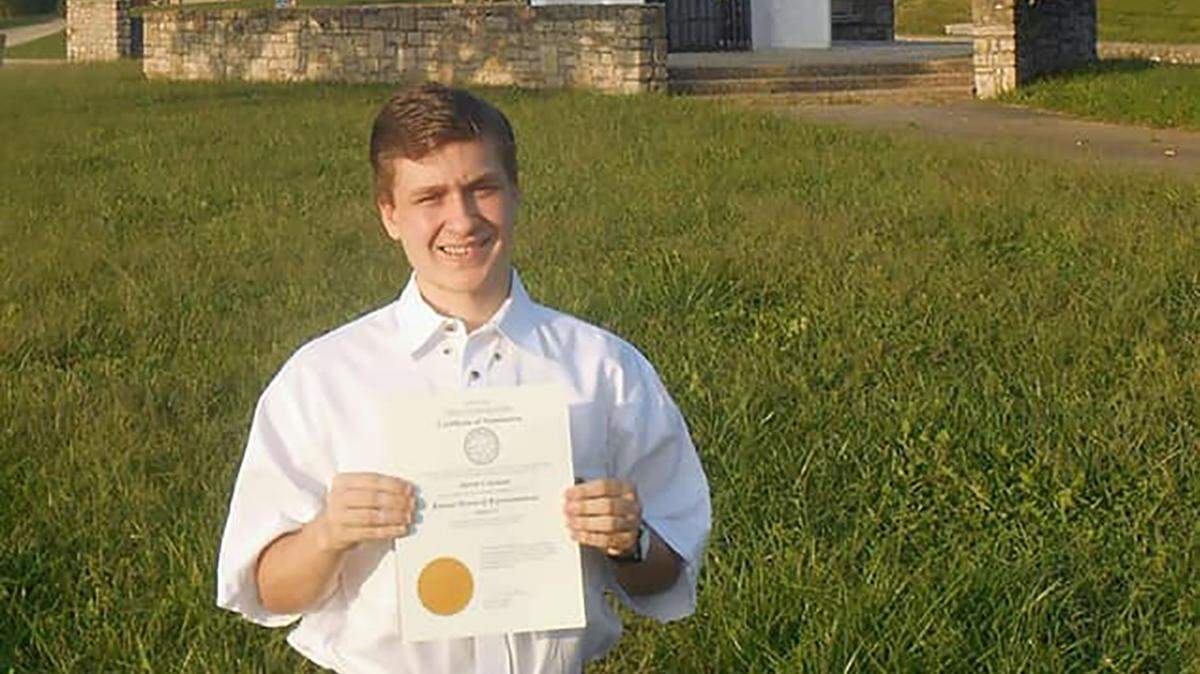
Aaron Coleman wants to tax the wealthy to fund an ambitious Medicare for All program in Kansas.
He wants Kansas to legalize and tax recreational marijuana to pay for universal basic income.
Students could attend trade schools and community colleges in Kansas tuition-free, if Coleman had his way.
But Coleman, an outspoken 20-year-old Democrat from Kansas City, Kansas, would run into a wall of opposition that ensures little progress on virtually all of his highest priorities.
His toxic relationship with his own party, and troubled personal past, would make him persona non grata to most lawmakers. His unabashedly left wing agenda would be dismissed out of hand by large swaths of the Republican-controlled Legislature.
“My district elects me, much to the dismay of the Democratic Party,” Coleman said in an email response to written questions from The Star. “I’m eager to work with anyone who wishes to expand healthcare to more Kansans. Naturally, I look to work with members of my own party first, if possible. But Bernie Sanders inspired me when he reached across the aisle to work with Republican John McCain to work on benefits for veterans.”
His future colleagues, should voters elect him over two write-in campaigns going up against him, aren’t so sure.
“I don’t even know how we get there,” said Rep. Stephanie Clayton, an Overland Park Democrat. “This is typical freshman campaigning: You sort of know but you don’t really know until you get there. There is a certain brand of politician who makes promises they can’t keep.”
Coleman stands a strong chance of defeating, once again, incumbent Rep. Stan Frownfelter, a Kansas City Democrat who has represented the Kansas House 37th District, which covers Turner and parts of Argentine, since 2007.
Coleman defeated Frownfelter by 14 votes in a low-turnout primary in August. Frownfelter acknowledges that he faces an uphill battle in a write-in campaign where Coleman is the only name on the ballot.
For Frownfelter, whose campaign was well funded compared to Coleman’s, the loss amounted to a reckoning. Did he take his seat for granted, providing an opening for a candidate like Coleman to out-hustle the incumbent?
Frownfelter, a centrist Democrat, says no: “I’ll tell you that right now I was scared. He was walking door to door, he’s bubbly.”
Or was it that support for Frownfelter, either for him or his policies, is fading in his community?
Frownfelter, 69, had lost a bid for a seat on the Board of Public Utilities the year before.
“You don’t really see him out in the community except at Democratic Party meetings,” Wyandotte County community activist Faith Rivera said of Frownfelter. “You don’t see him out like you see Aaron Coleman.”
‘Tax the rich’
Coleman is eager to discuss his platform for public office. He wants to get past stories of his past — accusations of bullying, revenge porn, making violent threats and abuse against women — which have dominated discussion about his race and attracted national attention to a state house election that often receives little notice.
The scrutiny of Coleman’s past at one point caused him to announce he was dropping out of the race after his primary victory, but then he quickly said he was resuming his campaign.
He would not consent to a live interview with The Star, but agreed to answer questions by email.
In his written responses, Coleman spells out an ambitious platform aimed largely at helping working class Kansans. His proposals are light on details about how to accomplish his goals or how to pay for them.
Coleman supports Medicare for All, a state version of a proposal to enact a government health insurance program. He said Medicare for All would allow Kansans to receive preventative care to avoid urgent or emergency care, “which is where much of medical expenses come from and can save states money.”
How can Kansas, a state historically beset by tight budgets made worse by the coronavirus pandemic, pay for Medicare for All?
“I would tax the rich to fund our healthcare,” Coleman said, adding later that he would use tax revenue from cannabis sales — if the sale of marijuana was made legal — to help fund health services.
Skeptics of Coleman’s plan wonder how Kansas could enact Medicare for All when votes in the Kansas Legislature do not exist to pass Medicaid expansion.
“I’m a huge Medicaid expansion advocate,” Clayton said. “We’ve been fighting, beating our brains out, doing incredible lifting and trying so hard and look at what’s happened.”
Coleman sees legalizing marijuana as the ticket for funding his priorities ranging from health care to universal basic income to shoring up state finances. He points to Colorado, which in 2019 surpassed $1 billion in tax revenue from marijuana sales since 2014.
Colorado has nearly twice the population of Kansas. And while marijuana sales have been a welcome addition to the state’s balance sheet, it’s fallen short of a cure-all for Colorado’s budget.
Colorado taxes retail marijuana sales at 15%, which generated $262.9 million in the 2018-19 fiscal year. It was the state’s eighth largest source of revenue for its general fund. Motor vehicle registration revenue outpaced tax receipts from marijuana sales.
Even if treated as a pariah, Coleman could be a vocal proponent for his agenda in the House. But those experienced in lawmaking in Kansas struggle to see a path for Coleman’s priorities to become reality.
“I just don’t see any viable avenue for any of the far-reaching policies he’s talking about to get passed,” said Jake Miller, a Wyandotte County resident and former legislative director for Kansas House Democrats who is supporting Frownfelter. “He’s alienated the left, he’s mocked the right and he’s kind of made it known there’s no place for anybody in the center.”
Clayton compares the prospects of Coleman’s political fortunes to Michael Capps, a Wichita Republican elected to the House in 2018 despite accusations he had been emotionally abusive to young boys.
Republican House leadership flirted with trying not to seat him, an extraordinary step allowed under the chamber’s rules. Republicans didn’t go through with it, but Capps was still like a ghost in the capital.
“No one would eat lunch with him, no one would talk to him, he was persona non grata for two years,” Clayton said. “I sort of see his (Coleman’s) experience in the legislature to that of Michael Capps.”
‘Shouldn’t take anything for granted’
Frownfelter’s campaign bought $118 worth of barbecue from Big Q Barbecue in Kansas City, Kansas, for a primary election night watch party. The sauce turned sour when Coleman emerged as the one-vote winner on election night, a margin that grew to 14 when canvassers verified the vote count.
The loss suffered by the small business owner, who has been in the Kansas Legislature since 2007 and only faced a competitive race in 2012 that he won easily, was a shock for the Kansas Democratic Party.
How could it happen?
Many in Wyandotte County say Frownfelter coasted during the primary as though Coleman didn’t represent a serious challenge. That’s despite Frownfelter’s substantial campaign finance advantage over Coleman.
“To make a long story short, he (Coleman) did the work and Stan Frownfelter did not,” Rivera said. “And that’s the situation we see time and time again in our community where elected officials think they’re going to win because they’ve won all the time.”
Frownfelter disputes the notion that he took it easy.
“I walked quite a little bit for the primary, as much as I could in the heat,” Frownfelter said. “I was out there hitting it hard, particularly in the Turner and Argentine areas.”
Two losses in two years may suggest a softening of support for Frownfelter and his policies. The Kansas House 37th District is generally considered a Democrat-leaning district.
Miller suggests Frownfelter’s primary performance is due in part to Frownfelter not having a challenger in recent years.
“I generally don’t believe the district had a familiarity or a name recognition with Stan Frownfelter,” Miller said. “And you would see that typically with a lot of districts in Wyandotte County.”
Rivera said it’s more likely that Coleman, whom she does not support, ran a more active campaign.
“He’s young, he’s got that drive, you see and talk to him, you talk to him for two minutes, you get the buy in,” she said. “If you talk to him for 10 minutes, he’s crazy.”
This story was originally published October 28, 2020 at 3:39 PM.