
Superdelegates become super controversial in Democratic race for president
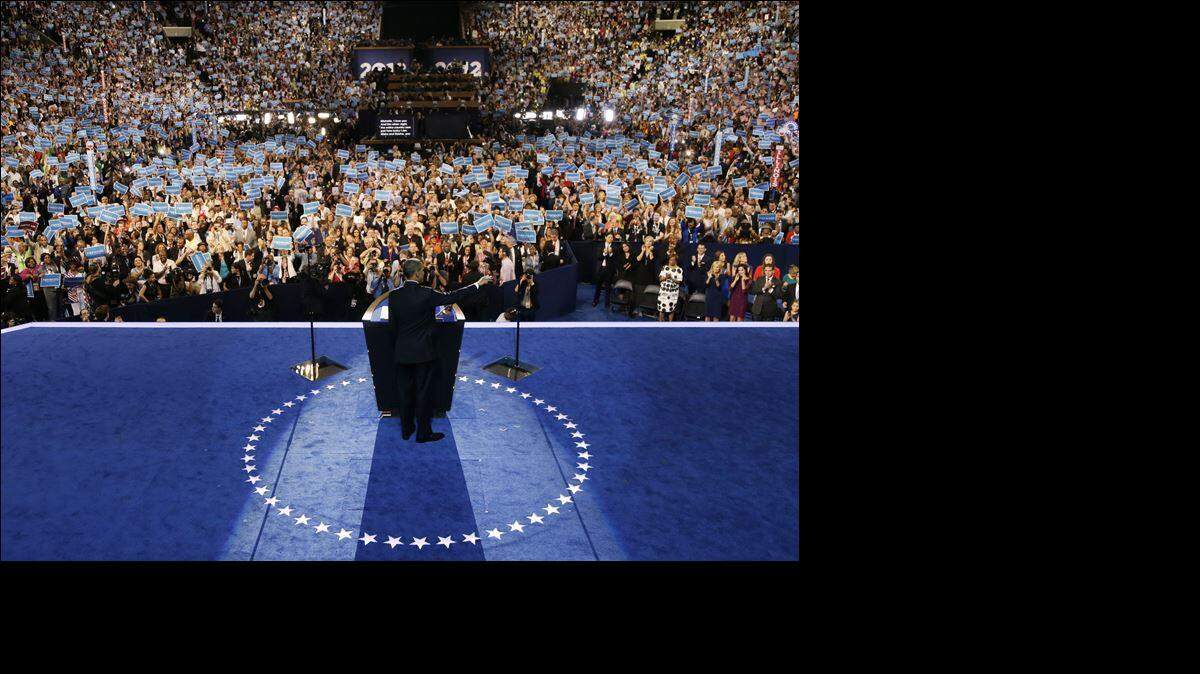
Lee Kinch is chairman of the Kansas Democratic party, and suddenly popular with a pair of presidential candidates named Clinton and Sanders.
Kinch will be a so-called “superdelegate” at his party’s summer convention — a political bigwig officially free to vote his conscience at the event.
Kinch’s super vote won’t matter if Hillary Clinton or Sen. Bernie Sanders wins a majority of convention delegates picked by voters in primaries and caucuses this year. That process continues tonight in Wisconsin, where Sanders and Clinton are locked in a close battle for the state’s 86 pledged delegates.
The campaign road then rumbles to New York, California and other states. If neither candidate reaches a majority of pledged delegates when all those contests are over, appointed superdelegates like Kinch will cast the deciding votes.
Sanders’ campaign believes that’s now inevitable.
“It’s clear now, to anybody who knows how to count delegates, that neither candidate, Hillary Clinton nor Bernie Sanders, is going to win a majority … with just pledged delegates,” Sanders campaign strategist Tad Devine said.
Clinton’s campaign is less worried about such an outcome. But neither side is taking any chances — Kinch and other superdelegates could quickly become a key voice in the nomination fight.
And that’s why his phone is ringing.
“Certainly, I’m persuadable,” he said. “It’s critically important.”
The Democratic party’s obscure superdelegate system has been crucial before.
In 2008, Clinton and then-Sen. Barack Obama fought over the allegiance of unelected superdelegates, with several switching to Obama as his lead among pledged delegates expanded. The process continued until Clinton withdrew from the race several weeks before the convention.
While that contest was eventually settled peacefully, superdelegates remain a sore point for many Democrats.
Superdelegates were invented so party officials could overturn the will of voters and hand-pick a nominee in close races, an anti-democratic approach that raises hackles in a party claiming a commitment to public participation.
“The whole deal stinks,” political analyst Mark Plotkin wrote in mid-March. “It’s wrong, unfair and undemocratic.”
Nearly 185,000 people signed an online petition calling on Democratic superdelegates to “back the will of the voters” at the convention. “Let the people elect their candidate!” said signer Jonathon Antle of the Kansas City area.
But Doug Brooks, a superdelegate from Joplin, said the system exists to ensure a voice for party leadership in picking a nominee. Indeed, he said, “the job of the superdelegate is not to reflect the voters’ interests.”
Missouri is a case study in how the system works, and why some consider it unfair.
In the state’s March 15 primary, Clinton barely edged Sanders in the popular vote, by less than one-half of one percent. When convention delegates were allocated based on the primary, Clinton got 36 pledged delegates, Sanders 35.
But 11 of Missouri’s 13 superdelegates have already expressed a preference — for Clinton. Nationally, her share of the superdelegates, at least for now, is far bigger than her share of the popular vote.
While superdelegates can always change their minds, Missouri’s seem pretty locked in. Asked if he might switch from Clinton to Sanders, superdelegate Rep. Emanuel Cleaver of Kansas City said, “I guess if I became hooked on crack or something ... As long as I’m in my right mind, I’m going with Hillary Clinton.”
Kansas City Mayor Sly James is also a Clinton superdelegate. “I’ve made my choice,” he said. “I respect Bernie Sanders. I like some of his ideas. I just have problems thinking about how he would get them implemented.”
Kansas could become another example of superdelegate-voter imbalance. Sanders won the state’s caucuses by a more than 2-1 margin, yet none of the four Kansas superdelegates has publicly announced for the Vermont senator.
One Kansas superdelegate is committed to Clinton.
Bill Roy Jr. is one of the uncommitted superdelegates in Kansas. He attended a Sanders rally in Lawrence before the Kansas caucuses, and met the candidate, but still hasn’t made up his mind.
“I’m letting the process work itself through,” he said, although the Kansas caucus results will be one factor in his decision.
As a result of patterns in other states, Sanders dramatically trails Clinton in declared superdelegates. Most surveys give her more than 400 superdelegate commitments, compared with 35 or 40 such votes for him.
In a recent conference call with reporters, the Sanders campaign said it needs to convince some superdelegates to switch sides.
“We are in communication with superdelegates,” said Sanders campaign manager Jeff Weaver. “We believe our superdelegate number is higher than the one that’s publicly available.” But, he quickly added, “I understand that’s not worth a lot at this point.”
The campaign suggested it would release the names of superdelegates who have changed their minds in the weeks ahead.
Clinton campaign strategist Joel Benenson scoffed.
“There’s no indication that these folks have flipped,” he told reporters. “If they think they’re going to be able to flip them, given how they usually approach these things, I’m sure they’d be touting them and putting their names out pretty quickly.”
Superdelegates were established in the 1970s after then-Sen. George McGovern was crushed at the polls by President Richard Nixon. Many Democrats said party officials — whose own fates relied in part on the top of the ticket — should have a bigger role in determining the nominee.
The system has been refined in the years since. There are 712 superdelegates in 2016, according to party documents: Democratic governors, senators and representatives are automatically on the list, as are members of the Democratic National Committee and “distinguished” party leaders from the past.
That’s a little less than one-third of the delegates needed to capture the nomination.
President Barack Obama is a superdelegate, as is former President Bill Clinton. It isn’t clear if either will actually cast a vote in Philadelphia.
Republicans don’t have free-agent superdelegates. In each state, the party’s chairman and both members of the Republican National Committee are automatically delegates, but they can be bound to a specific candidate based on caucus or primary votes.
That means the GOP’s process better represents voters, potentially making it harder for party regulars to control the outcome.
Whether that’s good or bad rests firmly in the eye of the beholder.
“The compelling argument for superdelegates is what’s going on in the Republican campaign,” Lee Kinch said of the bitter divide between voters and some members of the Republican establishment.
“The argument for superdelegates is Donald Trump.”
The Star’s Lynn Horsley contributed to this report.
Dave Helling: 816-234-4656, @dhellingkc
Kansas and Missouri superdelegates
Here are the superdelegates from Kansas and Missouri. Declared preferences are subject to change.
KANSAS: Undeclared — Lee Kinch, Bill Roy Jr., Melody McCray-Miller. For Clinton — Teresa Garcia Krusor.
MISSOURI: Undeclared — Roy Temple, Matt Robinson. For Clinton — Mayor Sly James, Rep. Emanuel Cleaver, Rep. William Clay Jr., Melba Curls, Dick Gephardt, Darlene Green, Sen. Claire McCaskill, Gov. Jay Nixon, Sandra Querry, Brian Wahby.
This story was originally published April 4, 2016 at 8:16 PM.