
Missouri lawmakers to hold hearings on Real ID
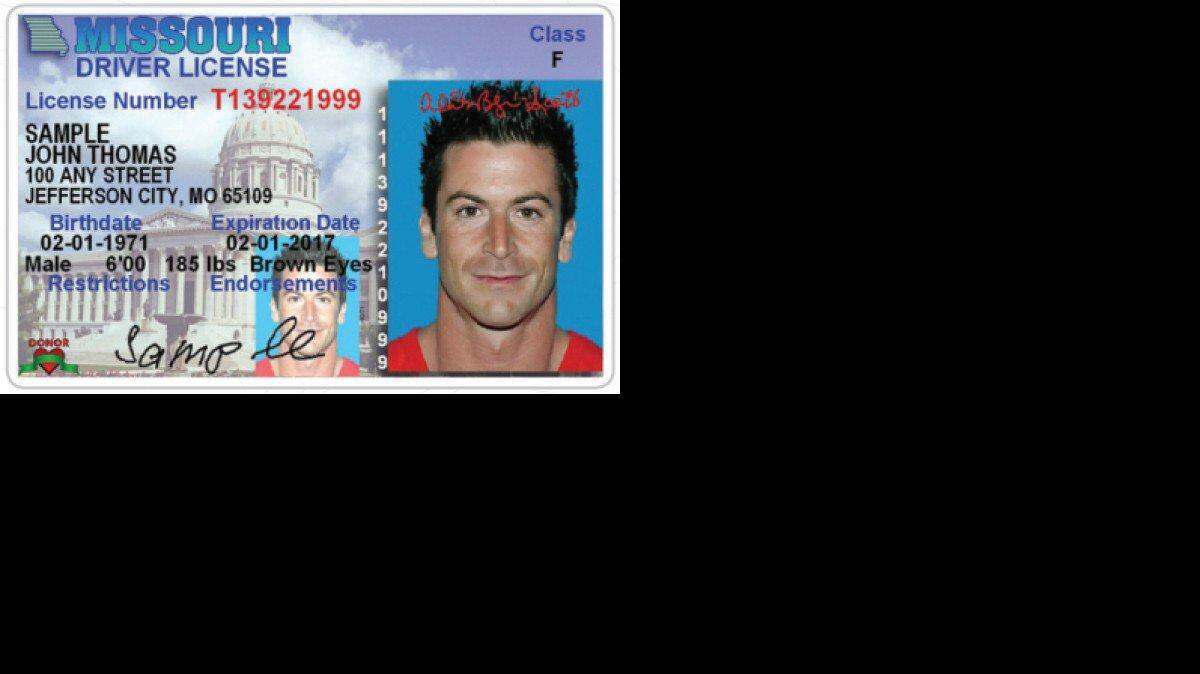
Sunday is the last day a Missouri driver’s license will be an accepted form of ID at certain federal facilities, and that has Missouri Rep. Elijah Haahr fielding questions from all directions.
“I’ve gotten calls and emails from a lot of constituents,” said Haahr, a Republican from Springfield. “On Monday and Tuesday at my regular job back home, I had people coming into my office with questions like, ‘I’m going on vacation in two weeks. Will they let me get on a plane?’ ”
For the record: Yes, Missourians can still use their state driver’s licenses to get on a plane. That won’t change until Jan. 22, 2018, at the earliest.
They can also be used to get into federal courthouses and hospitals.
Not so much at lesser-traveled federal sites, such as military bases and nuclear power plants. Missourians can still get in, but they’ll need an alternative ID, like a passport, or they’ll be subject to heightened security protocols.
At Fort Leonard Wood in the Ozarks, for example, all visitors will now undergo a criminal background check before they can center the Army post, according to the base’s public affairs department.
All this stems from the fact that Missouri isn’t in compliance with the federal Real ID Act, a 2005 law passed by Congress and signed by President George W. Bush setting minimum standards for licenses. Missouri passed its own law in 2009 prohibiting the state from complying with the federal requirements.
Privacy concerns and fear of anything resembling a national ID card fueled overwhelming bipartisan opposition.
In the short term, most Missourians won’t notice the difference. But if Missouri doesn’t get into compliance by 2018, the state’s driver’s licenses will no longer be accepted to board commercial flights.
State lawmakers, who returned to the Missouri Capitol for the 2016 session on Wednesday, have vowed to take action.
Haahr has been tapped by Missouri House leadership to look into the issue and come up with a solution. The House Emerging Issues Committee, which Haahr chairs, will hold a public hearing Wednesday.
“We’ve asked someone from the Department of Homeland Security, the governor’s office, the attorney general’s office and someone from the Missouri Department of Revenue to come and testify,” Haahr said. “We’re trying to get our arms around this issue and figure out the best way forward.”
Gov. Jay Nixon, a Democrat, signed the 2009 law. Asked Thursday if he regretted that decision, Nixon said that at the time the focus was on protecting the privacy of Missourians. But he now believes the law must be changed.
“What I don’t want is for (the federal government) to continue to move forward, and all at once be in a situation where Missourians can’t travel,” he said.
Congress approved the Real ID Act in 2005, following a recommendation from the commission formed to study the Sept. 11, 2001, terrorist attacks.
The 9/11 Commission said the country would be safer if there were minimum standards for the government-issued identification, such as driver’s licenses, that is required to enter federal buildings or board commercial airplanes.
According to the Department of Homeland Security, Missouri fails to meet several of the federal government’s requirements to comply with the Real ID Act. That includes the law’s guidelines on storing source documents used to get a license and photos that appear on the license.
Each state must agree to share its database of licensed drivers with other states. The 2009 Missouri law strictly prohibits implementing this type of database out of fear it could result in a breach of privacy rights.
Real ID-compliant driver’s licenses must also document the applicant’s citizenship status and Social Security number and contain a chip or magnetic strip containing that information in a machine-readable format.
Sen. Rob Schaaf, a St. Joseph Republican, voted for the 2009 bill when he was in the House. He recently posted on his Facebook that lawmakers knew that by passing the law they were putting Missouri on a collision course with the federal government. He believes Missouri should stand its ground.
“Now, we can either stand as the sovereign state we are and refuse to cooperate, fighting whatever comes, or buckle under to a slowly restricting surveillance,” he wrote. “I intend to continue to fight for our privacy. Will the federal government really be able to withstand the backlash of refusing to allow Missourians onto flights?”
Missouri is not alone in its current predicament. Illinois, Minnesota, New Mexico, Washington and American Somoa are also wrestling with what steps should be taken to get their licenses into compliance with federal law. Twenty-seven states aren’t completely in compliance but have been granted extensions by the federal government, delaying any penalties until later this year.
Kansas is in compliance with the law.
Sen. Ryan Silvey, a Kansas City Republican, believes the solution in Missouri is simple.
In 2009, while serving in the House, he pushed to create two types of driver’s licenses in Missouri — one that is in compliance and one that isn’t.
Missourians who are wary of the Real ID law would be able to get driver’s licenses that don’t align with all of the federal regulations. Those who have no qualms with the standards would be issued a different license.
Drivers in Vermont, for example, already have this option.
“Let individual Missourians decide whether they want to participate,” he said. “For the state government to put a roadblock up for those who aren’t worried about participating is silly.”
Jason Hancock: 573-634-3565, @J_Hancock
This story was originally published January 8, 2016 at 4:46 PM.