
ACLU chapters in Missouri and Kansas find new energy to deal with controversies
On a recent Thursday, Kansas City school officials pondered disciplining 13 students who had staged a Ferguson, Mo.-related protest at Lincoln College Preparatory Academy that morning.
By afternoon, the Missouri chapter of the American Civil Liberties Union intervened.
“Protest that does not disrupt the classroom is a protected form of speech,” it wrote in a faxed message to the principal. “Any attempt to punish these students would send the wrong message.”
Any sanctions for the students are still pending. And the ACLU is scheduled to meet with school officials this coming week.
“We do push,” said Jeffrey Mittman, the ACLU’s executive director in Missouri. “We mean what we say.”
By itself, the ACLU’s speedy involvement at Lincoln would be unremarkable. The group has taken up similar causes for decades.
But ACLU officials say the move reflects a new and aggressive effort to place the group in the center of highly public controversies in Missouri and Kansas over same-sex marriage, privacy and police policy — as well as a host of smaller concerns.
Not everyone is happy with the trend. Critics claim the increasingly visible ACLU has strayed from its initial mission protecting the Bill of Rights to promote a broader liberal agenda involving abortion rights, immigrants, even legal marijuana.
Those criticisms have done little to slow the group’s recent efforts.
The Missouri ACLU chapter has been actively and visibly involved in the ongoing protests in Ferguson. It sued on behalf of a foreign journalist arrested during a protest and argued for protections for street demonstrators. It asked for information after a Kansas City Star photographer was detained by police during a recent protest, although the newspaper did not seek its help.
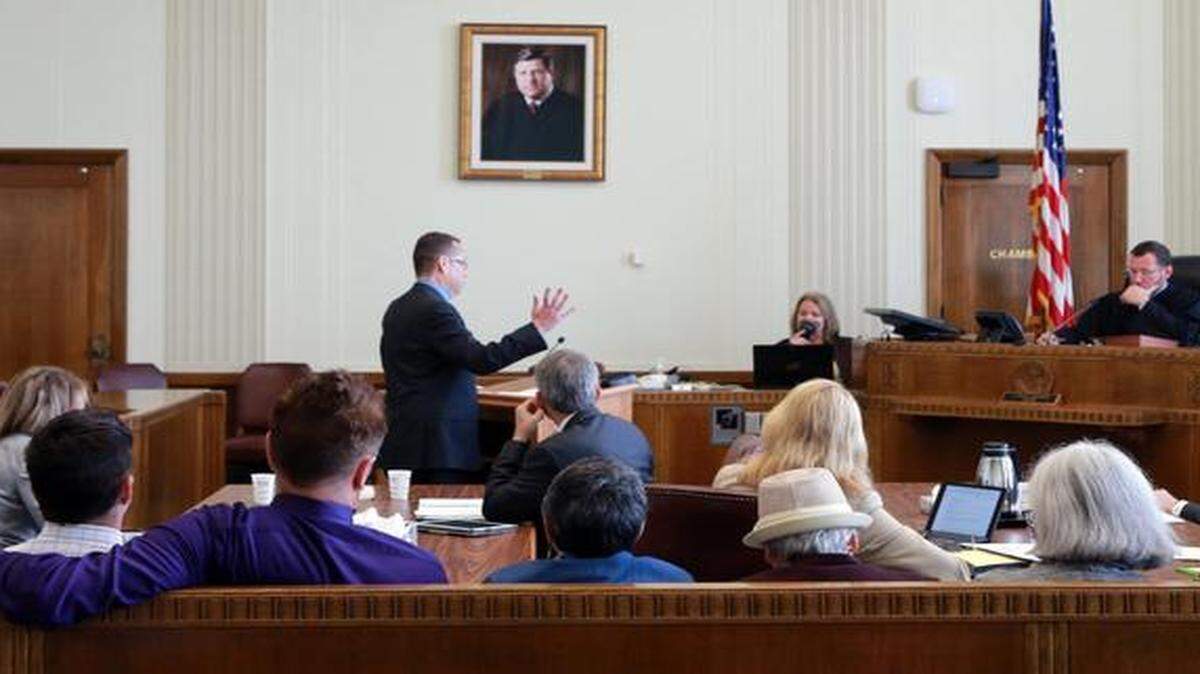
In Kansas, the ACLU chapter has helped lead the fierce legal battle over same-sex marriage.
But the group’s increased visibility isn’t limited to recent high-profile controversies.
▪ Missouri’s ACLU sued in the fall of 2013 over access to state records related to executions.
▪ The group actively promoted a statewide constitutional amendment in August that extended privacy protections to electronic communications.
▪ Earlier this month, it sued Grain Valley in federal court, saying the city illegally punished a driver who flashed his headlights near a speed trap. The city has now changed its policy on such tickets and dismissed a ticket against the man whose case had been taken up by the ACLU.
▪ Kansas ACLU officials worked with Roeland Park this summer on a controversial ordinance barring discrimination based on sexual orientation or gender identity.
▪ In May, it wrote a letter on behalf of a disabled jail inmate in Great Bend, who soon got the special accommodations she sought.
▪ The organization told Kansas sheriffs in June they need not detain people suspected of illegal immigration merely because federal authorities ask them to.
The letters, lawsuits and lobbying have convinced more than a few lawyers and lawmakers that the ACLU is openly pursuing a more central role in the states’ policy debates.
“I run into them all the time now,” said Kansas City attorney Eddie Greim, a critic of the group.
ACLU officials in both states say the perception of a higher public profile may be slightly misplaced. They never went away, they say.
But they say the decision to reorganize the states’ two chapters provided both with new energy. The western half of Missouri and all of Kansas were part of the same ACLU chapter for many years.
That changed in 2013, when each got its own unified ACLU. Mittman was already in place in Missouri. Recently the Kansas chapter announced its new director — Micah Kubic, a former City Council aide in Kansas City and current planning director at the Full Employment Council.
“We are leaning forward,” said Doug Bonney, legal counsel for the Kansas ACLU. “We may not be popular in all contexts, but we want people to know we’re here.”
Unpopularity is embedded in the ACLU’s DNA.
The charity was founded in the 1920s as an organization broadly committed to protecting rights enshrined in the Bill of Rights, including free speech and free association. It famously supported self-proclaimed Ku Klux Klan members who sought access to Kansas City’s public access cable channel in the 1980s. It filed a friend-of-the-court brief defending Fred Phelps’ right to stage offensive anti-gay demonstrations at funerals.
Many Americans know it as the group fighting openly religious displays in public spaces like courthouses and schools — an effort that ACLU officials say is a diminishing part of their mission.
But critics contend the ACLU has expanded its efforts far beyond protecting civil liberties. The group’s website claims work on immigration issues, prisoner rights, abortion, even liberalized marijuana laws.
“The ACLU grates on a lot of people because they claim to be neutral when, in fact, they’re not,” Greim said. “They’re choosing a side.”
ACLU officials reject the characterization of their group as a disguise for liberal politics.
Mittman, with Missouri’s chapter, said the ACLU worked closely with a conservative Republican Party to pass a Missouri constitutional amendment protecting electronic communications from unreasonable searches. He said he worked closely with conservatives in Alaska during his stint with the ACLU there.
But he admits the public doesn’t always see the ACLU as nonpartisan.
“We do have a job to educate people,” Mittman said. “Don’t think in terms of red and blue. Don’t think in terms of left and right. Think in terms of the Constitution.”
Part of that outreach, he said, won’t involve the courts. Instead, the ACLU lobbies, speaks to outside groups, posts to social media — and in Missouri it offers a smartphone app that forwards audio and video of law enforcement encounters directly to the group.
In Roeland Park, City Council members say the ACLU was instrumental in drafting and passing a difficult anti-discrimination ordinance this year. The ACLU helped organize JoCo United Against Discrimination and lobbied residents to support the new rules.
The ACLU “provided valuable resources and analysis to the council as the ordinance worked its way through the process,” Roeland Park Councilwoman Megan England said in an email.
At times, of course, the ACLU decides to take issues to court. In October, it sought to end the Kansas prohibition on same-sex marriage.
“We worked directly with the ACLU in helping find plaintiffs,” said Thomas Witt of the Kansas Equality Coalition, a leading organization supporting same-sex marriage. “Now the ACLU is representing them very aggressively, and we’ve been quite pleased.”
Outreach, lobbying and litigation are paid for through volunteer labor and gifts. The ACLU chapters are nonprofit 501(c)(3) organizations, which makes their operations tax-exempt and donations to them tax-deductible.
In its 2012 tax return — for operations before the two-state reorganization took effect — the ACLU chapter in eastern Missouri reported raising just over $880,000 and spending slightly more than $1 million. The Kansas ACLU chapter reported income of about $580,000 and spending about $508,000.
Figures in both states are expected to increase this year.
Conservatives worried about the ACLU say there are efforts to support right-leaning legal groups as a counterbalance to the ACLU.
The American Center for Law and Justice — the ACLJ — is one such organization. So is a group called Judicial Watch. The American Civil Rights Union, or ACRU, is a nonprofit group “committed to ensuring that those who believe in traditional moral values remain free to hold, express, teach and practice those beliefs,” according to its website.
The ACRU filed a legal brief supporting Hobby Lobby in its dispute over contraceptive coverage for its employees. It also urged the Supreme Court to uphold the right of a public prayer before government meetings — a practice the court found legal. It has also called the ACLU “bullies.”
The Landmark Legal Foundation, with an office in Kansas City, has been involved in similar efforts.
Yet none of the groups has had the influence of the ACLU in either Kansas or Missouri. Lee’s Summit attorney Mark Bredemeier, who once worked with Landmark, said that’s partly because conservatives are more interested in winning legislative battles than legal ones.
“We’ve tended to think these issues are better addressed by elected representatives instead of on the courthouse steps,” he said.
But Independence attorney Marty Kerr — a former ACLU board member — said the group’s more aggressive approach is appropriate.
“Absolutely, they need to take this stuff on,” he said. “That’s the purpose of the ACLU.”
That also seems to be the ACLU’s business plan for the foreseeable future.
“We have a responsibility to say, ‘Hey Kansans, hey Missourians, you have constitutional rights,’” Mittman said. “‘And not only do you have those rights, there is an organization that will help you defend them.’”
To reach Dave Helling, call 816-234-4656 or send email to dhelling@kcstar.com.
This story was originally published December 13, 2014 at 3:49 PM.