
With no money to replace them, can we count on old voting machines?
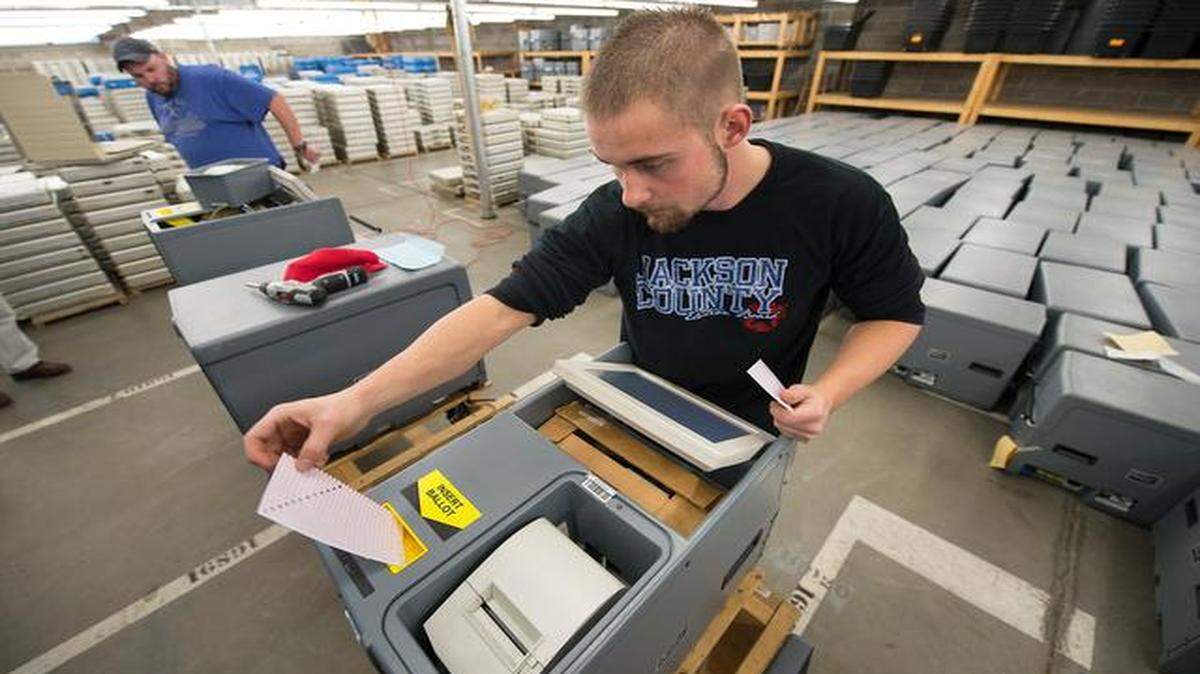
Election authorities in Kansas and Missouri are growing nervous.
Their touch-screen and optical-scan election machines that voters poked and punched just a few weeks ago are growing old. Some devices now exceed their expected life cycle and need to be replaced.
But the enormous cost of buying new election equipment has left legislators and budget officers with little appetite for the job. Replacing all the voting machines in just Jackson and Johnson counties would cost between $10 million and $20 million, according to some estimates, far more than lawmakers have set aside for such purchases.
As a result, election officials say, voters in the 2016 presidential election may confront old, unreliable machines — and the potential for another Bush vs. Gore debacle.
“We’re just really concerned,” said Bob Nichols, the Democratic election director for Jackson County. “Going into a presidential election year with old equipment — we don’t want to be another Florida.”
The Presidential Commission on Election Administration warned of a voting-machine crisis in a report it issued nearly a year ago.
“This impending crisis arises from the widespread wearing out of voting machines purchased a decade ago,” it wrote. “Jurisdictions do not have the money to purchase new machines, and legal and market constraints prevent the development of machines they would want even if they had the funds.”
Like many jurisdictions, Jackson County and Kansas City received one-time federal grants in the mid-2000s to help buy the voting machines they now use. The grants were part of the Help America Vote Act, passed after the Bush-Gore election in an effort to upgrade antiquated voting apparatuses nationwide.
The act achieved its goal. But Washington is not expected to come up with the cash for another round of purchases, and local governments have been reluctant to sock away money for replacement machines.
Shawn Kieffer, the Republican election director for the Kansas City Board of Election Commissioners, said the board has been able to save about $200,000 to replace the 450 optical-scan counters it now uses.
That’s less than 10 percent of the expected cost to replace all of the board’s ballot-counting equipment.
“It’s an issue because we know the feds aren’t going to come up with $1 billion or more” to replace machines across the country,” said Shelley McThomas, the Democratic election director in Kansas City.
Johnson County owns 2,400 touch-screen machines purchased in the early 2000s by local taxpayers, not with federal grants. Those machines, now 12 years old on average, show occasional hiccups — a few misfired this November — but may be able to muddle through the 2016 election, said Johnson County Election Commissioner Brian Newby.
After that, though, all bets are off.
“You just have to buy new equipment,” Newby said. “Everybody buys new PCs, and that’s what really has to happen.”
Newby said Johnson County officials have started talking about a funding mechanism, including potentially issuing bonds.
Even if election officials find the money, though, there are other potential problems in upgrading or replacing voting equipment.
Many of the companies that made voting machines 10 years ago have left the business because the big contracts dried up. And the federal Election Assistance Commission, which is supposed to certify the quality of voting machines, remains in limbo, a victim of the ongoing stalemate between Republicans and Democrats in Congress.
“Machine manufacturers have no incentive to develop new cutting-edge voting equipment,” Kieffer said. “The equipment can’t get certified, and there are no funds to pay for it without the largesse of the federal government.”
Some jurisdictions are taking matters into their own hands. Los Angeles County decided in October to spend $15 million just to design custom voting machinery it hopes to roll out in 2018.
That doesn’t appear to be an option locally. Newby said he expects vendors will return to the market as cities and counties find the funds to overhaul their election machinery over the next few years.
Yet election officials concede theirs is a tough argument to make in a time of shrinking budgets. Voting machines typically are used just four or five times a year, and most taxpayers never use them except in presidential election years.
And replacing the machines may be a never-ending chore. Even under the best of circumstances, the replacement equipment now under discussion won’t be fully available until 2020 — and would need to be replaced again in just a decade or so.
At the same time, many voters remain deeply suspicious about the use of machines to tally their votes. Most jurisdictions require a paper record of a voter’s choice, adding to the expense and maintenance problems for voting machines.
As a result, some jurisdictions are abandoning electronic voting apparatuses and returning to old-fashioned paper ballots. Some are urging other steps. Mail-in voting, online voting and early voting are mentioned as alternatives.
Yet fully developing those options in time for what is expected to be a hotly contested presidential race in 2016 will be difficult.
“In a way, 2016 is already here,” Newby said.
To reach Dave Helling, call 816-234-4656 or send email to dhelling@kcstar.com.
This story was originally published November 29, 2014 at 4:19 PM.