
Democrat Claire McCaskill makes nice with Senate Republicans
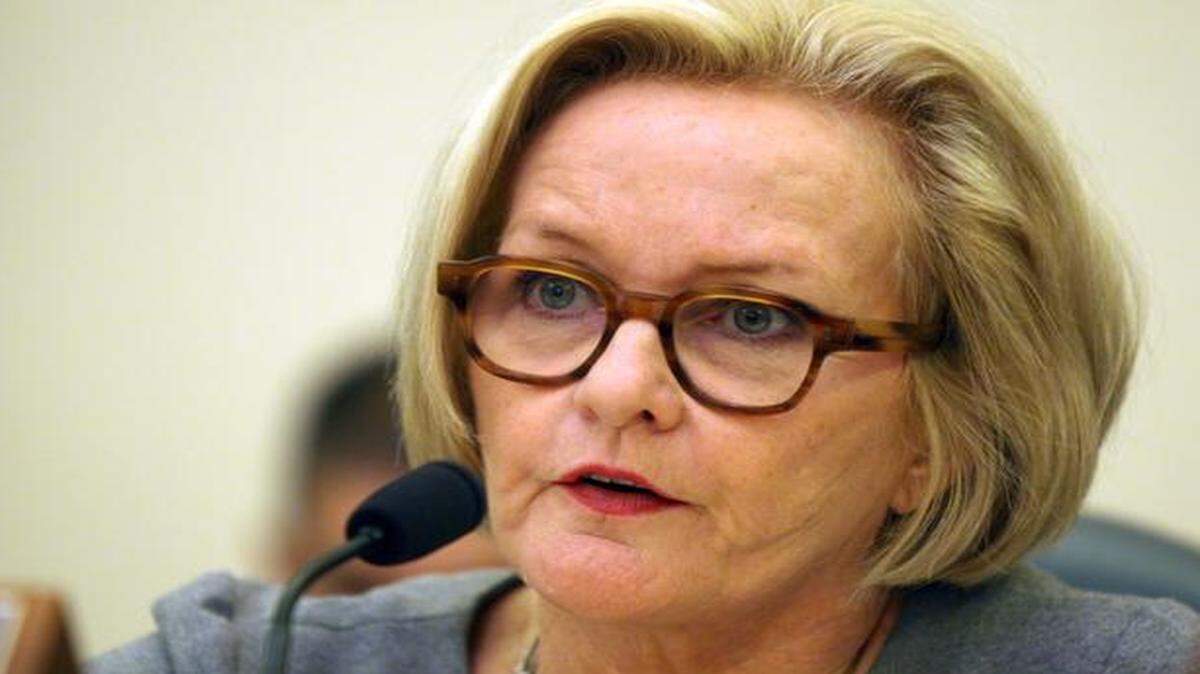
The week after Republicans trounced her party in midterm elections, Democratic Sen. Claire McCaskill of Missouri returned to Washington and promptly made the rounds to sound out her victorious GOP colleagues.
McCaskill grabbed lunch with her fellow Missouri lawmaker, Roy Blunt, a member of the Republican leadership team. She visited with Republicans Rob Portman of Ohio, Lindsey Graham of South Carolina and Ron Johnson of Wisconsin, who’s poised to become the chairman of the homeland security committee. And she hugged her friend Susan Collins, a moderate Republican who’d been re-elected in Maine.
She even gave a friendly handshake to Republican Sen. Pat Roberts of Kansas and congratulated him on his hard-fought defeat of independent candidate Greg Orman.
McCaskill’s outreach efforts reflect the new reality she’ll face on Republican-controlled Capitol Hill.
This is uncharted territory for McCaskill: She’s never served in the minority party as a lawmaker — not in Missouri’s House of Representatives in the ’80s, and not in the U.S. Senate, which she joined in 2006.
When Democrats lost control of the Senate on Nov. 4, McCaskill lost significant clout. Come January, she’ll forfeit subcommittee chairmanships on consumer protection and financial oversight, along with other perks that come with being a member of the party in power.
But there’s a silver lining for McCaskill, even in defeat. She now is one of a handful of centrist red-state Democrats whose votes will be crucial to Republicans’ legislative agenda — or to Democratic efforts to block the GOP.
Republicans will hold at least 53 votes in the Senate come January. Sixty votes are needed to pass most legislation. That’s where McCaskill and other moderate Democrats come in, among them Joe Manchin of West Virginia, Heidi Heitkamp of North Dakota, Jon Tester of Montana, Tim Kaine and Mark Warner of Virginia and Louisiana’s Mary Landrieu, if she wins a December runoff. Those Democrats all signaled their willingness to cross their own party last week by publicly announcing opposition to Harry Reid of Nevada as minority leader.
“Mitch McConnell is going to need six to 10 votes for just about anything, so the moderates are going to have to participate and hopefully help the Senate find consensus and common ground,” McCaskill said in an interview with McClatchy, referring to the incoming majority leader from Kentucky.
The votes of McCaskill and other red-state Democrats will be highly sought in a Republican-led Senate, Blunt said. Getting them to cooperate with Republicans “will be part of the daily work of the majority,” he said.
Reid and Democratic leaders, on the other hand, will concentrate on keeping McCaskill and her moderate colleagues in line to thwart Republicans’ plans.
First up was the Keystone XL pipeline. A bill to approve that project narrowly missed the cut in the Senate by a 59-41 vote Tuesday despite McCaskill’s support. It needed 60 votes to move ahead. Republicans are expected to revive the bill after the new Senate convenes in January, at which point it stands a better chance of passing.
In addition to the pipeline, McCaskill said she looked forward to working with Republicans on veterans’ issues, fiscal oversight, tax restructuring, trade and consumer protection concerns such as car safety. She also hopes, with Republican support, to pass her bill to curb sexual assaults on college campuses.
“The centrist credentials she has built within the Washington, D.C., community should allow her to continue to affect policy despite being in the minority,” said George Connor, the department head of political science at Missouri State University.
To that end, McCaskill was among 30 senators who signed a letter to McConnell and Reid last week, proposing monthly bipartisan lunches “to broaden the relationships and deepen the rapport among members.”
That doesn’t mean McCaskill will see eye to eye with Republicans all the time, or even most of the time. She’s unlikely to help them repeal the Affordable Care Act, for example, although she’s open to amending the law.
McCaskill previously helped pass a measure that removed a tax-reporting requirement on small businesses that she considered burdensome. She also is part of a bipartisan effort to repeal a provision in the health care law that requires Missouri and some other states to subsidize high wages at hospitals through Medicare reimbursements.
“I’m going to work with Republicans when they do things I agree with and I’m going to fight Republicans when they’re doing things that I think are damaging,” McCaskill said.
On Sunday, McCaskill took her political tightrope-walking show to the airwaves. She told CBS “Face the Nation” host Bob Schieffer that she’s “not crazy” about the president’s plan to act unilaterally on immigration, but she also said she was angry at Republicans in the House of Representatives for not allowing a vote on a comprehensive immigration bill the Senate passed last year.
McCaskill told McClatchy she was a little cranky “because I don’t have much patience for people jumping up and down about what the president is going to do when they aren’t doing anything.”
She says that seeking compromise is nothing new for her, but that election results clearly underscore that voters are fed up with partisan wrangling and gridlock.
“What the American people said in a voice that was unmistakable, and they said it really loudly once again, is they want us to work together when we can, and there’s a lot of places we can work together,” she said. “We need to quit this silly business of obstruction.”
To reach Lindsay Wise, call 202-383-6007 or send email to lwise@mcclatchydc.com. Twitter: @lindsaywise.