
Vote for construction of Keystone XL pipeline falls short in U.S. Senate
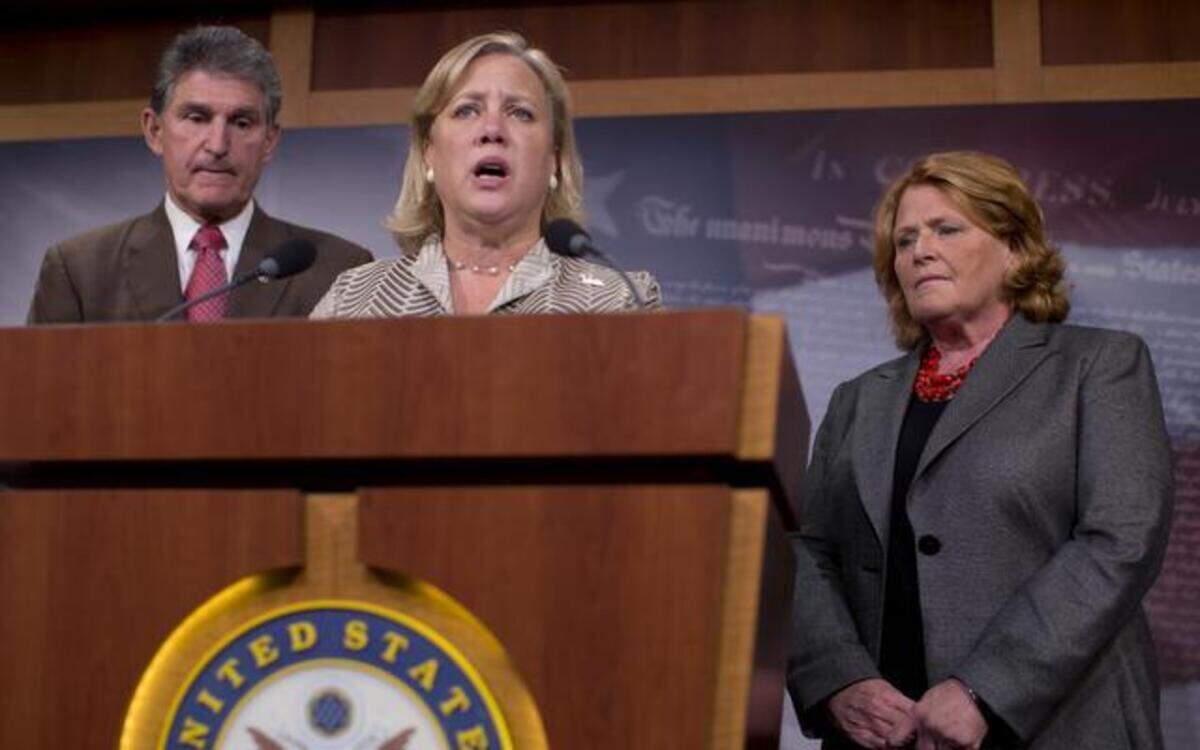
The Senate failed to vote for construction of the Keystone XL pipeline Tuesday evening, rebuffing a Democratic senator fighting for her political career and setting up a confrontation between President Barack Obama and a Republican-controlled Congress over the pipeline next year.
Senators voted 59-41 for the pipeline, falling one vote short of the 60 needed to get past a threatened filibuster and pass the bill. Fourteen Democrats joined 45 Republicans in voting for the bill.
The legislation was meant to force Obama to approve the nearly 1,700-mile, $7.6 billion project, which would deliver 830,000 barrels of oil a day from western Canada to the American heartland
Tuesday’s vote was steeped in election politics. After refusing to allow a vote for months, Senate Majority Leader Harry Reid of Nevada cleared the way to help a fellow Democratic senator, Mary Landrieu, facing a tough runoff election in Louisiana, where the pipeline is popular.
Her opponent, Republican Rep. Bill Cassidy, sponsored similar pro-pipeline legislation, and it passed the House of Representatives last week.
Reid and Senate Democratic leaders allowed the vote in hopes of boosting Landrieu’s prospects against Cassidy back home. They still opposed the bill themselves and did not use the party machinery to formally push for or against the bill, leaving her and other Keystone supporters scurrying for yes votes.
“We usually know the outcome of the vote before we take it because the deals are all cut,” Landrieu said on the Senate floor. “I brought this bill to the floor knowing in my heart that we have 60 votes.”
Democratic foes, who say the pipeline would harm the environment and contribute to global warming, were supportive of Landrieu’s political plight but staunch in their opposition against her bill.
In one breath, Sen. Barbara Boxer, a California Democrat, ensured that Landrieu got credit for the bill by reminding senators that they were voting on Landrieu’s, not Cassidy’s, measure. In the next, she blasted Landrieu’s bill, saying the “XL” in the pipeline’s name stands for “X-tra Lethal.”
Added retiring Sen. Tom Harkin, an Iowa Democrat: “I believe it’s one more capitulation to our fossil fuel habit, one more accelerant to global warming that threatens our children’s future.
“Every dollar we spend today on developing and using more fossil fuels is another dollar spent in digging the graves of our grandchildren.”
Republicans, the oil industry and labor unions touted the pipeline as a job creator that would help the United States lower the amount of oil it uses from the Middle East.
“The Keystone XL pipeline really is, if there is such a thing, a win-win,” said Sen. John Thune, a South Dakota Republican.
Voting to advance the bill were Missouri Republican Roy Blunt and Democrat Claire McCaskill and Kansas Republicans Jerry Moran and Pat Roberts.
Moments before the vote, Landrieu pleaded with her colleagues, arguing that jobs related to the pipeline would go to rural American communities struggling in the economic recovery.
“This is for Americans, for an American middle class,” Landrieu said. “The time to act is now.”
She then thanked her Democratic colleagues who supported her, including three who lost their elections this month.
Tuesday’s vote doesn’t end the Keystone debate, which involves a pipeline that would bring crude oil from the Canadian oil sands in Alberta to American refineries on the Gulf Coast. Republicans vowed to approve the pipeline when they control both the House and Senate next year.
“Once the 114th Congress convenes, the Senate will act again on this important legislation, and I look forward to the new Republican majority taking up and passing the Keystone jobs bill early in the new year,” said Senate Minority Leader Mitch McConnell, a Kentucky Republican who will become Senate majority leader next year.
If Congress passes a Keystone bill, Obama would have to decide whether or not to veto it. His aides signaled they don’t think Congress has a say.
For decades, the executive branch has had the final say on projects that cross U.S. borders and require so-called presidential permits. The administration has put a review of the pipeline on hold while it awaits the results of a lawsuit in Nebraska over the pipeline’s route.
White House press secretary Josh Earnest on Tuesday said that “the president believes that this is something that should be determined through the State Department.”
The State Department, which determined in its first review that the pipeline would not have a significant impact on climate change, is now assessing whether the project is in the U.S. national interest.
The State Department in January said an average of 42,100 jobs a year would be created during construction of the pipeline, with wages totaling $2 billion.
However, once the pipeline became operational, it would only require an estimated 50 employees — 35 permanent workers and 15 temporary contractors, according to the State Department.
If the Canadian crude were processed in the United States and not exported in its raw form, it would add business across the energy chain, from U.S. refiners turning oil into products to those who distribute, wholesale and deliver gasoline to stations nationwide.
That’s not how it’s being sold by politicians for and against, however. They mostly suggest the crude oil would transit U.S. territory for export out of the Gulf Coast seaports.
“Understand what this project is: It is providing the ability of Canada to pump their oil, send it through our land, down to the Gulf, where it will be sold everywhere else,” Obama said Friday. “It doesn’t have an impact on U.S. gasoline prices.”
The comments didn’t sit well with energy experts.
“That’s sort of a facile political phrase. It’s a route to supply crude oil that will enable refined products to be exported,” said Kevin Book, who heads research for ClearView Energy, a policy advisory group.
There’s a good likelihood that the Canadian oil actually would go to U.S. refiners.
Canadian crude oil is of a heavier grade, and it competes with imported oil from Mexico and Venezuela. The Keystone XL pipeline could force those two countries to discount their oil to compete with the Canadian product.
As McConnell made clear, the issue will not disappear once Republicans control both chambers. Ten of the Senate Democrats who voted yes will be back next year, adding to the 53 or 54 Republicans whose votes McConnell can count on.
That places the likely support for the pipeline in senatorial limbo — enough to pass a bill and send it to the White House, but a few votes shy of the two-thirds majority needed to override a veto.
The Washington Post and Tribune Washington Bureau contributed to this report.
This story was originally published November 18, 2014 at 9:37 PM with the headline "Vote for construction of Keystone XL pipeline falls short in U.S. Senate."